
If you own a business, you know how challenging a demand spike can be when you’re not prepared for it. But you can turn these moments into great opportunities to show up and stay in people’s minds and hearts.
When demand jumps, your warehouse can feel it. Orders pile up. Pickers get rushed. Stock gets moved twice. The whole place starts to feel loud, and everyone is stressed out.
That is where Modula's AI warehouse management services fit in. AI helps a warehouse see trouble sooner, plan better, and keep work moving when the order volume suddenly changes.
McKinsey says AI can cut inventory by 20% to 30% by improving demand forecasting and inventory planning, which shows how much room there is to do this job better.
Why Demand Spikes Create Problems So Fast
A demand spike can come from a holiday rush, a social media mention, or even bad weather. The fact that people are ordering is always great, but a sudden change can cause trouble because you may not be prepared for it.
Some items may run out of stock. Your workers need to know what to pick first. And space needs to be freed up fast.
AI helps because it looks at patterns across sales history, stock movement, shipping delays, and other signals to predict what is likely to happen next. AI is already being used in planning, warehousing, and transportation to make supply chains more efficient and more flexible.
AI Helps Warehouses Prepare
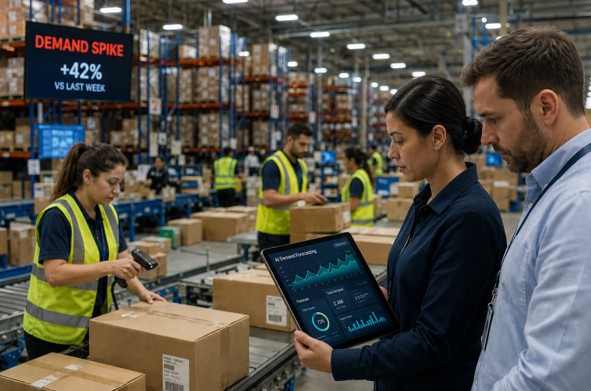
Here’s the thing. AI acts like a smart early warning system. It spots which products are likely to jump, which zones in the warehouse will get busy, and where stock should be moved before the rush begins.
That helps teams avoid the usual chaos of waiting until the orders are already late, and gives them a chance to prepare.
Better Forecasting Helps You Make Good Decisions
AI helps you make better decisions because it can predict what’s going to happen. If it knows that a certain item always spikes before a weekend promotion, it can move that item closer to the packing area early. If it knows a supplier usually runs late after a holiday, it can order sooner or keep backup stock ready. It can also help you understand which items are popular, so you know that you should always have them in stock.
That kind of planning lowers panic and saves time. It also reduces waste, because the warehouse is not overbuying just to feel safe.
Smarter Labor Planning During Busy Periods
Another win is smarter labor planning. Demand spikes are not only about products. They are also about people. If ten extra pallets arrive and the team is still staffed for a normal day, delays show up fast.
AI helps managers see where labor will be tight and where it can be shifted. It can suggest which shift needs more hands, which zone needs more picking support, and which tasks should be done first. That makes the whole operation a lot calmer and more strategic.
Start Small and Build From There
If you want to give this a try, you can always start small. Just pick one pain point and work on fixing that.
Feed the AI clean data from orders, inventory, and shipping. Then check whether the forecasts are helping real work get easier. The strongest results come from focused use cases, a clear road map, and a plan that can pay for the next step.
Why Shared Data Matters
This is also a great tool for teams working across multiple locations. Inventory management software and warehouse management software help everyone see the same data (like stock levels, picking, packing, shipping, and returns), which helps with internal communication. That kind of shared view matters even more when demand jumps, and the whole team needs to move as one.
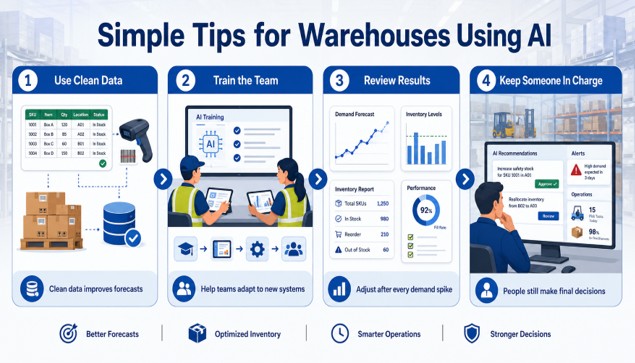
Simple Tips for Warehouses Using AI
Here are the habits that make AI work better in a warehouse:
Use clean data from the start. Bad data gives bad forecasts. If item names, locations, and counts are messy, AI will guess wrong. Keep the data tidy and current.
Train the team on the new process. The tool should not sit in the background while workers keep doing things the old way.
Check results after every peak. Look at what ran short, what sat too long, and where the plan failed. Then adjust the model and the work rules.
Keep someone in charge. AI can point to the best next move, but people still need to decide when reality on the floor is different from the screen.
Final Thoughts
Demand spikes are never fun, but they do not have to break the warehouse. AI helps teams see farther ahead, use space better, and make faster calls with less stress.
Times are changing. AI is reshaping modern logistics. And while you’re scared to take the first step, your competition is way ahead of you.
The warehouses that handle spikes best are not the ones that rush the hardest. They are the ones that adapt to this change, the ones that prepare early, share good data, and let smart tools do the heavy lifting before the rush arrives.

- Kindle Publishing Income Review: Is Sophie Howard Legit? - September 23, 2026
- 7 Figure Accelerator Review: Is Philip Johansen Legit? - September 21, 2026
- How to Market Health and Wellness Products Online - September 21, 2026