Most online stores start with the founder packing boxes at a kitchen table. That setup works fine at 20 orders a week, but it breaks down at 200. Shipments go out late, and inventory counts stop matching what the website shows.
Every hour spent taping boxes is an hour that could have gone into marketing or product work. Sooner or later, a growing brand must decide whether to build its own fulfillment operation or outsource that work to a specialist.
What a Third-Party Logistics Provider Does
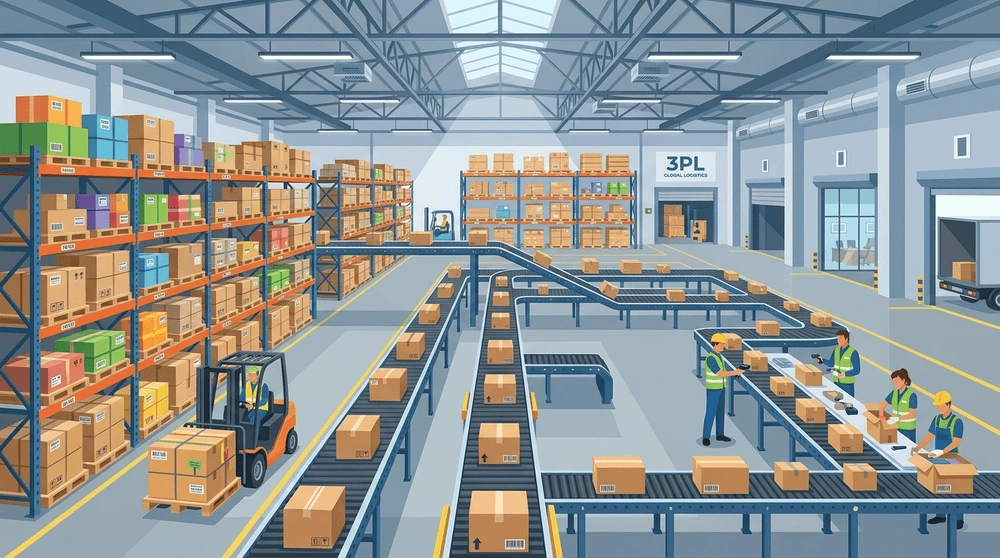
A third-party logistics provider, or 3PL, takes over the physical side of selling online. The brand ships its inventory to the provider's warehouse, where it’s stored until a sale, after which staff packs the box and hands it to a carrier. Many providers process returns as well. Companies that offer 3PL services connect directly to a store's sales channels, so orders reach the warehouse automatically.
That appeal is easy to see. The brand keeps control of its products and its marketing, while the 3PL focuses on moving goods efficiently. For a small team, that split can change what the business can take on.
Some providers focus on large retailers that move full pallets to store shelves. Others specialize in direct-to-consumer brands that send single orders to households. In my view, small online sellers fit best with the second group, because those warehouses are set up for high volumes of small parcels and frequent product launches.
Where In-House Fulfillment Starts Breaking Down
Self-fulfillment carries costs that don’t show up on a spreadsheet, and the biggest is the founder's time. A few hours of packing each day adds up to a whole other part-time job, and that extra time should be used to focus on growth.
Space is the next problem. Inventory outgrows the spare room and ends up in a garage or a rented storage unit, products get harder to find, picking errors creep in, and each wrong item costs a refund plus a reshipping fee. Sometimes it even costs the customer.
Location is another limit. A brand with one shipping location can reach nearby buyers quickly, but customers on the other side of the country end up waiting longer or paying more for postage. Cart abandonment tends to climb once delivery estimates stretch past a week. Leasing a second commercial building closer to those customers is an expensive solution that few small brands can justify.
How 3PLs Make a Supply Chain More Efficient
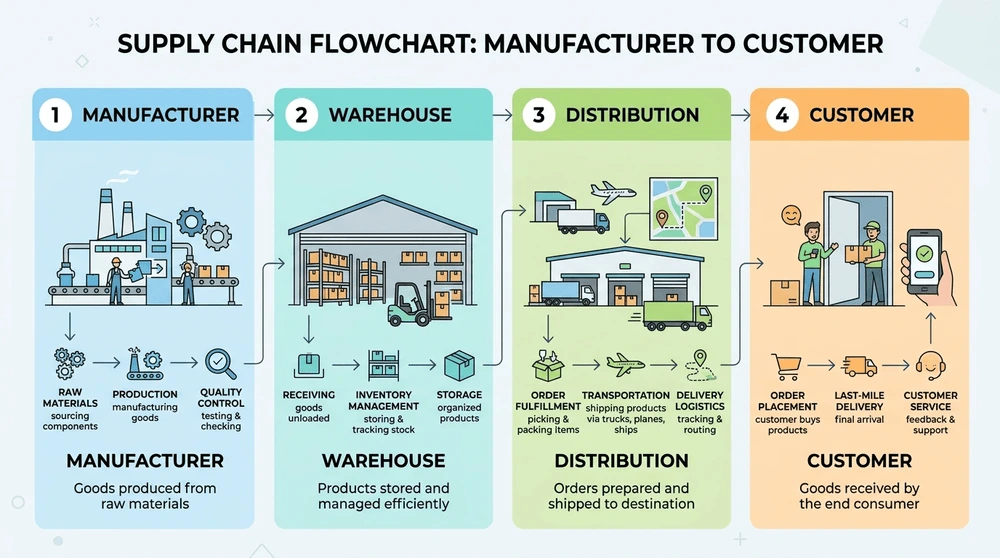
A good 3PL improves multiple stages of the supply chain at once. Most gains come from scale and technology, two capabilities small brands struggle to build themselves.
Distributed Inventory and Faster Delivery
Many providers run warehouses in multiple regions. Stock can be split between an East Coast facility and a West Coast facility, putting most customers within a two- or three-day ground-shipping zone. Shorter distances lower postage and speed up arrival, which is crucial because shoppers now expect those perks as standard.
Faster delivery also changes how a store can market itself. When a brand can promise delivery by a specific date, it can show that date at checkout, and that can boost conversion rates. Vague delivery windows give shoppers one more reason to leave.
Carrier Rates Small Sellers Can't Get Alone
Carriers price their services by volume. A 3PL ships thousands of packages a day across its entire client base, so it can negotiate rates an individual seller could never secure. Those discounts often offset a large share of the fulfillment fees. Some brands end up paying less per order than they did when shipping themselves.
Packing habits improve with volume as well. Experienced warehouse teams know how to size boxes to avoid dimensional weight charges. A few cents saved per box adds up over a year of orders.
Real-Time Inventory Visibility
Modern 3PLs use warehouse management software to track every unit from receiving to shipping. Live stock levels appear in a dashboard, and alerts go out when a product runs low. Reliable data underpins effective supply chain management, since reorder decisions are only as good as the numbers behind them. With accurate counts, a brand can avoid stockouts and keep cash out of excess inventory.
Over time, that order history becomes useful for forecasting. Brands can see which products sell faster in certain months or regions and plan purchase orders around those patterns. Suppliers get clearer lead times. Less money goes to rush freight for surprise shortages.
Scaling Through Seasonal Peaks
Order volume rarely stays static when Black Friday or a viral social post can triple demand overnight. To keep up in-house, a brand would need to hire and train temporary staff on short notice. A 3PL already has the labor and the space to absorb those spikes, and the brand pays for extra capacity only when it uses it.
The Customer Experience Payoff
Customers notice warehouse efficiency, even if they never think about it. Details like tracking numbers landing in inboxes within hours of purchase and orders arriving on time with the right items inside shape how buyers feel about a brand.
Accuracy also has a cost side. Every mis-shipped order creates a support ticket and a replacement shipment, and it can trigger a negative review that stays on the product page for years. Warehouses that scan barcodes at each step catch most errors before they seal the box.
When returns do happen, a 3PL with a clear returns process can inspect and restock items quickly, getting refunds or replacements to customers sooner. Often, a smooth return impacts whether someone buys again. For brands that rely on repeat orders, dependable fulfillment is one of the most practical tools for customer retention.
Trade-Offs to Weigh Before You Outsource
Most 3PLs charge one fee for storage and another for each order they pick, and some even add receiving or account fees on top. Storage charges can cut into margins for brands with slow-moving products, and some providers set monthly order minimums that small sellers struggle to meet.
Communication can become a weak point. If a shipment goes missing, the brand depends on the provider to investigate and respond. Some 3PLs assign a dedicated account manager, whereas others route every issue through a general ticket queue. During peak season, that difference becomes obvious.
Control is the other concern. Custom packaging and handwritten notes are harder to guarantee once someone else packs the box. Switching providers later also takes effort, since you have to move inventory and rebuild integrations. For that reason, I would treat the choice as a long-term partnership.
How to Choose the Right 3PL Partner
Start with integrations. The provider should connect with the platforms the brand already sells on, whether that's Shopify or Amazon, because manual order transfers defeat the purpose of outsourcing. Ask for a test order to be run through the integration before committing, and confirm that tracking numbers sync back to the store.
Next, compare warehouse locations with where customers actually live. A provider with facilities near the brand's largest markets will cut both transit times and postage. Request a full fee schedule up front and run a sample month of orders through it, so the first invoice holds no surprises.
Accuracy commitments and growth capacity come last. Strong providers publish order accuracy targets and back them with service agreements. They should also have the space and the staff to handle two or three times today's volume. A partner that fits now but can't grow with the brand will force another move later.
It also helps to talk with current clients before signing. Ask how the provider handled their last peak season and how quickly they resolved problems. A short reference call often tells you more than a sales presentation.
Conclusion
Fulfillment is one of the few parts of an online business customers experience firsthand. Getting it right builds trust, and getting it wrong erodes that trust quickly. A capable 3PL gives growing brands warehouse networks and shipping discounts that would take years to build in-house. For a brand that’s outgrown the garage, that support can remove one of the biggest limits on growth.

- The Role of 3PLs in Building a More Efficient Supply Chain - October 21, 2026
- How Flexible Engineering Teams Are Reshaping Digital Growth - October 21, 2026
- How Large Companies Can Improve Their Visibility Across Competitive Search Results - October 20, 2026