Running a takeaway cafe without the right point-of-sale setup is a bit like trying to serve espresso through a funnel. The best POS systems for this environment need to handle rapid transaction volume, stay compliant with PCI DSS requirements, and connect cleanly to delivery platforms without creating a mess of disconnected tools.
After reviewing dozens of platforms across real-world cafe contexts, it's clear that most operators underestimate how much the wrong choice costs them. This guide covers five strong contenders built for exactly this kind of operation.
The vetting process for this list
Every decision here was based on public information. User reviews, feature documentation, software directory ratings, and official product pages were all pulled together before any company made the cut. Only platforms with a demonstrated track record serving retail and food-and-beverage operators were considered for inclusion.
→ See the full research breakdown
- BLogic Systems - Best for restaurant POS and integrated payment processing
- LithosPOS - Best for multi-location retail and restaurant chains
- Epos Now - Best for multi-location retail and hospitality POS management
- Loyverse - Best for small to medium-sized retailers and restaurants
- HungerRush - Best for quick-service and fast-casual restaurant payment processing and POS
The Difference the Right POS Systems Makes
Picking a POS system for a cafe that runs takeaway orders is genuinely consequential. The wrong setup means slower transaction processing at the counter, gaps in PCI DSS compliance that put customer payment data at risk, and separate systems that don't quite talk to each other the way you need them to.
A well-chosen system handles every payment type without friction, from contactless tap to mobile wallets, and keeps the kitchen and counter in sync even during an internet outage.
What actually matters is the total cost of ownership. That means factoring in hardware and software fees, as well as per-transaction charges, not just the sticker price on the terminal.
Cafes that get this right see faster ticket times, better system reliability during peak rushes, and a lot less staff frustration on a busy Saturday morning.
The 5 Best POS Systems: Quick Comparison
Note: All data in this table is sourced from review platforms and the official websites of the listed companies.
Company Name | Years Operating | Headquartered In |
BLogic Systems | 14+ years (est. 2010) | San Jose, California, USA |
LithosPOS | 13+ years (est. 2012) | New York, New York, USA |
Epos Now | 14+ years (est. 2011) | Norwich, UK |
Loyverse | 11+ years (est. 2014) | Limassol, Cyprus |
HungerRush | 22+ years (est. 2003) | Houston, Texas, USA |
1. BLogic Systems - Best for Restaurant POS and Integrated Payment Processing
How Does BLogic Systems Operate?
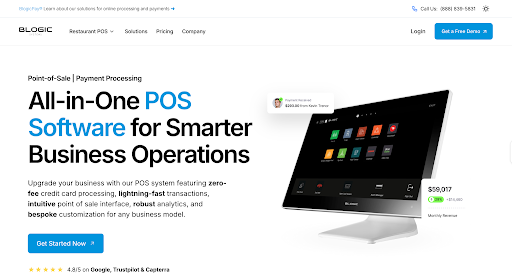
For cafes that need everything to talk to each other from day one, the platform built by BLogic Systems, cafe POS system, brings together POS software, payment processing through BLogicPay, inventory management, employee scheduling, and delivery connections under one dashboard. They've processed over $10 billion in transactions across 5,000 to 6,000 merchants since 2010, which shows they're legit when it comes to scale. The offline-capable architecture is a genuinely useful feature for cafes where internet reliability isn't always a given.
Why Is BLogic Systems a Contender for POS Systems?
The main problem BLogic Systems addresses is fragmentation. Cafes often end up juggling separate tools for payments, delivery orders, and scheduling, and that creates errors and lost revenue. Their 0% credit-card-fee program option and support for Apple Pay, Google Pay, PayPal, and contactless payments make the payment side unusually flexible for operators watching their margins.
From the User Reviews:
Operators consistently point to the 24/7 human support as a standout, which is rare in this category. There's also recurring praise for how smoothly the DoorDash, Uber Eats, and Grubhub connections work reliably, not just on paper. That kind of centralized delivery management is hard to match for a cafe running high takeaway volume.
2. LithosPOS - Best for Multi-Location Retail and Restaurant Chains
How Does LithosPOS Operate?
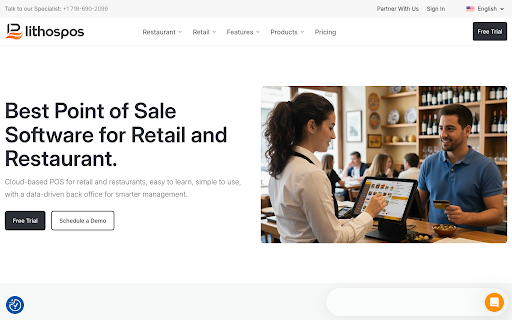
LithosPOS is a web-based platform built for retail and food-and-beverage businesses, and it's been doing this work since 2012. They connect country-specific payment processing, e-commerce platforms, aggregators, and ERP tools into one billing environment, which is genuinely useful for operators running across borders or multiple locations. The AI tools built into the platform give real-time guidance on pricing and promotions, which goes well beyond what most standard POS systems offer.
Why Is LithosPOS a Contender for POS Systems?
LithosPOS tackles the challenge of managing consistent operations across dozens or hundreds of locations, something that breaks a lot of simpler platforms under pressure. Their reach across 60+ countries and 10,000+ independent stores suggests the platform is built to handle serious operational demands without falling over.
From the User Reviews:
Users across review platforms frequently mention the intuitive interface as a major plus, particularly for staff who need minimal training time. The offline functionality gets called out repeatedly too, which matters a lot for cafe environments where connectivity can be unpredictable. And honestly, the AI-driven insights feel like a genuine differentiator rather than a marketing checkbox.
3. Epos Now - Best for Multi-Location Retail and Hospitality POS Management
How Does Epos Now Operate?
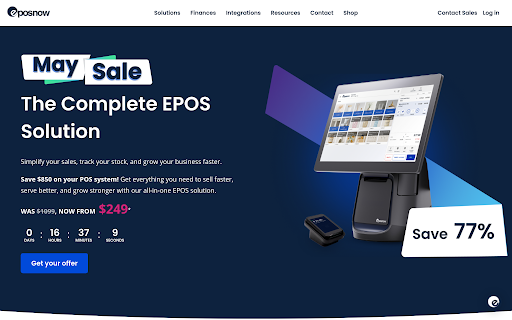
Epos Now runs a web-based POS platform that gives retail and hospitality operators remote access to sales, inventory, and transaction data across multiple locations. They've been at this since 2011 and now serve around 90,000 merchant locations across 11 countries (not cheap to build that kind of footprint, but they've done it). The platform works with a wide range of hardware, from touchscreen terminals to tablets, and connects to accounting, e-commerce, and CRM tools through third-party connections.
Why Is Epos Now a Contender for POS Systems?
Where Epos Now earns its place is in multi-location management, giving operators a single view of what's happening across sites without needing to log into each terminal separately. Their AI support agent, Sidekick, has reportedly automated up to 70% of support demand, which translates to faster resolution times for the operators relying on the system during peak hours.
From the User Reviews:
Reviews tend to highlight the flexibility of the hardware setup, particularly for operators who already own terminals and don't want to replace everything. The web-based remote access gets consistent praise from managers overseeing multiple cafe locations. There are occasional notes about the learning curve on advanced features, though most users land comfortably after initial setup.
4. Loyverse - Best for Small to Medium-Sized Retailers and Restaurants
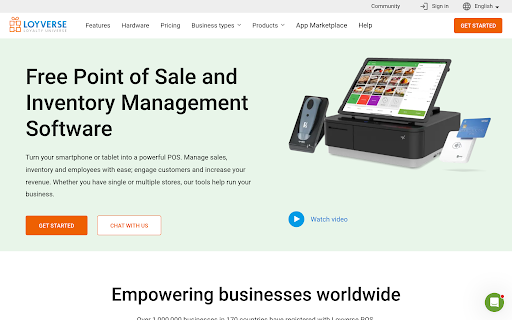
How Does Loyverse Operate?
Loyverse covers the full operational stack for small to mid-sized businesses: sales tracking, inventory, employee management, and customer retention programs, all available in 25+ languages across 170+ countries. The free basic tier is real (not a watered-down demo), and add-ons like advanced inventory or employee management start at $5 per employee per month. They connect with Stripe, PayPal, and Square for payment processing, so operators aren't locked into proprietary payment rails.
Why Is Loyverse a Contender for POS Systems?
For a cafe owner who's watching every dollar and needs a reliable POS without committing to enterprise pricing, Loyverse fills that gap better than most. Their 20+ years of POS development experience means the free tier isn't an afterthought. It's a genuinely functional starting point that scales when the business does.
From the User Reviews:
The most consistent feedback across Capterra, G2, and Trustpilot centers on value for money, which makes sense given the pricing model. Users running small cafes and independent restaurants appreciate that the loyalty program comes built-in rather than as a paid add-on. The global language support gets mentioned more than you'd expect, which speaks to how diverse the user base actually is.
5. HungerRush - Best for Quick-Service and Fast-Casual Restaurant Payment Processing and POS
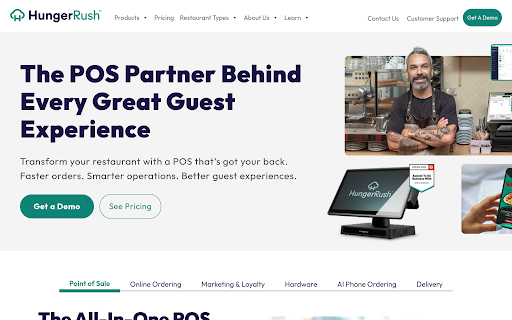
How Does HungerRush Operate?
HungerRush has been in the restaurant technology space since 2003, and their flagship product, HungerRush 360, brings together digital ordering, delivery, customer engagement, restaurant management, and payment processing in one platform. They also run Menufy, an online ordering tool with built-in features that rival some of the best online reputation management companies, plus OrderAI Text, which lets customers place orders by text message without downloading an app. They process $5 billion in monthly pizza sales, so the transaction volume experience is clearly there.
Why Is HungerRush a Contender for POS Systems?
Quick-service cafes dealing with high takeaway volume need a platform that won't buckle under pressure, and HungerRush has built its entire product around exactly that demand profile. The Grubhub partnership and their established relationships with major fast-casual brands give operators confidence that the delivery-side connections are road-tested, not experimental.
From the User Reviews:
Operators running high-volume takeaway operations tend to highlight the digital ordering side as the strongest piece of the platform. The text-to-order feature generates genuine enthusiasm from users who see it reduce friction for repeat customers. A few reviewers note that the platform feels more suited to pizza and fast-casual than to specialty cafe formats, which is worth keeping in mind.
The Process Behind This Ranking
Gathering Your Baseline Data
The starting point was building a broad list of POS platforms relevant to cafe and takeaway operations. Software directories, food-and-beverage industry publications, and community forums were all sourced to identify platforms with meaningful traction in this space. The goal at this stage was breadth, pulling in well-known names alongside platforms that appear frequently in peer recommendations but don't always make the mainstream shortlists.
Pre-Verification Phase
Once the initial list was in place, platforms without verifiable market presence were removed. This meant looking at review volume across multiple platforms, checking whether the company had consistent documentation of its features, and assessing whether the merchant base described in company materials matched what actual users were reporting. Patterns in review sentiment were analyzed, including what operators praised and where they flagged frustration.
The Verification Phase
Each platform that passed the pre-verification step was then cross-checked more thoroughly. Claims made on official product pages were compared against what users described in real-world reviews and case studies. If a platform claimed strong offline functionality but user reviews consistently described connection-dependent failures, that discrepancy was weighted in the evaluation. Real-world results carried more weight than marketing copy throughout this phase.
Tracking Authority Markers
Beyond reviews and feature verification, attention was paid to third-party signals of credibility. Industry awards, mentions in trade publications, and evidence of original research or proprietary tools were all factored in. Platforms that had earned formal recognition (like Epos Now's UK Tech 100 ranking or Loyverse's consistent placement on major review platform award lists) received additional weight because those signals are harder to manufacture than self-reported metrics.
Evidence Specific to POS Systems
The final filter focused on how well each platform addresses the real challenges of cafe and takeaway operations. Dedicated service pages covering restaurant or cafe POS use cases, verified reviews from food-and-beverage operators, and case studies showing measurable outcomes in similar environments were all treated as strong supporting evidence. Platforms that covered these bases clearly made the final five. Those that couldn't demonstrate relevance to the cafe and quick-service context, even if they were strong general POS tools, didn't make the cut.
How to Pick Your Best Match
Choosing the right POS system for a takeaway cafe comes down to a few practical filters. Not every platform suits every operation, so narrowing by fit matters more than chasing the most feature-rich option.
- Industry/Domain Experience: Look for platforms with a documented history in food-and-beverage or quick-service environments. General retail experience doesn't always translate to the pace of a cafe counter.
- Features and Service Options: Prioritize offline functionality, delivery platform connections, and multi-payment method support. These aren't nice-to-haves for takeaway; they're operational requirements.
- Pricing Structure: Factor in the total cost: hardware, monthly software fees, and per-transaction rates together. A low monthly fee can get expensive fast if the processing rates are high-volume killers.
- Results Measurement: Ask how the platform reports transaction processing speed and system availability. Platforms that surface this data clearly make it easier to catch problems before they cost you and your customers.
- Industry Knowledge and Compliance: PCI DSS compliance isn't optional. Confirm that the platform handles this natively and can walk you through what's covered versus what falls on the operator.
Closing Thoughts
The best POS systems for takeaway cafes aren't necessarily the biggest or the most feature-packed. They're the ones that match the actual pace and demands of the operation. Transaction speed, offline reliability, delivery platform connections, and transparent pricing are what separate a good fit from a frustrating one.
As takeaway volume keeps growing and customer payment habits keep shifting toward contactless and mobile, the right system now becomes a genuine long-term asset rather than just a transactional tool.

- The Niche E-Commerce Playbook: How Specialist Brands Build an Audience Online - September 25, 2026
- Kindle Publishing Income Review: Is Sophie Howard Legit? - September 23, 2026
- 7 Figure Accelerator Review: Is Philip Johansen Legit? - September 21, 2026