Hey, Drew here. Welcome to my FBA Launch Club review. This one's a little different from my usual course breakdowns. The program I sat down to review turned out to be a rebrand of an older one, and that older one is now a dead website.
FBA Launch Club is Kevin Pak's Amazon private-label coaching program, and it's the direct successor to his old course, FBA Boss Academy, which quietly shut down in 2025. It's application-only, the pricing isn't published anywhere, and it promises 1-on-1 coaching until you're profitable. Whether it's worth your money comes down to how much capital you can afford to risk and how comfortable you are buying into a program with a complicated history.
I've reviewed a lot of "make money on Amazon" programs over the years, so I went digging through the sales page, the old Boss Academy reviews, Trustpilot, and a stack of video reviews. What follows is the full picture.
💡 FBA Needs Real Capital. Here's a Lower-Risk Way to Start.
FBA Launch Club is built around Amazon private label, which means paying for inventory, shipping, and ads before you see a dollar back, usually $5,000 to $10,000 on top of the program fee. If you don't have that kind of money to risk yet, there are leaner ways to start building online income in 2026. I break down five of them, all powered by AI, in my guide on how to make money online with AI.
Jump to the lower-risk alternative below, or keep reading for the full FBA Launch Club review.
⭐ FBA Launch Club Rating: 3 out of 5
I give FBA Launch Club a 3 out of 5. There's a real program here with real coaches and some genuinely positive early reviews, and I like that they're upfront about it taking time. What holds it back is the hidden pricing, the heavy capital you need on top of the fee, and the baggage from its previous life as FBA Boss Academy. It's a legitimate program, but not an easy yes for beginners.
What Is FBA Launch Club?
FBA Launch Club is an application-only coaching program that teaches you how to build an Amazon private-label brand, founded by Amazon seller Kevin Pak. Instead of handing you a video course and leaving you to it, the pitch is hands-on help: 1-on-1 coaching, done-with-you support, and access to a team of Amazon sellers until your business is profitable.
The sales page leans hard on one line: this isn't another Amazon course. The model runs on applying, getting on a strategy call, launching your first product with a coach, then scaling. They also push an AI angle, saying they use AI to speed up product research, listing optimization, and launch strategy so you move faster than the competition.
The headline numbers are big. The site claims over $25 million in tracked client sales and 500+ clients doing more than $20,000 a month. Hold onto that $25 million figure, because as you'll see in a minute, it has a bit of a history.
If private label is new to you, it works like this: you find a product, put your own brand on it, ship it to Amazon's warehouses, and Amazon handles storage and delivery. You make money on the margin between what the product costs you and what it sells for, after Amazon takes its cut.
Who Is Kevin Pak?
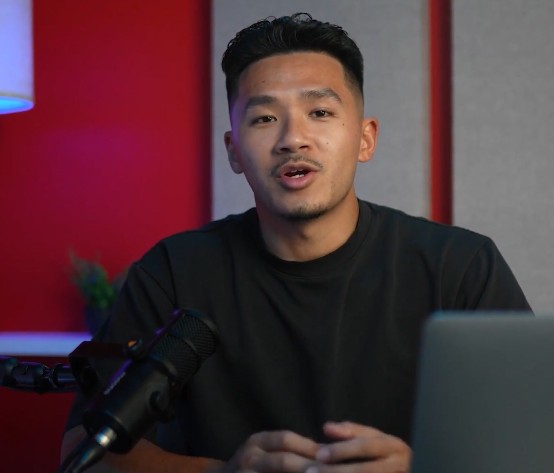
Kevin Pak is an Amazon FBA seller and YouTuber who built his following teaching private label, and he's the founder of FBA Launch Club. Before Amazon, he worked as a fitness coach and bodybuilder, earning around $4,000 a month for long hours.
His origin story is a familiar one in this space. After reading Robert Kiyosaki's Rich Dad Poor Dad, he started hunting for a way out of trading hours for dollars, landed on Amazon FBA, and took a course from Tanner J. Fox to learn it. His first product reportedly started with about $3,000 in capital. It flopped, but he stuck with it and later pulled in six figures in revenue.
Today he runs his coaching business alongside a sizable YouTube presence built on Amazon tutorials. He's a real seller, which matters when you're sorting the legit operators from the pure hype merchants. Kevin can clearly sell on Amazon. Whether his program is the best use of your money is a separate question, and that's what the rest of this review is about.
What Happened to FBA Boss Academy?
FBA Boss Academy was Kevin Pak's original Amazon course, and it shut down in 2025 and was rebranded as FBA Launch Club. If you visit the old fbabossacademy.com today, you won't find a course. You'll find a bare WordPress site with a single default "Hello world!" post dated August 2025. The lights are off.
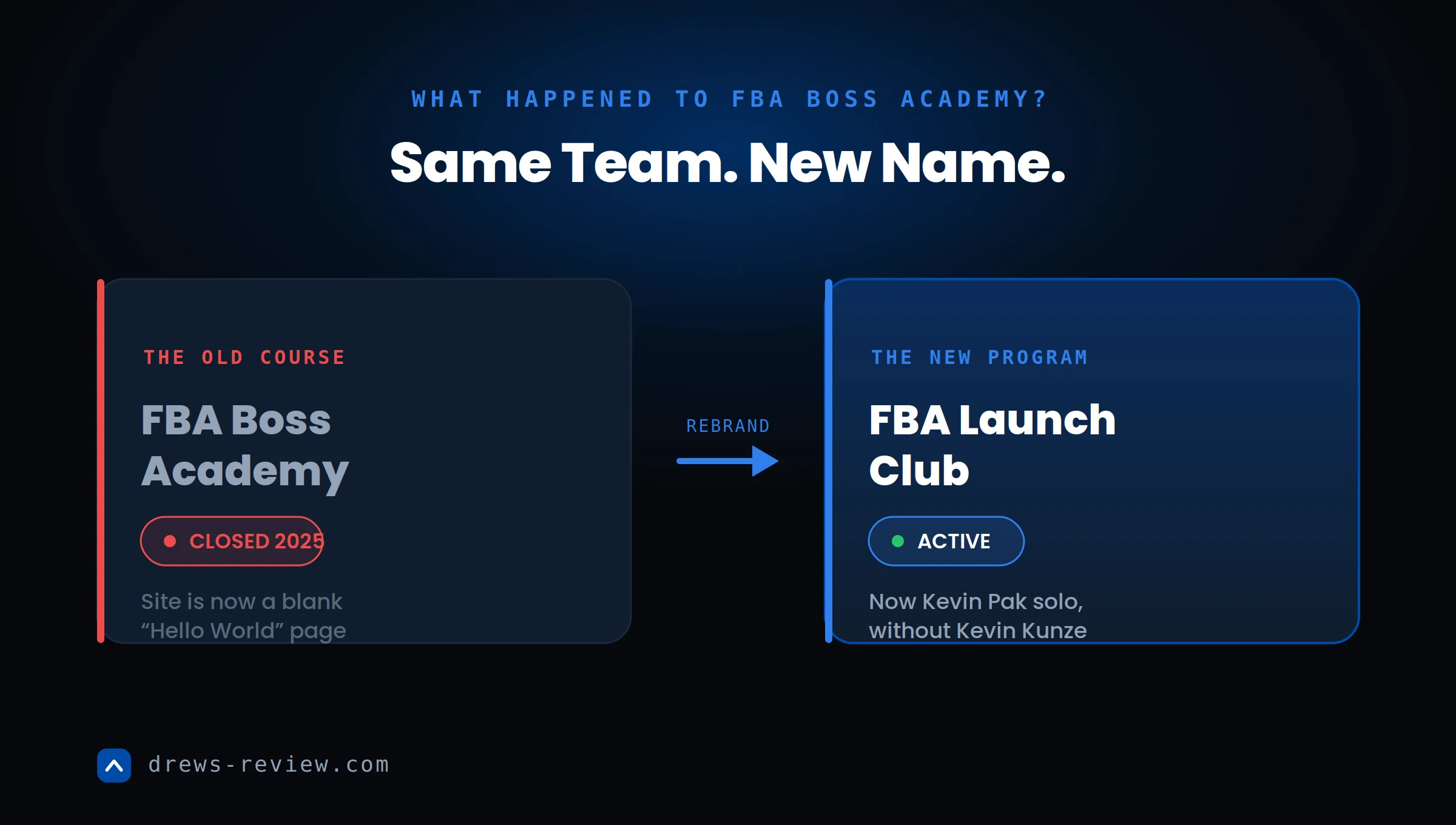
This isn't guesswork on my part. The rebrand shows up in the plumbing. The program's listings on Whop and Podia, the platforms that host this kind of course, still describe the operation as FBA Boss Academy even under the FBA Launch Club name. The Launch Club terms-of-service page went live around July 2025, right before the old site went dark. It's the same operation with a new name.
One big change came with the rebrand: Kevin Pak is now running this solo. Boss Academy was marketed as a two-founder operation with Kevin Pak and Kevin Kunze. By the end, reviewers reported that Kunze had no real involvement in the course or the group, and there was a public falling-out between Pak and a former partner that got picked apart on TikTok. The Launch Club team page doesn't mention Kunze at all.
I keep an eye on this pattern, because courses in the make-money-online world close and reopen under new names constantly. If you want to see how common it is, here's my running list of online business courses that have shut down.
About That $25 Million Claim
One thing made me raise an eyebrow. The $25 million figure that now headlines FBA Launch Club as "tracked client sales" hasn't always belonged to the clients.
In older reviews and videos, that same $25 million a year was described as Kevin Kunze's personal Amazon sales. Other coverage pinned $25 million on Kevin Pak's own accounts. Now, on the Launch Club site, it's reframed as the collective sales of students. The number hasn't changed, but its owner has, moving from one founder's personal revenue, to the other's, to "our clients." When a flagship statistic quietly changes owners depending on who's telling the story, I'd take it with a grain of salt.
The Complaints That Trailed Boss Academy
Boss Academy left behind a messy review trail, and it's worth knowing before you buy the new version. On Trustpilot, Boss Academy racked up around 170 reviews, and the critical ones are specific.
Reviewers described a heavily moderated Facebook group where critical questions didn't get posted and pushback got met with defensiveness. Several complained about ongoing upsells and, more seriously, about losing real money: buying inventory that didn't sell, then bleeding cash on ads. One detailed review claimed the glowing ratings were incentivized, with students offered discounted "product selection" in exchange for positive reviews. Another described a bullying tone from coaches in private messages.
There was also the now-infamous energy drink. The team launched a product called Driven Energy on TikTok and, by one reviewer's account, sold only 83 units despite large social followings. Not exactly a confidence-builder from a program teaching you how to launch products.
To be fair, I can't confirm how much of this carried into FBA Launch Club, which is a fresh entity with its own much smaller review history. But the people running it are the same, so these are fair questions to raise on your strategy call.
What Do You Get With FBA Launch Club?
FBA Launch Club gives you 1-on-1 coaching, access to a team of Amazon sellers, a launch framework, and done-with-you support across product research, listings, and ads. The core promise is help until you're profitable, rather than a pile of videos you watch alone.
The program runs in four steps. You fill out an application, hop on a strategy call where they map out a plan, launch your first product with a coach guiding you, then work on scaling once you're making money. They cap how many clients they take each month, which is either genuine quality control or standard scarcity marketing, depending on how cynical you're feeling that day.
Who You'll Actually Work With
The team is Kevin Pak plus four coaches. Kevin handles the overall strategy and the offer side. A coach named JJ is presented as having built a seven-figure Amazon brand with a 90%+ product success rate. Rob focuses on ads and cutting wasted PPC spend. Daniel covers sourcing and listings. Kevin C rounds it out on product research and supplier negotiations.
Access to experienced coaches is the real selling point here, and it's what you're paying a premium for. A good coach who has launched real products can save you from expensive beginner mistakes. Just know that in the Boss Academy days, some reviewers said the day-to-day help came from ex-students rather than the founders, so it's worth asking exactly who will be answering your questions.
How Much Does FBA Launch Club Cost?
FBA Launch Club doesn't publish its price anywhere. You only find out after applying and getting on a call. That alone tells you it isn't cheap, because programs confident about an accessible price usually put it right on the page.
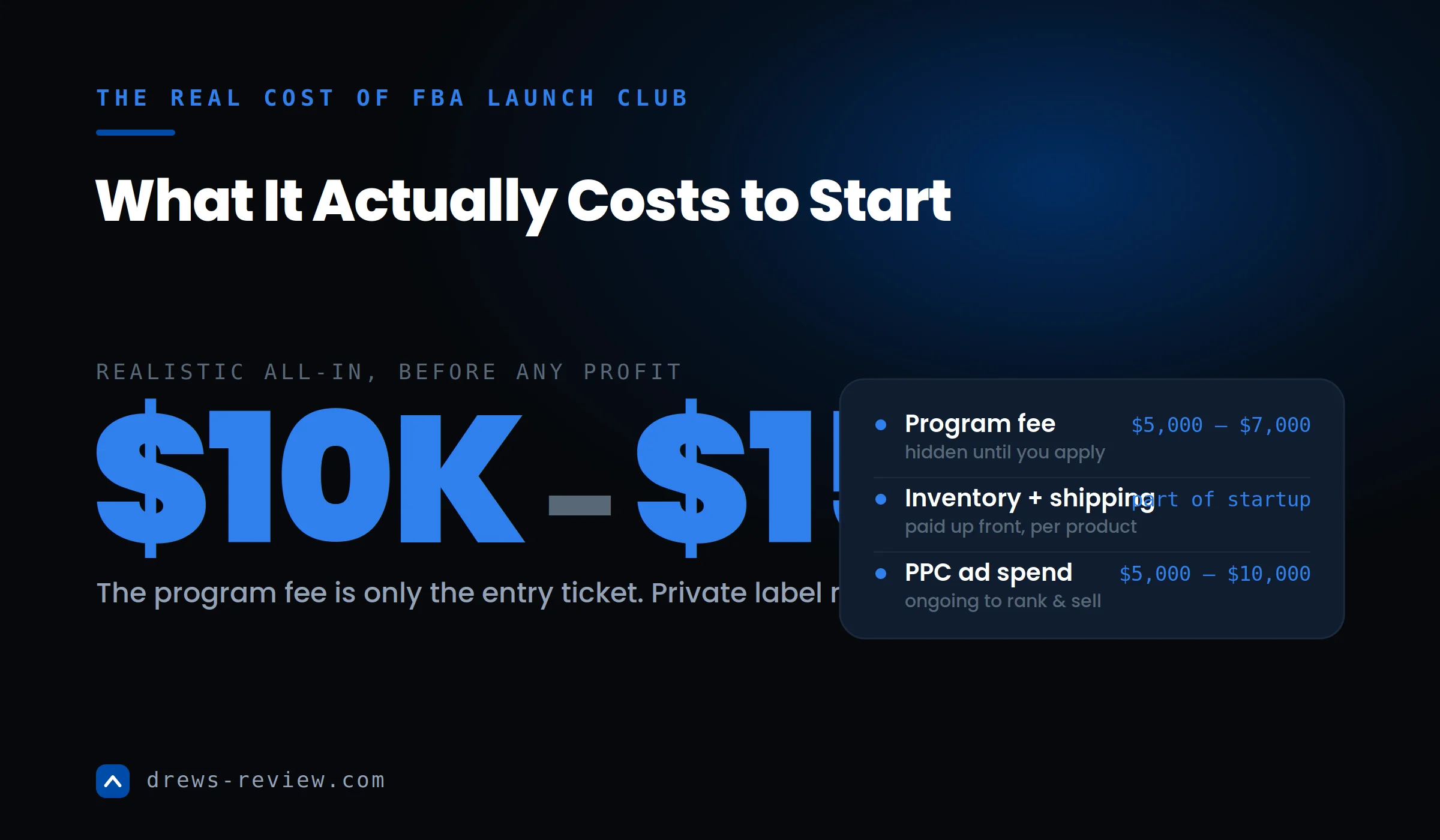
For a reference point, the old FBA Boss Academy reportedly ran around $5,000, and as high as $7,000 depending on the student, with different people paying different amounts. Since Launch Club is the same operation, I'd expect a similar ballpark, though I can't confirm an exact figure. The old program's refund policy was also conditional and short, around 14 days, so read the fine print carefully before you pay anything.
One part catches beginners off guard every time, and I say this in every Amazon review I write: the program fee is just the entry ticket. Private label means paying upfront for inventory and shipping, then funding pay-per-click ads to get seen. Realistically you're looking at another $5,000 to $10,000 before your business turns a profit, and there's no guarantee it will.
That combination of a five-figure all-in cost, no published price, and no guarantee is exactly why I steer beginners toward lower-risk starting points first. If you want to build income online without sinking your savings into inventory and ad spend, grab my free guide: Want to Build a $10K/Month AI Business Without a Team or Paid Ads? It's a very different route to the same destination.
What Are People Saying About FBA Launch Club?
FBA Launch Club currently sits at about 4 out of 5 on Trustpilot, but across only 14 reviews, so the sample is small and the program is new. The reviews that are there skew positive and hit the same themes: responsive 1-on-1 chat, helpful coaching calls, and coaches who actually reply quickly.
What I appreciated is that some reviewers were honest about the timeline. One described being a full year in, launching their fourth product before finally landing a winner, and only then climbing toward $30,000 months. They made a point that the program doesn't sell overnight success. That's a refreshingly real account in a niche stuffed with "I made $10k in my first week" nonsense.
Still, 14 reviews isn't much to go on, and given the Boss Academy history of allegedly incentivized reviews, I'd treat a brand-new stack of five-star ratings with healthy caution. Read them, but weight them lightly until the program has a longer track record under its new name.
Is Amazon FBA Private Label Still Worth It in 2026?
Amazon private label can still be profitable in 2026, but it's harder and more expensive than the sales videos let on. This matters more than any single course review, because the business model itself is what you're actually betting on.
A few headwinds are worth understanding. Amazon's seller fees have crept up over the years, and the referral fee alone takes roughly 15% of each sale in most categories (you can check the current numbers on Amazon's own fee schedule). Competition is fierce, with a flood of new sellers joining constantly, many of them sourcing from the same suppliers. Amazon also sells its own private-label products, which compete directly with yours. Add rising shipping costs and overseas sellers moving into FBA, and margins get squeezed from every side.
Then there's the margin gap. Programs in this space often dangle 30 to 45% profit margins, but real private-label margins usually land closer to 10 to 20% once fees, ads, and returns are counted. Going in expecting the high number and budgeting for it is how people end up underfunded and quitting. None of this makes FBA a scam. It's a real business with real risk, and it takes the same work any real business does.
A Lower-Risk Alternative: Start With AI for $47
If the five-figure all-in cost of FBA Launch Club made you wince, you're not alone, and there are cheaper ways to start building online income in 2026.
This is the honest pitch for my own course, so take it for what it is. FBA Launch Club asks you to risk thousands on inventory and ads before you know whether it'll work. My 2026 AI Business Blueprint takes the opposite approach. It's $47 one-time and walks you through five business models you can start lean using AI, including AI e-commerce, faceless YouTube, AI freelancing, and affiliate marketing. No inventory to buy, no ad budget required to begin.
I'm not saying AI beats a well-run Amazon brand at scale. A profitable private-label business is a real asset. I'm saying that if you're a beginner deciding where to put your first dollars, starting with something that doesn't demand $10,000 of risk capital is the smarter first move. You can always graduate to FBA later, once you've got some income and confidence behind you.
The Pros and Cons of FBA Launch Club
What I like: You get real 1-on-1 coaching from people who've actually sold on Amazon, which beats watching videos alone. The early Trustpilot reviews are positive and, importantly, honest about the long timeline. Kevin Pak is a genuine seller with a real track record. And the AI-assisted product research angle is at least a nod toward how much the game has changed.
What I don't like: The pricing is hidden behind an application, which I never love. The all-in cost with inventory and ads pushes this into five-figure territory with no guarantee of results. It carries real baggage from FBA Boss Academy, including complaints about heavy moderation, upsells, incentivized reviews, and members losing money. The flagship $25 million claim has changed owners more than once. And the review history under the new name is still thin.
Is FBA Launch Club a Scam or Legit?
FBA Launch Club is not a scam. There's a real coaching program, real coaches with Amazon experience, and real (if few) positive reviews from students. You get access to people and support in exchange for your money, which is a legitimate transaction.
But being legitimate and being worth it for you are two separate questions. A program can be completely legitimate and still be the wrong place to spend $5,000, plus another five figures on inventory, especially if you're a beginner who can't comfortably afford to lose that money. Judge it on fit and value. It's a legitimate program, so the scam question isn't really the one that matters here.
Final Verdict: Is FBA Launch Club Worth It?
FBA Launch Club is worth considering only if you've got real capital to risk, you specifically want Amazon private label, and you value hand-holding enough to pay a premium for it. For everyone else, I'd pump the brakes.
My honest take after digging in: the coaching is real and some students are clearly winning. But the hidden pricing, the five-figure all-in cost, the unproven track record under the new name, and the complicated history of its predecessor add up to a lot of "proceed with caution" for the average beginner. If you can afford to lose $10,000 to $15,000 and treat it as a business investment with no guarantees, and you go in clear-eyed about the Boss Academy history, it could work for you.
If that number makes your stomach drop, start somewhere lower-risk and build up to it. Whatever you decide, get on that strategy call armed with questions: about the exact price, the refund terms, who's really doing the coaching, and how their average student (not their best one) is actually doing.
You Might Also Find This Useful
Before you commit to any Amazon program, it pays to compare your options. I've put together a roundup of the best Amazon FBA courses if you want to see how Launch Club stacks up against vetted alternatives. And if you're set on private label specifically, my Private Label Masters review covers another program in the same model, so you can compare coaching styles and pricing before spending a cent.
Frequently Asked Questions
What is FBA Launch Club?
FBA Launch Club is an application-only Amazon private-label coaching program founded by Kevin Pak. It offers 1-on-1 coaching, a team of Amazon sellers, and done-with-you support to help you launch and scale a private-label brand. It's the rebranded successor to Pak's earlier course, FBA Boss Academy.
Is FBA Launch Club the same as FBA Boss Academy?
Yes, in practice. FBA Launch Club is the rebrand of FBA Boss Academy, which shut down in 2025. The backend course platforms still reference FBA Boss Academy under the Launch Club name. The main difference is that Kevin Pak now runs it solo, without former co-founder Kevin Kunze.
How much does FBA Launch Club cost?
FBA Launch Club doesn't publish its price. You have to apply and get on a call to find out. The old FBA Boss Academy reportedly cost around $5,000 to $7,000, so expect a similar range. On top of the fee, budget another $5,000 to $10,000 for inventory, shipping, and ads.
Is FBA Launch Club a scam?
No, FBA Launch Club is not a scam. It's a real coaching program with real coaches and legitimate (if limited) positive reviews. Whether it's worth the money is a separate question that depends on your budget and goals. The high cost and hidden pricing are reasons for caution, not signs of fraud.
Can I start an online business without spending thousands?
Yes. Amazon private label is capital-heavy, but plenty of online business models aren't. My 2026 AI Business Blueprint covers five lower-cost models, including AI e-commerce and affiliate marketing, that you can start for $47 instead of risking five figures on inventory and ads. It's a better fit for most beginners testing the waters.
Who is Kevin Pak?
Kevin Pak is an Amazon FBA seller and YouTuber, and the founder of FBA Launch Club. He's a former fitness coach who learned Amazon private label, built a six-figure business, and now teaches it through coaching and his YouTube channel.

- Fast-growing E-commerce Sellers Are Overhauling Fulfillment Hubs To Keep Up With Orders - October 16, 2026
- Ad Network Marketing Myths That Can Lead to Poor Campaign Decisions - October 13, 2026
- Dropship Breakthru Review: Price, Guarantees, Fine Print - October 11, 2026