That’s roughly $1,000 to $9,000, with payment plans available.
I’m not a customer of his program. I joined his free Skool community, got his emails, and attended his workshop from start to finish. Everything below comes from that workshop, (and other workshops I attended) his public channels, or his earlier company’s review profile, and I’ll say which is which.
I also run a faceless YouTube channel myself, so I’ll tell you where I think he’s right, and he’s right about more than you’d expect.
📌 The Short Version
Steffen Miro is a 24-year-old creator from Namibia who runs faceless YouTube channels and sells coaching through a program called Freedom Channels Elite. He markets through free YouTube videos, a free five-hour course, a free Skool community, and a two-hour live workshop that ends in a pitch. The price is never published, but he states the range in the workshop. The guarantee promises continued coaching rather than a refund. The teaching in the first hour is solid. The Q&A includes tactics that sit against YouTube’s terms, which is the part worth reading carefully.
⭐ Steffen Miro Rating: 2.5/5
I give Steffen Miro’s program a 2.5 out of 5.
The teaching portion of his workshop is better than I expected. His niche research framework is specific and sensible, his packaging advice is correct, and he’s accurate about a YouTube policy change that most people selling in this space haven’t mentioned.
What pulls the score down is everything around it. The price is hidden until you’re on a call. The guarantee pays in more coaching, not money back. The scarcity in the pitch doesn’t hold up against his own words. And the Q&A recommends channel and account tactics that could put a beginner’s channel at risk.
Who Is Steffen Miro?
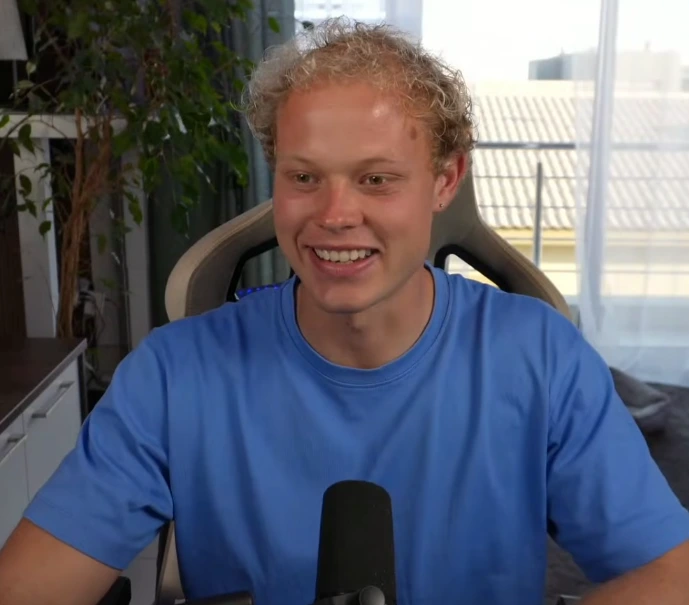
Steffen Miro is a 24-year-old faceless YouTube creator from Namibia who now sells coaching on the model. He says he started posting to YouTube at 12, which makes 2026 his twelfth year on the platform.
His backstory, as he tells it in the workshop, is specific enough to be credible. His parents divorced, he wanted to help his mother financially, and in Namibia, where he says most people are skeptical about online businesses, he nearly got kicked out of school over his YouTube posting. He describes trying dropshipping, trading, and affiliate marketing before seeing a faceless video with 37 million views and deciding that was the model.
What he claims to earn: over $500,000 from faceless channels to date, with one channel bringing in more than $140,000 in 2025. He says his family now runs channels too, and that he’s coached over 150 people directly.
None of that is independently verified, which is normal in this industry and worth stating plainly.
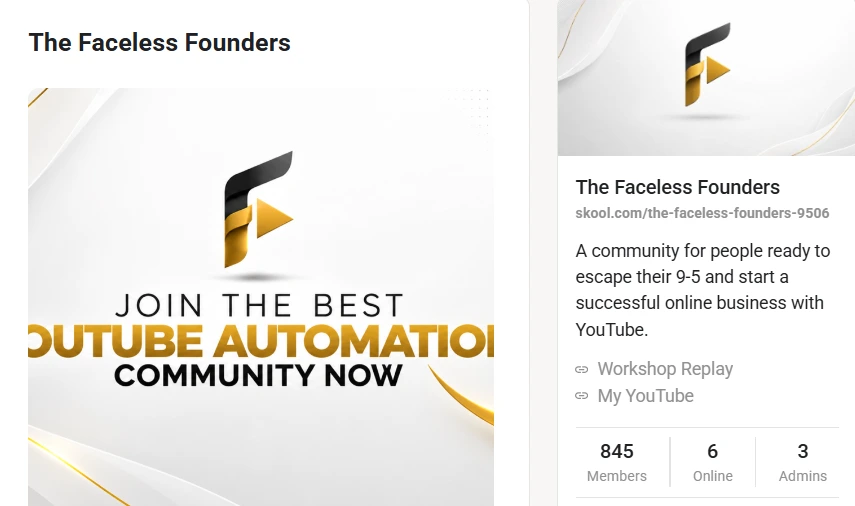
His public footprint: about 23,000 subscribers on his main channel, a second channel at roughly 5,300, and a free Skool community with around 845 members at the time of this writing.
What Is Freedom Channels Elite?
Freedom Channels Elite is Steffen Miro’s coaching program, promising to take you from zero to a monetized faceless YouTube channel within 90 days. He says he created it a little over a year ago.
From his workshop presentation, it includes a step-by-step video roadmap he says he refilmed twice in 2026, with the latest version recorded about two weeks before the workshop I attended. You get an assigned one-to-one success team, one-to-one calls with him personally, two weekly group calls he hosts, an archive of past calls, and a private community.
The bonuses he presents are extensive, and he puts their combined value at roughly $9,000: done-for-you niche selection and validation, a vetted freelancer pool, an AI chatbot trained on his program, a free pre-monetized channel, channel setup and shadowban avoidance, a team delegation playbook, a monetization and ad placement protocol, an AI channel minicourse, and one-to-one WhatsApp support with him.
I’ll come back to that pre-monetized channel, because it’s the part that needs the most thought.
How Much Does Steffen Miro’s Coaching Cost?
In his workshop, Steffen states the range himself: “We have multiple programs and different price points, from low four figures to higher four figures, depending on the speed and level of support you want to move with.” That means roughly $1,000 at the entry level and up to around $9,000 at the top.
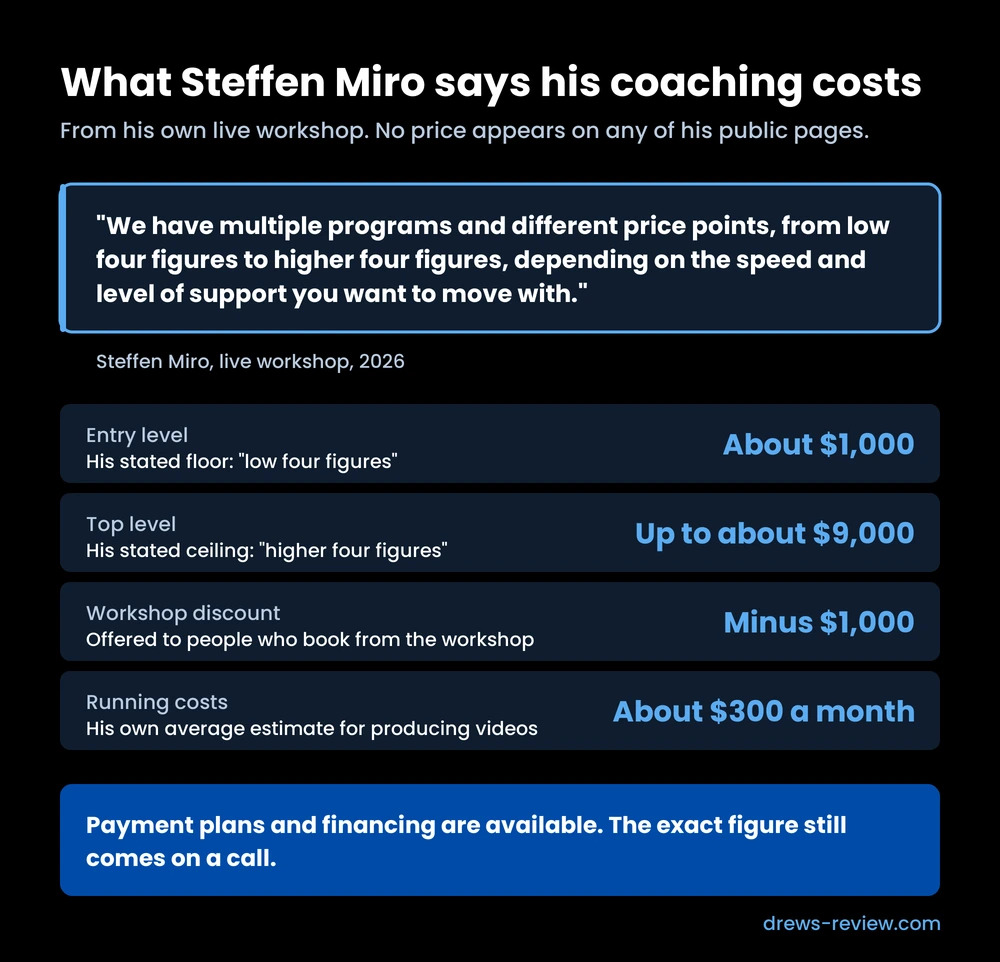
He confirms payment plans and financing are available, and he’s direct about who it isn’t for, saying the program isn’t suitable for “people who have less than four figures in USD to invest into their education.”
He also offers a $1,000 discount to people who book from the workshop, describing it as something he’s never done before.
The exact figure still comes on a call. When asked about price directly during the Q&A, he repeats the range and says it depends on your situation, your goals, and the speed you want to move at.
So if you’re considering this, know two things going in. The entry point is at least four figures, and you’ll learn your specific number from a salesperson or from him, after an application.
What Does the Guarantee Actually Cover?
The guarantee promises more coaching, not your money back. In his words: if you join, show up, put in the work, and aren’t monetized within 90 days of one-to-one coaching, “we will coach you one-on-one at no extra cost until you are.”
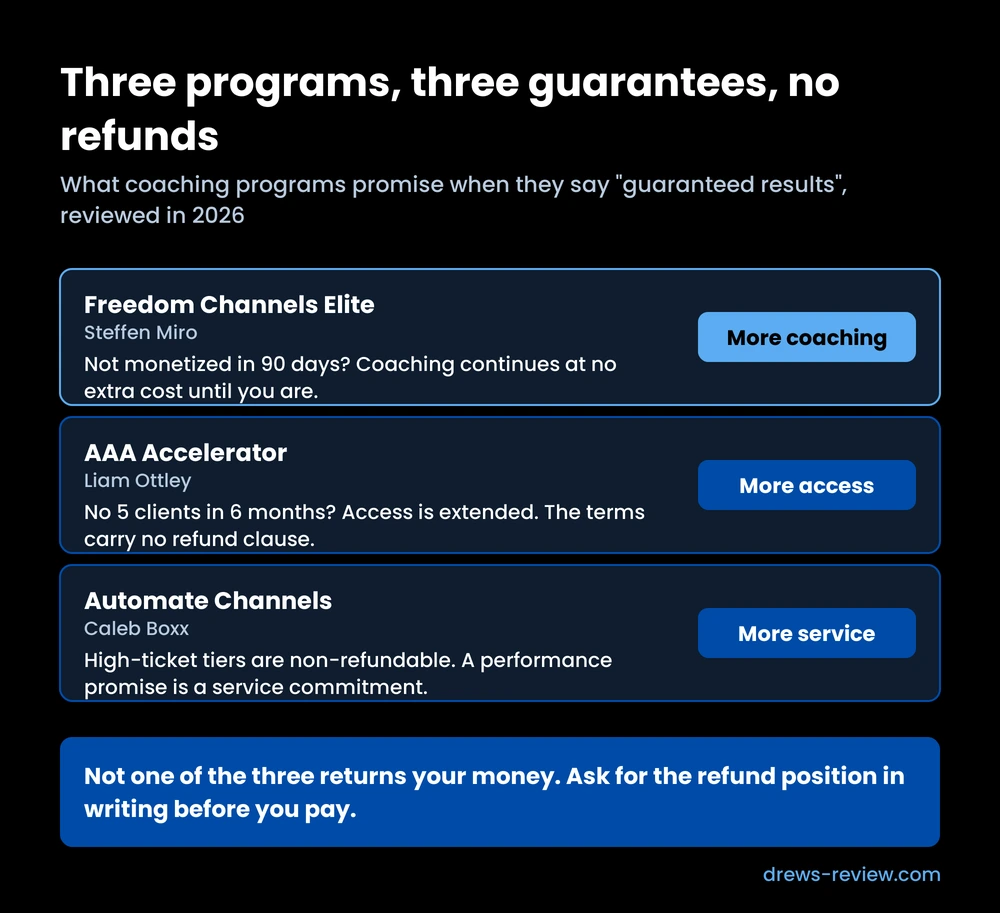
He says this is backed by a signed client agreement, and repeats several times that results are guaranteed.
Read it carefully, because the distinction matters. If the program doesn’t work for you, what you receive is more time with the program. There’s no refund described anywhere in the workshop, and no refund terms are published on any of his public pages.
This is a pattern, not a one-off. I’ve reviewed two other coaching programs this year whose guarantees work exactly the same way, promising continued service rather than a refund. It’s becoming the standard structure in this industry, and buyers should know what they’re actually being offered.
Before paying anything, get the agreement in writing and ask one direct question: under what circumstances, if any, do I get money back?
Is the Free Workshop Worth Attending?
Yes, and that’s a genuine compliment. The first hour contains real teaching, and if you’re curious about faceless YouTube, you’ll learn something before the pitch starts.
He builds it around three pillars.
Niche selection, which he treats as the single most important decision. His criteria are specific: find faceless channels under 100,000 subscribers, started in the last one to six months, with at least one long-form video over 100,000 views, growing consistently rather than one viral fluke, producible with stock footage and an AI voice, and ideally with a US audience because the ad rates are higher. He recommends building a fresh YouTube account and training the recommendation feed to surface candidates.
That framework is sound. It’s close to how I’d approach it myself, and it’s more concrete than most free content on the topic.
Packaging, meaning titles and thumbnails. His advice is to keep titles broad rather than niche, stay under 60 characters, and keep thumbnails to two or three focal points. He uses a good example: a video titled around Mount Everest outperforming a near-identical video named after a person most viewers wouldn’t recognize. That’s correct, and it’s the mistake I see most often.
AI and delegation, where he recommends using AI for scripts with a specific prompt structure, AI voice tools, and hiring editors from Discord communities rather than freelance marketplaces. He puts video production cost at $20 to $30 each.
He’s also honest about limits in places. He says AI is a tool and not a magic button, warns against producing what he calls AI slop because YouTube doesn’t reward it, and tells attendees directly that quality matters less than niche, topic, and packaging. He also says plainly that some students take longer than others and that he can’t help people who quit.
Is He Right About the February 2027 Change?
Yes, and this is the most useful thing in the workshop. He tells attendees that YouTube is doubling the watch time requirement in February 2027, and that this makes starting now better than waiting until January.
That checks out. YouTube announced on August 10, 2026 that new Partner Program applicants will need 8,000 qualified watch hours in the previous 365 days from February 1, 2027, up from 4,000. The Shorts path doubles too, from 10 million to 20 million qualified views in 90 days. The 1,000-subscriber requirement doesn’t change, and creators already in the program are unaffected.
So the urgency is real rather than manufactured. If you’re planning to start a channel and monetize it, the bar genuinely gets twice as high in February.
I’ve covered what this means for the model in more detail in my piece on whether YouTube automation is worth it.
The Q&A: What He Recommends, and What YouTube’s Rules Say
This is the section I’d want a beginner to read twice. In the Q&A at the end of the workshop, the advice moves from content strategy into account mechanics, and some of it sits against platform rules.
On pre-monetized channels. A free pre-monetized channel is listed as bonus number four. Asked about it, he says they use them “only for trends,” not for building long-term channels, and cites making $90,000 in one month from two pre-monetized political channels in 2024. Asked whether AdSense transfers with a sold channel, he says no, and that you connect your own AdSense account instead.
What the rules say: buying or selling a channel isn’t illegal, but it conflicts with YouTube’s terms, which prohibit selling access to the service. Google’s AdSense terms don’t permit account ownership transfers at all, which is why the AdSense has to be swapped. Channels that change hands can be acted on by the platform at any time.
On phone verification. Asked how he verifies accounts, he names a virtual number service and says to use it for verifying YouTube channels, while warning against using those numbers for the Google account itself. He also recommends separate Google accounts and emails for each channel, and says proxies aren’t necessary.
What the rules say: Google limits how many channels a single phone number can verify, typically two per year, which is the reason these services exist. Using them to work around that limit puts the account at risk if Google’s security filters flag it.
On business structure, he recommends one LLC per channel to keep things separate. For someone running several channels, that’s a meaningful recurring cost and more complexity than most beginners need.
How I’d read all of this. None of it is illegal, and he isn’t hiding it, since it came up openly in a free workshop. But a beginner following this advice could build their business on an account footing that YouTube can act against, and that risk sits entirely with the student rather than the coach. If you join, ask what happens to your channel, and your fee, if an account gets actioned.
How Does the Pitch Work?
The workshop runs two hours, with roughly the first hour teaching and the rest selling. That’s a normal structure, and the pressure in the second half is worth knowing about before you attend.
After the offer opens, he directs attendees to book a call more than fifteen times. He frames the WhatsApp support and the discount as things he’ll never offer again, saying “this is probably going to be the last ever time I will be doing this.”
The scarcity doesn’t entirely hold up. He tells attendees the calendar is almost full and that spots fill extremely fast. Later in the same session, he says: “Tuesday is still empty. I don’t know why nobody wants to book for Tuesday. Wednesday is booked out, Monday is booked out, Tuesday has some open spots, so I don’t know what’s going on.”
Both statements are in the same workshop, about twenty minutes apart. Treat the urgency accordingly.
One thing I’ll credit him for: he tells attendees directly that nobody will force them to buy on the call, and that his team will only make an offer if it makes sense. He also repeats that the program isn’t for people without four figures to invest.
What Do His Students Say?
There’s very little independent feedback, and what exists is from an earlier brand. His previous program, YTA University, has a Trustpilot profile with 21 reviews, all of them five-star and all from around September 2023. One Trustpilot page now lists that profile as inactive.
I couldn’t find current reviews for Freedom Channels Elite on Trustpilot, the BBB, or Reddit. For a program selling at four figures, that’s a thin public record.
What you get instead is testimonials he presents himself, and there are many: a student at $30,000 a month who later reports $50,000 to $60,000, another at $60,000 a month across three channels, one who monetized two channels in 10 days, another in 13 days, and a 62-year-old student making around $10,000 a month. He says students average monetization in three to six weeks.
He does add that not all students perform like the examples, and he says outright that he doesn’t track an overall success rate, explaining that people who quit make the number meaningless.
That answer is honest in one sense and unsatisfying in another. The students who quit are exactly the data a buyer needs.
One More Thing Worth Knowing: The Brand Keeps Changing
In three years he’s run at least three brands. YTA University, which carries his only independent reviews and is now dormant. The Faceless Founders Skool community, which he announced in October 2026 he’s closing. And Freedom Channels Elite, both as the paid program and as the name of the new community replacing it.
When I checked, the old community was still live with 845 members while the new one had 134. That’s a migration in progress rather than a completed move.
None of that is wrongdoing. It’s worth knowing because what you’re buying access to has changed name and location more than once, and anything described as lifetime access should be read against that history.
Does Faceless YouTube Still Work in 2026?
Yes, and it’s harder than it was, for two reasons that both landed this year.
YouTube tightened the rules on mass-produced content. In July 2025 it renamed its repetitious content policy to inauthentic content, covering repetitive or mass-produced output. In January 2026 came the first major enforcement wave, with reports of major faceless channels removed in a single sweep.
Faceless isn’t banned, and AI isn’t banned. What gets demonetized is templated output with no original perspective. Steffen is right when he says AI isn’t banned, though his workshop spends more time on that reassurance than on what the policy actually targets.
And the monetization bar doubles in February. Eight thousand watch hours instead of 4,000 for new applicants.
Together those make the model tougher for beginners than it was even a year ago. It’s still workable, which I know because I run a channel myself, and I’ve written about how I make faceless channels with AI and which niches are worth considering.
What I Like
The free content is substantial. A five-hour course on YouTube, a free community, and a workshop with an hour of real teaching. You can learn a lot from him without paying anything.
His niche framework is specific and usable, with criteria you can apply the same afternoon.
He’s accurate on the February 2027 change, which many people selling in this space still haven’t mentioned.
He states the price range in the workshop rather than hiding it entirely behind the call.
He sets expectations in places, saying results vary, that quitting is the main failure mode, and that the program isn’t for people without four figures.
What I Don’t Like
The exact price still requires a call, and the range spans $1,000 to roughly $9,000.
The guarantee pays in coaching, with no refund described anywhere.
The scarcity contradicts itself within the same workshop.
The Q&A advice puts the account risk on the student, including pre-monetized channels and virtual number verification.
The independent record is almost nonexistent, with 21 reviews from 2023 on a brand he no longer uses.
The brand has moved three times in three years, which makes any long-term access promise hard to evaluate.
The testimonials are outliers presented as the pattern, with no success rate tracked.
Who Is This For?
It suits someone who has already started a faceless channel, has four figures they can afford to lose, and wants direct access to someone who does this daily. The one-to-one element is the real product, and students who use it heavily are the ones reporting results.
Skip it if the fee would be most of your available money. You’d still need a monthly production budget on top, which he puts at around $300 a month on average.
Skip it if you’re not willing to do outreach-level work on your own channel. He says this himself: he can’t help people who quit.
Skip it if you want a refund option. There isn’t one described.
What Are the Alternatives if You’re Starting With Nothing?
Start with his free material before you consider paying him anything. The five-hour course on his channel and the free Skool community cost nothing, and if that content doesn’t get you building, a four-figure program probably won’t either. That’s the honest test, and he deserves credit for making it available.
Then publish something before you buy anything. One channel, a handful of videos, scripts you wrote yourself with AI help. You’ll learn more about whether you can stand this work than any coaching call will tell you, and you’ll find out before you’ve spent four figures.
If you want structure on a budget, here’s where I’m biased, stated plainly. I sell The 2026 AI Business Blueprint for $47. One of its five modules covers faceless YouTube with AI: scripting, voiceovers, thumbnails, and what to outsource versus what to do yourself.
Be clear on what that is and isn’t. It’s a guide, not coaching. There’s no one-to-one call, no assigned success team, no WhatsApp access, and no guarantee that you’ll be monetized. If you want someone reviewing your channel every week and telling you what to fix, a $47 guide is not that, and I’d rather say so than pretend otherwise.

What it does do is let someone with no budget find out whether this business suits them for the price of lunch instead of a month’s rent. If it does suit you, and you later want hands-on coaching, you’ll be a far better judge of whether a four-figure program is worth it than you are today.
My honest advice for a true zero-budget start: use his free course and mine or neither, publish ten videos, and see whether you enjoy it. The people who succeed at this enjoy the work. The ones who don’t, quit, whatever they paid.
Final Thoughts: Is Steffen Miro Legit?
Yes, he’s a real creator teaching a real model, and his free content is worth your time. He’s not inventing a business that doesn’t exist, and he’s more accurate about YouTube’s current rules than most of his competitors.
What I can’t get past is the shape of the offer. A four-figure minimum with the exact number held back for a call. A guarantee that returns coaching rather than money. Urgency that contradicts itself in the same session. Almost no independent feedback from paying customers. And Q&A advice that moves the platform risk onto the student.
If you’re still interested, do four things. Watch the free five-hour course first. Attend a workshop and leave before booking, so you can think without a countdown. If you do book, get the price, the agreement, and the refund position in writing before you decide. And ask directly what happens to your channel and your fee if a pre-monetized channel or a verification method causes a problem.
Drew’s Take: The teaching hour is good and the free material is genuinely useful. The paid offer asks for four figures on terms that protect him more than you. Use what he gives away, publish ten videos, and decide after that.
Frequently Asked Questions
How much does Steffen Miro’s coaching cost?
He states a range of low four figures to high four figures in his workshop, meaning roughly $1,000 to $9,000 depending on the support level. The exact price comes on a call, and payment plans and financing are available.
What is Freedom Channels Elite?
It’s his coaching program, promising a monetized faceless YouTube channel within 90 days, with one-to-one coaching, weekly group calls, a video roadmap, a private community, and bonuses including done-for-you niche selection.
Does Steffen Miro offer refunds?
No refund is described anywhere in his workshop or on his public pages. The guarantee is that if you do the work and aren’t monetized in 90 days, coaching continues at no extra cost until you are.
Is Steffen Miro legit?
Yes, he’s a real creator who runs faceless channels and publishes substantial free training. The concerns are the hidden pricing, the coaching-only guarantee, the lack of independent reviews, and some Q&A advice that conflicts with YouTube’s terms.
Is YouTube really doubling the watch hours in February 2027?
Yes. YouTube announced on August 10, 2026 that new Partner Program applicants will need 8,000 qualified watch hours from February 1, 2027, up from 4,000. Existing partners aren’t affected.
Can you start faceless YouTube with no budget?
Yes, if you write and edit yourself. Production costs come from outsourcing, which is optional at the start. Free training, including Steffen’s own five-hour course, covers the fundamentals.
Is it safe to buy a pre-monetized YouTube channel?
It carries real risk. Channel sales conflict with YouTube’s terms, AdSense accounts can’t be transferred between owners, and a transferred channel can be actioned at any time.

- Steffen Miro Review: What His Coaching Really Costs - November 13, 2026
- Competitor Price Monitoring For Online Stores An Engineer’s Guide - November 11, 2026
- How Local Search Algorithm Changes Impact Niche Businesses - November 10, 2026