Affiliate marketing is one of the most talked-about ways to make money online, but a lot of people still aren't totally clear on what it actually is or how it actually works. I get it — there's a lot of noise out there. This guide cuts through it.
Whether you're completely new or just looking for a clearer picture, I'm going to walk you through everything: what affiliate marketing is, how the mechanics work, the different methods you can use, and what it realistically takes to build income from it. I've been running an affiliate site since 2019, so I'll share what I've learned along the way.
👉 Quick heads-up before you dive in:
The biggest challenge with affiliate marketing in 2026 isn't understanding the fundamentals (I'll cover those below) — it's maintaining the content volume required to actually succeed. SEO needs 2-4 blog posts weekly, YouTube needs 3-5 videos, email marketing needs sequences and broadcasts, social media needs daily posting. That's 20-30 hours of manual content creation per week, which is why 95% of beginners quit in months 3-6.
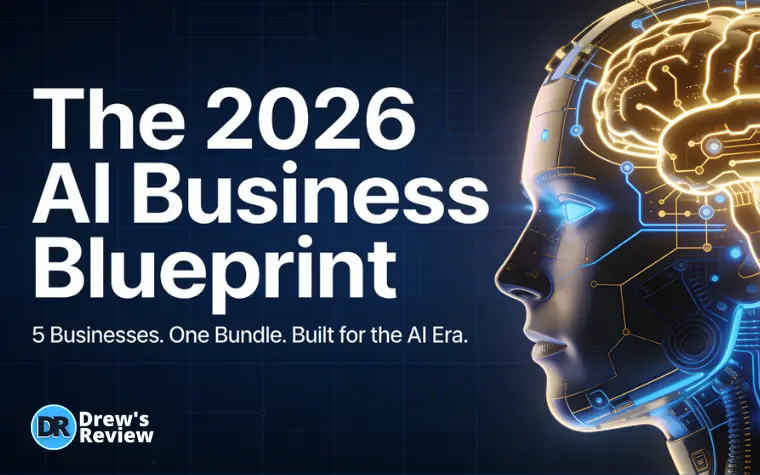
AI tools compress those timelines by 70-80% without sacrificing quality. Product reviews drop from 3 hours to 45 minutes, email sequences from 10 hours to 90 minutes, YouTube scripts from 90 minutes to 10 minutes. The 2026 AI Business Blueprint ($27 one-time) teaches AI workflows for affiliate content creation in Module 1, plus four other business models you can start in 2026. Same fundamentals you'll read below, sustainable execution that doesn't burn you out.
Not ready to commit yet? Grab the free AI Side Hustle Cheat Sheet to see how you can start a profitable affiliate marketing business and have 4 other business model options to choose from.
Now, let's break down exactly how affiliate marketing works.
What Is Affiliate Marketing?
Affiliate marketing is a performance-based model where you earn a commission by promoting someone else's product or service. You place a unique tracking link in your content — when someone clicks it and makes a purchase, you get paid.
You're essentially acting as the middleman between the buyer and the seller. You don't create the product, hold inventory, or deal with customer support. Your job is connecting the right person with the right offer, and the merchant handles everything else.
There are three main players in every affiliate arrangement: the merchant (the product owner), the affiliate (you), and the customer. Many programs also run through affiliate networks — platforms like ShareASale, CJ Affiliate, or Impact that sit between merchants and affiliates and handle tracking, reporting, and payments.
What Are the Benefits of Affiliate Marketing?
The biggest benefit is low startup cost. You don't need to develop a product, manage inventory, or hire staff. You can start with a website, some content, and a free account on an affiliate network.
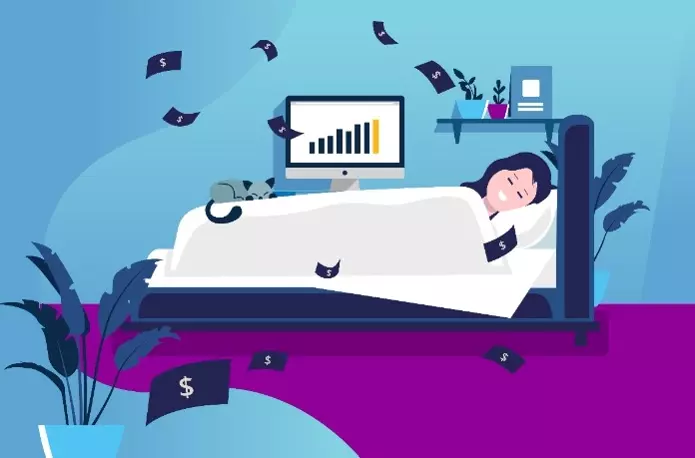
The income potential is also genuinely passive once things are up and running. A product review you published two years ago can still send you commissions every single month if it ranks in Google. I have articles on this site doing exactly that.
You're not locked into one product or one income stream either. A single site can promote dozens of affiliate offers across multiple programs, which protects you if one program closes or cuts commissions unexpectedly. Diversification matters here.
There's also no ceiling. Some affiliates earn a few hundred dollars a month as a side income. Others have built seven-figure businesses. The range is wide, but the upside is real if you're willing to put in the work.
This means that you can potentially earn money while you sleep!
How Does Affiliate Marketing Actually Work?
The mechanics are straightforward. You join an affiliate program, receive a unique tracking link, and place that link in your content. When someone clicks and completes the desired action — usually a purchase, but sometimes a free trial signup or form submission — the merchant's system logs the conversion and credits you a commission.
Most programs track clicks through browser cookies. Cookie duration varies significantly by program. Amazon Associates uses a 24-hour window, while many software programs offer 30, 60, or even 90-day cookies. Longer cookies give you more time to earn credit after the initial click, which matters if your content sits early in the buyer journey.
Payments usually go through direct bank transfer, PayPal, or check. Minimum payout thresholds vary too — some programs pay at $10, others at $100. Always check payment terms before you commit time to promoting a program.
What Are the Different Ways to Do Affiliate Marketing?
There's no single method. The right approach depends on your skills, budget, and available time. Here are the main ones.
Is SEO Blogging the Best Way to Start?

This is the method I use on this site, and I think it's the most sustainable long-term play. You build a website, publish content that ranks in Google, and monetize with affiliate links.
The best affiliate sites are authority sites — meaning Google trusts them because they consistently publish accurate, well-researched content in a defined niche. Once you earn that organic traffic, it's essentially free, which keeps your margins high compared to paid methods.
SEO does take time to compound. You won't see meaningful traffic in the first few months, and that's completely normal. But once it kicks in, the results can be significant and largely passive. Check out our roundup of the best affiliate marketing courses if you want to find training built specifically around this approach.
Does Paid Advertising Work for Affiliate Marketing?
Paid traffic through Facebook Ads or Google Ads lets you move much faster than SEO. You build a landing page, drive paid clicks to it, and try to convert visitors before your ad spend eats your margin.
The risk is obvious — if your conversion rate drops or your cost-per-click rises, you can lose money quickly. This method works, but it requires tight tracking, split-testing, and a financial cushion to absorb losses while you find what works. I'd approach paid traffic only after you understand your numbers well.
How Does Email Marketing Fit Into Affiliate Marketing?
Email is one of the highest-converting channels in the industry. You build a list through an opt-in form on your site or through paid lead generation, then send that list helpful content alongside relevant affiliate offers.
The reason it converts so well is trust. People who opted in and are opening your emails are already warm. When you recommend something, they're far more likely to act than a cold website visitor who found you through a search.
Solo ads are another way to grow a list faster — you pay to have your message sent to someone else's email list. They can work, but list quality varies enormously. Research the seller carefully before spending money here.
Can You Do Affiliate Marketing on Social Media?
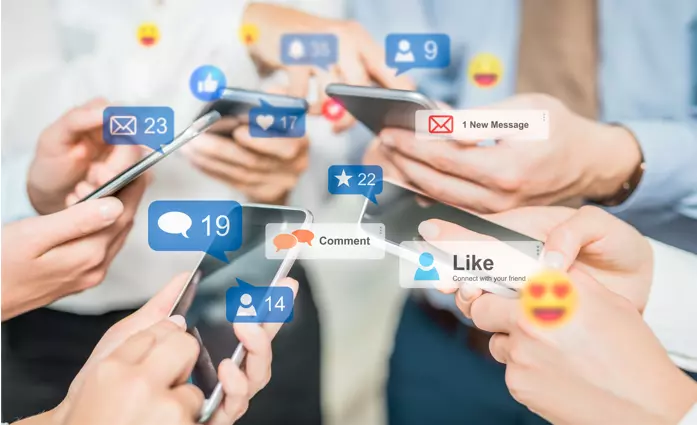
Platforms like Instagram, TikTok, Pinterest, and YouTube all allow affiliate links in various forms. Social works best when you're building a genuine audience around a specific topic — a home décor account promoting furniture, a fitness creator recommending equipment, and so on.
One important note: every platform has different rules around affiliate promotion. Some require disclosure, others restrict direct affiliate links in posts and prefer you funnel traffic to a landing page first. Always read the platform's terms before you start pushing links, or you risk getting your account flagged.
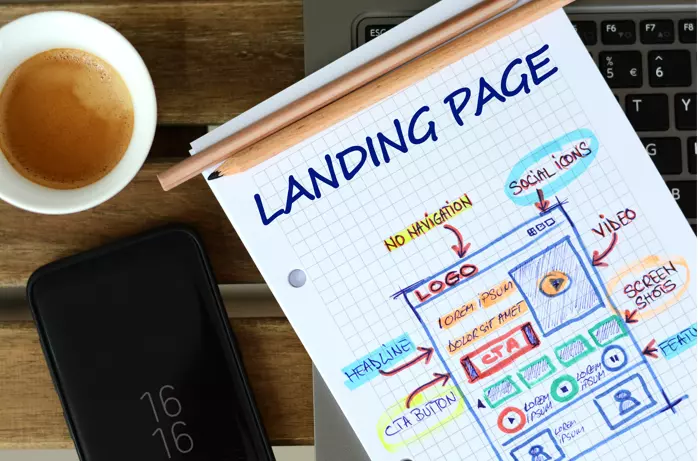
Below is an image of what a Landing page may look like. This is an example of a complex landing page. A simple one would be a page with a single email optin.
Is YouTube a Good Channel for Affiliate Marketing?
YouTube affiliate marketing is strong because video builds trust faster than text alone. A solid product review video can rank both on YouTube and in Google's video results, which doubles your exposure from a single piece of content.
You drop your affiliate links in the video description, mention them in the video, and earn commissions from anyone who buys after clicking through. If you already have a niche you know well and you're comfortable on camera, this is worth taking seriously alongside your other channels.
How Do You Choose the Right Affiliate Marketing Program?
Start by matching the program to your niche. There's no point promoting web hosting tools to a cooking audience — the product has to make sense for the people you're already talking to.
Next, look hard at the commission structure. Physical products typically pay 1–10% (Amazon sits at the lower end of that range). Digital products and software can pay 20–50% or more. Recurring commissions on subscription products are especially valuable — you earn every month the customer stays subscribed, which means one conversion keeps paying you.
Check cookie duration carefully. A 24-hour cookie on a product with a long consideration cycle means you'll miss a lot of conversions from people who don't buy immediately. If your content is early in the buyer journey, a longer cookie window makes a real difference to your earnings.
Finally, verify the program's reputation before you invest time promoting it. Check affiliate forums and communities to see whether people get paid reliably and whether the merchant is responsive. Programs that quietly change terms, lower commissions, or disappear entirely are more common than you'd think.
What Is the Best Niche for Affiliate Marketing?
The best niche combines real buyer intent, decent commission rates, and enough content topics to build genuine depth. Personal finance, software and SaaS, online education, health and wellness, and home improvement consistently perform well. But the list isn't exhaustive — almost any niche can work if there are products people actively want to buy.
I think picking a niche you actually know something about is underrated advice. Writing about products you understand makes the content better, and better content ranks and converts. That's not a small edge.
A common mistake is chasing high-commission niches with no personal connection to the topic. You'll burn through content ideas fast, your writing will be thin, and readers will sense that you don't really care. Niche enthusiasm isn't just nice to have — it shows up in the work.
Don't go too narrow either. A micro-niche like "keto snacks for women over 50" can work, but you'll cap out on content volume quickly. Aim for something specific enough to be focused but broad enough to build out over time.
How Much Do Affiliate Marketers Make?
There's no clean answer here — the range is genuinely massive. Some affiliates earn a few hundred dollars a month as a supplement to their day job. Others have built full-time businesses well into six figures annually.
What drives the difference? Niche selection, commission structure, traffic volume, and how well the content actually converts. A site pulling 50,000 monthly visitors in a high-commission software niche will earn far more than one with the same traffic in a low-commission physical product niche.
I'll be straight with you — building to a meaningful income via SEO typically takes 12 to 24 months of consistent effort. Paid traffic can be faster, but there's real financial risk until you find a profitable angle. Most people who quit do so in months three through six, right before the compounding starts to show.
The ceiling is high if you're consistent. The floor is zero if you're not. Most people land somewhere in the middle — and even $500 to $1,000 a month in passive affiliate income is genuinely worth building.
What Are the Top Affiliate Marketing Trends for 2026?
AI-Assisted Content and Quality Signals
AI writing tools have changed content production significantly. Affiliates are using tools like Claude, ChatGPT, and others to speed up first drafts, outlines, and research. At the same time, Google's quality signals have sharpened — thin AI content without genuine expertise gets filtered out fast.
The practical reality: AI doesn't replace expertise, but it dramatically compresses execution timelines for affiliates who know their niche.
A product review that used to take 3 hours (research competitors, outline structure, write comparisons, craft FAQ section) now takes 45 minutes with AI handling the first draft and structure. An email sequence that took 10 hours to write manually takes 90 minutes with AI generating variations you edit for voice.
The edge goes to affiliates who use AI to produce more good content, not to replace the human knowledge behind it. Someone who publishes 2 reviews per month manually can publish 8 with AI assistance - same quality depth, 4x volume. That volume compounds into rankings and traffic faster.
Module 1 of my 2026 AI Business Blueprint covers AI for affiliate content creation across all the methods mentioned on this page - blog posts, YouTube scripts, email sequences, social media captions, landing page copy. Same affiliate fundamentals, compressed timelines.
Check out my guide on how to make money with AI for more on how this plays out practically.
Niche Authority Over Generalist Sites
Google's algorithm updates over the past two years have consistently rewarded niche experts over broad topic sites. Affiliates building deep topical authority in a specific space are outperforming those trying to cover everything. This trend doesn't show any signs of reversing.
First-Party Data and Email Lists
With ad targeting getting less precise and algorithm changes harder to predict, email lists have become more valuable than ever. Affiliates who own a direct line to their audience are far less exposed when Google updates or social platforms change their rules. Building your list alongside your SEO is a core strategy now, not an optional add-on.
Video and Short-Form Content
YouTube remains one of the most reliable affiliate channels, and short-form video on TikTok and Instagram Reels is driving solid affiliate traffic for physical product niches in particular. If you haven't added any video to your content mix, 2026 is the time to start taking it seriously.
Creator-Led Affiliate Programs
Influencers and content creators with loyal audiences are taking a larger share of affiliate revenue — especially in lifestyle, fitness, and consumer product categories. Programs like Amazon Influencer and LTK have lowered the barrier for creators to monetize without a full website. More competition, but also more proven routes in.
How Do You Actually Succeed With Affiliate Marketing?
Success in affiliate marketing comes down to three things: picking the right products, building genuine trust with your audience, and staying consistent long enough for the compounding to work.
Picking the right products matters more than most beginners realize. Promoting something you haven't used or don't believe in erodes credibility quickly, and readers can usually tell. I stick to products I've actually tested wherever I can on this site.
Trust is built through content quality, honesty, and showing up consistently. If you publish sporadically, quit when traffic is slow, and only write about products with the highest commissions regardless of quality — you'll struggle. The affiliates who build durable income treat it like a real business, because it is.
Patience is genuinely required on the SEO path. Most affiliate sites don't see meaningful organic traffic for at least six months. The ones that stick around past that point are almost always the ones that end up making real money.
Should You Take an Affiliate Marketing Training Course?
I think training is worth it, especially when you're starting out. The learning curve is real — SEO, content strategy, keyword research, link building, conversion optimization — there are a lot of moving parts, and figuring it all out from random blog posts takes way longer than it should.
A good course gives you a proven system to follow instead of piecing things together from sources of varying quality. It shortcuts the expensive trial-and-error period significantly.
Not all courses are equal though. Some are excellent — they teach repeatable, sustainable strategies that hold up over time. Others are outdated or built more around the creator's personal brand than actual results. I've reviewed a lot of them on this site. Check out my roundup of the best affiliate marketing courses to find options actually worth your time and money.
The Content Creation Bottleneck (And How AI Changes It)
Here's what nobody mentions when they're explaining affiliate marketing: the content volume requirement is brutal.
Every method on this page requires consistent content creation:
SEO blogging: 2-4 articles per week minimum to build topical authority. Each review takes 2-3 hours to write, research, and optimize.
YouTube affiliate marketing: 3-5 videos per week to maintain algorithmic momentum. Each video requires scripting (1 hour), filming, editing, thumbnails, and metadata optimization.
Email marketing: Welcome sequences (5-7 emails), product campaigns (3-5 emails per offer), weekly broadcasts. One complete funnel takes 8-12 hours to write from scratch.
Social media: Daily posting on Instagram/TikTok (7-10 posts per week), caption writing, content planning, engagement. Easily 10-15 hours weekly.
Paid advertising: Landing page copy, ad variations (10-20 per campaign), testing, optimization. Constant creative refresh to avoid ad fatigue.
Do the math. If you're running SEO + email + social (common for serious affiliates), you're looking at 20-30 hours of content creation per week before you even start driving traffic.
This is why 95% of affiliate marketers quit in the first six months. They run out of time, they run out of ideas, or they burn out trying to maintain volume manually.
AI compresses those timelines by 70-80%:
- Product reviews: 3 hours → 45 minutes (AI handles outline, comparison table, FAQ structure, you add expertise)
- Email sequences: 10 hours → 90 minutes (AI generates complete sequences, you edit for voice and add personal touches)
- YouTube scripts: 60-90 minutes → 10-15 minutes (AI writes full scripts from topic + target keywords, you review and adjust)
- Social captions: 30 minutes per post → 30 seconds (AI generates 5-10 variations instantly, you pick the best)
- Landing page copy: 2 hours → 10 minutes (AI writes headline, bullets, CTA, FAQ - you polish and publish)
The affiliate marketing fundamentals on this page don't change (pick products, create content, build trust, drive clicks, earn commissions). AI just removes the execution bottleneck that kills most beginners before they see results.
I'm not talking about letting AI spam garbage content. The strategy is the same - genuinely helpful content, products you believe in, building real authority. AI just handles the grunt work so you can execute at the volume required without burning out.
Module 1 of The 2026 AI Business Blueprint covers AI for affiliate content creation across every method mentioned on this page - SEO blog posts, YouTube scripts, email sequences, social media content, landing pages, and ad copy. Same fundamentals, sustainable execution.
Frequently Asked Questions About Affiliate Marketing
Is affiliate marketing free to start?
It can be, but realistically you'll want to invest in a domain and hosting if you're going the SEO route. You can technically start for free using social media or a free blog platform, but your own website gives you far more control and long-term stability. Budget around $50–100 to start properly.
Do I need a website to do affiliate marketing?
No, but having one helps significantly for the SEO approach. You can run affiliate marketing through social media, YouTube, or email without a website. That said, a website gives you a content hub that compounds in value over time in a way that social media posts simply don't.
How long does it take to make money with affiliate marketing?
Most people see their first commissions within a few months, but consistent income typically takes 12 to 24 months of sustained effort on the SEO path. Paid traffic methods can be faster but require upfront ad spend and a testing period before you find what's profitable.
Is affiliate marketing still worth it in 2026?
Yes. The model continues to grow globally, and affiliates who publish genuinely useful content and build real topical authority are doing well even after recent algorithm changes. Thin content sites have been hit hard, but quality-first affiliates are still seeing strong results.
What is a good commission rate for affiliate marketing?
Digital products and software typically pay 20–50%, sometimes higher for high-ticket offers. Physical products through retailers like Amazon pay 1–10%. Recurring commissions on SaaS subscriptions are especially valuable — you earn every month a customer stays active, which adds up quickly.
What's the difference between affiliate marketing and dropshipping?
With affiliate marketing, you earn a commission and never touch the product, inventory, or customer service. With dropshipping, you run the storefront, manage the customer relationship, and ship from a third-party supplier. Affiliate marketing has lower risk and lower overhead; dropshipping gives you more control over pricing and brand.
Can AI help me with affiliate marketing content creation?
Yes - AI dramatically reduces the content creation bottleneck. Successful affiliate marketing requires consistent content volume across whatever channels you choose (blog posts, YouTube videos, emails, social media). Creating 2-4 blog posts weekly, 3-5 YouTube scripts, 5-10 social captions, and email sequences manually takes 20-30 hours per week.
Module 1 of The 2026 AI Business Blueprint shows you how to use AI to compress that to 5-10 hours - review outlines in 5 minutes, email sequences in 90 minutes instead of 10 hours, YouTube scripts in 10 minutes instead of 90, social captions in 30 seconds. Same affiliate fundamentals (pick products, create helpful content, build trust, drive clicks), AI just handles the grunt work so you can maintain volume without burning out.
What's the biggest challenge with affiliate marketing?
Content volume. Every successful affiliate marketing method requires consistent content creation - SEO needs 2-4 posts weekly, YouTube needs 3-5 videos, email marketing needs sequences and broadcasts, social media needs daily posting. Creating that much content manually is why 95% of affiliate marketers quit in the first six months.
One product review takes 3 hours to write, one email sequence takes 10 hours, one YouTube script takes 60-90 minutes, social posts take 30 minutes each. Do that across multiple channels and you are spending 20-30 hours weekly just on content creation before driving any traffic. AI tools compress content creation timelines so you can hit volume requirements without burning out. Same affiliate fundamentals, sustainable execution.
Do I need AI tools to succeed with affiliate marketing?
No - you can manually create all your content and still succeed if you are disciplined and consistent. Plenty of affiliate marketers built six-figure businesses before AI tools existed. But AI tools make hitting the content volume requirements significantly easier. Most people quit affiliate marketing in months 3-6 because writing 2-4 blog posts per week plus emails plus social content feels overwhelming.
AI removes that bottleneck. You still need to pick the right products, understand your audience, and build genuine trust. AI just handles the grunt work - outlines, first drafts, email sequences, social captions, YouTube scripts. If you want to test both approaches, grab the free cheat sheet (5 Businesses You Can Start with AI Today) to see which tools actually matter for affiliate content creation.

- Top Google Review Software for Improving Local Business Reputation - October 22, 2026
- How Remote Technology Is Changing the Way Legal Proceedings Are Conducted - October 21, 2026
- The Role of 3PLs in Building a More Efficient Supply Chain - October 21, 2026