Dropshipping is not dead. But the way most people were doing it a few years ago? That version is finished.
I hear this question constantly from readers, and I get why. You see the skeptics online, the failed stores, the guys who tried it and quit after three months. It makes you wonder if the whole model has run its course. The short answer is no — but you do need to understand what's changed.
The business model itself is thriving. What's dead is the old approach: slap up a generic Shopify store, source everything from AliExpress, run some Facebook ads, and wait for money to roll in. That playbook stopped working a while ago. What works now is smarter, more intentional, and honestly more sustainable.
I'll show you exactly what the data says and what you need to do differently in 2026.
What Does Google Trends Say About Dropshipping?
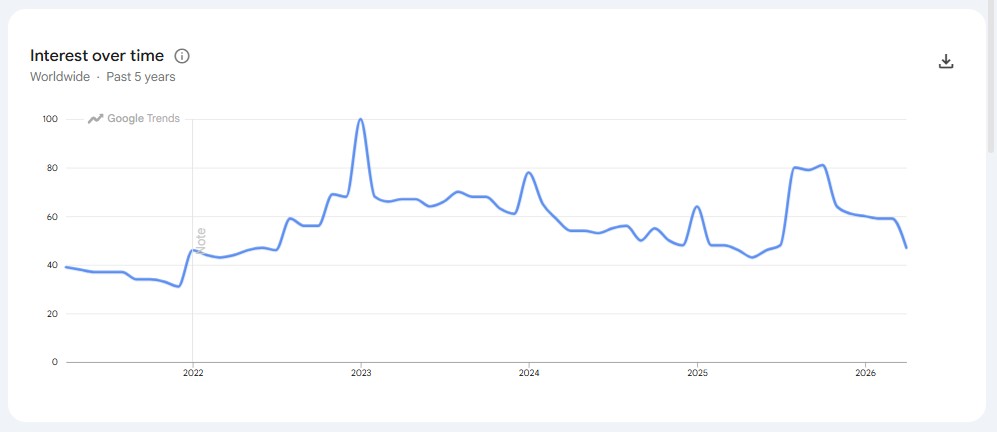
Google Trends shows that interest in dropshipping has remained consistently strong for years, with no sign of dying off. When you search "dropshipping" worldwide over the past five years, you'll see a line that dips and spikes but holds an overall upward pattern. That's not what a dead industry looks like.
Below is a screenshot from Google Trends with the term "dropshipping" - over the past 5 years.
Let's look at a few sub-niches too. Interest in eBay dropshipping has big variances — spikes, drops, then more spikes — but it hasn't flatlined. When you dropship on eBay, you list products in your store, and when a sale comes in, you purchase from a supplier and ship directly to the customer. Simple model, still active.
Amazon dropshipping follows a similar pattern: up and down over time, but trending upward. Dropshipping on Amazon means sourcing and listing products on the Amazon marketplace, often using Fulfillment by Amazon (FBA) to handle the logistics side of things.
The trend data alone tells you this isn't a dead market. It's a maturing one.
Is AliExpress Dropshipping Dead?
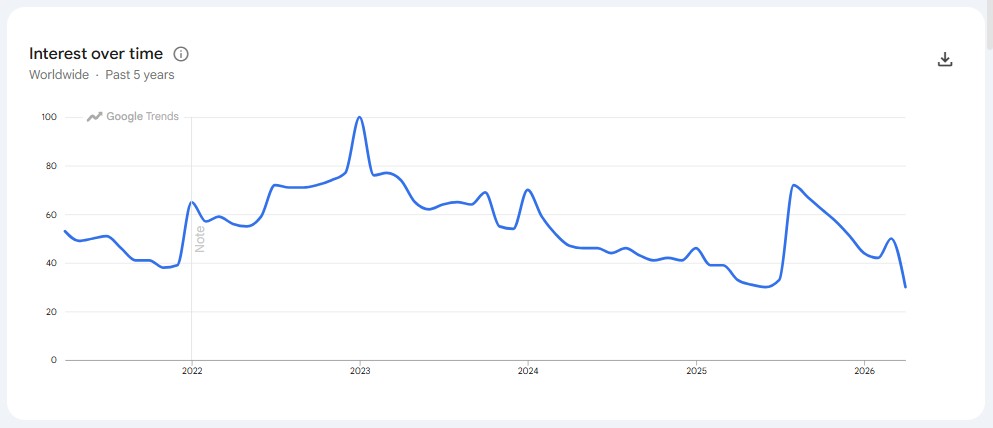
AliExpress dropshipping is not dead, but it's no longer the free ride it used to be. Interest in AliExpress as a dropshipping source has held up well in Google Trends over the past several years, and new dropshippers still flock to it because vendors actively cater to them, new products hit the platform daily, and the sheer volume of suppliers gives you a lot to work with.
Below is a screenshot from Google Trends with the term "Aliexpress dropshipping" - over the past 5 years.
That said, the main pain point with AliExpress has always been shipping times. Customers today expect fast delivery, and waiting 2–3 weeks from an overseas supplier is a tough sell. The smarter approach I recommend — and I'll get into this below — is to use AliExpress for product testing, then move to a domestic supplier or wholesale model once you identify your winners.
Alibaba dropshipping, by comparison, gets far less search interest. This makes sense. AliExpress is cheaper, has a bigger product catalog, and is genuinely easier to navigate for people just getting started.
Is Shopify Dropshipping Dead?
Shopify dropshipping is not dead. Shopify remains the most popular platform for dropshipping stores, and the infrastructure around it keeps improving. According to recent data, Shopify accounts for around 30% of all active dropshipping stores worldwide.
What has changed is how saturated the beginner experience looks. If you launch a generic store using a free theme, import some random products, and run cookie-cutter ads, you'll struggle. That's not because Shopify is dead — it's because that approach never had much of a foundation to begin with.
The platform itself is solid. What you build on it is what matters.
Is Dropshipping Dead in 2026?
Dropshipping is not dead in 2026 — the market data makes that clear. According to multiple research reports, the global dropshipping market is projected to be worth somewhere between $343 billion and $476 billion this year, up from around $290 billion in 2025. That's consistent 20%+ annual growth. Industries don't grow at that pace while dying.
Another stat worth knowing: roughly 27% of all online retailers now use dropshipping as their primary fulfillment model. That's not a niche side hustle. That's a mainstream business structure.
What is dead is the "easy money" version of it. I think a lot of the "is dropshipping dead?" panic comes from people who tried the low-effort approach, it didn't work, and they concluded the whole model was finished. The model isn't the problem. The approach was.
Is There Too Much Competition in Dropshipping?
There is more competition now than when dropshipping first took off, but that doesn't mean you can't enter the market and do well. Competition exists because demand exists. If nobody wanted these products, nobody would be selling them.
The people who struggle with competition are the ones running undifferentiated stores. Same products, same images, same ads, same free theme. When your store looks like everyone else's, price becomes the only differentiator — and that's a race to the bottom.
The way to win is not to avoid competition. It's to be genuinely better than what's already out there. There are always new products gaining traction, new niches opening up, and new consumer problems waiting to be solved. If you're paying attention, you can find them before they become crowded.
I feel like a lot of people underestimate how much of an advantage a slightly better-looking store with slightly better customer service already has. The bar in dropshipping is not as high as people think — most stores are mediocre.
How Do You Stand Out From Other Dropshippers?
You stand out by building a real brand instead of just a store. Here are eight specific things I'd focus on.
1. Move to a Wholesale Model After Finding Winning Products
The old approach was to keep dropshipping the same products indefinitely from a supplier in China. This doesn't hold up because shipping times are too long and margins get squeezed. The smarter move is to treat dropshipping as a testing phase. Find what sells, then negotiate with a wholesaler or domestic supplier to carry that product with better margins and faster shipping. This is the model that actually builds something sustainable.
2. Skip the Free Themes
Walk through enough dropshipping stores and you'll notice they all look the same. That's because they're using the same handful of free Shopify themes with zero customization. A premium theme costs very little relative to what you're putting into ads and inventory testing, and it immediately separates your store from the generic competition. It signals to the customer that you're a real business.
3. Use SEO as a Traffic Source
Most dropshippers rely entirely on paid ads and never touch SEO. That means if you do build out product pages and blog content targeting evergreen keywords, you're in a category of one in most niches. Organic traffic costs nothing once it's flowing, and it makes your business a lot more resilient than one that shuts down the moment you pause your ad spend. Focus on products that will be in demand for years, not trending items that spike and disappear.
4. Have Outstanding Customer Service
A real business gives customers more than one way to get help. Phone, email, live chat — even offering two of these puts you ahead of stores that only have a contact form buried at the bottom of the page. Trust is everything in ecommerce, and being reachable is a fast way to earn it.
5. Don't Rely on One Marketing Channel
If your entire business depends on Facebook ads, you're one policy change or CPM spike away from a serious problem. Diversify. Google Shopping ads, TikTok ads, influencer partnerships, email marketing, SEO — you don't need all of these at once, but building a second and third channel protects you. I think of each traffic source as a leg on a table. The more legs, the more stable it is.
6. Invest in Imagery and Design
Your store's visual presentation matters more than most people realize. A clean logo, good color choices, and quality product images all contribute to whether a visitor trusts you enough to buy. If you're using raw AliExpress images, at minimum swap out the backgrounds or make subtle edits so your listing looks different from every other store selling the same product. Presentation is a signal of legitimacy.
7. Offer Faster Shipping
Slow shipping is the biggest complaint customers have about dropshipping stores, and rightly so. The fix is to find domestic or regional suppliers for your best-selling products. US-based suppliers can get orders to customers in 3–7 days. European suppliers within 5–10 days across Europe. Once you find a winning product, this should be one of the first things you sort out. Faster shipping leads to fewer chargebacks, better reviews, and repeat customers.
8. Optimize for Mobile
More than 65% of dropshipping purchases now happen on mobile devices. That means your store needs to look good and function well on a phone — not just on a desktop. Test your store yourself on your phone. Is it easy to navigate? Does the checkout work smoothly? Is the product imagery clear on a small screen? These small things add up.
How Do You Get Started with Dropshipping in 2026?
The best way to get started is to follow a proven system rather than piecing things together from YouTube videos and Reddit posts. I've tested a lot of dropshipping courses over the years, and the difference between a good one and a bad one is significant. A good course saves you from expensive mistakes early on — wrong product choices, bad ad setups, supplier errors — that can cost you weeks of wasted effort and real money.
If you're serious about building a dropshipping business, I'd recommend checking out my full breakdown of the best dropshipping courses available right now. I've gone through the most popular options and ranked them based on what they actually teach, not just what they claim on the sales page. Start there, pick one, and commit to it.
Frequently Asked Questions
Is dropshipping still profitable in 2026?
Yes, dropshipping is still profitable in 2026. Average gross profit margins run between 15–30% before advertising costs. The key is choosing the right products, building a branded store, and not relying on a single traffic channel. The market is growing — it's the approach that determines profitability, not the model itself.
Is traditional dropshipping dead?
Traditional dropshipping — sourcing everything from AliExpress and shipping directly to customers with 2–3 week delivery times — is largely dead. The modern approach uses dropshipping to test products, then transitions to domestic suppliers or a wholesale model for the winners. That's what sustainable dropshipping looks like today.
How much money can you make with dropshipping?
Most active dropshipping stores earn between $1,000 and $5,000 per month. Only about 1.5% of stores reach $50,000 or more monthly. Those numbers reflect the reality that success takes skill and consistency — but it's not an unreachable ceiling if you approach it properly.
Is Shopify still the best platform for dropshipping?
Shopify is still the most widely used platform for dropshipping, accounting for around 30% of all active dropshipping stores globally. It has a strong app ecosystem, reliable checkout, and good supplier integrations. For most people starting out, it's still the right call.
What's the biggest mistake new dropshippers make?
The biggest mistake is treating dropshipping like a passive income machine rather than a real business. That means launching a generic store, running ads with no testing strategy, and expecting sales without putting in the work on branding, customer service, or differentiation. The stores that succeed are the ones that actually try to be better than what's already out there.

- What Business Owners Should Know About Company Audits - October 20, 2026
- Top West Coast Fulfillment Companies for Ecommerce Brands in 2026 - October 19, 2026
- Digital Entrepreneurs Are Discovering That Physical Operational Infrastructure Accelerates Digital Scale - October 18, 2026