Hey, Drew here. Welcome to my Passion Product Formula review — a deep look at Travis Marziani's Amazon FBA course that promises to help you turn a product you actually care about into a six-figure Amazon business.
I've been in the affiliate marketing and online business space since 2010, and I've reviewed more courses than I can count at this point. For this one, I spent a solid 20+ hours researching the Passion Product Formula from every angle — independent reviews, Reddit threads, Trustpilot, YouTube student testimonials, Travis's own content, and the course sales pages. I wanted to find out whether this course is worth $997 or whether you're better off spending that money elsewhere.
The short answer? Travis Marziani is legit, and the Passion Product Formula is a solid Amazon FBA course — but "solid" doesn't mean it's the right fit for everyone, and there are some real concerns you should know about before you buy.
💡 The Passion Product Formula Costs $997 — Plus $2,000–$5,000 in Startup Capital. Here's the $47 Alternative.
Travis teaches a passion-first approach to Amazon FBA — find a product you love, crowdfund it on Kickstarter, manufacture it, and sell it through Amazon. It's thorough, it's well-structured, and Travis has a real track record. But the course fee is just the beginning. You'll need inventory, packaging, shipping, product photography, Amazon PPC ads, and more. Travis himself recommends budgeting $2,000–$5,000 beyond the course just to get started.
If you want to build an online business without touching physical inventory, managing suppliers, or spending thousands on Amazon ads, Module 3 of my 2026 AI Business Blueprint covers how to use AI to build and monetize an e-commerce presence for $47 one-time. No inventory, no crowdfunding, no warehouse fees.
Jump to the AI alternative or keep reading for the full breakdown of what Travis offers.
⭐ Passion Product Formula Rating: 3.5/5
I give the Passion Product Formula a 3.5 out of 5. Travis Marziani is a credible instructor with real Amazon FBA success — not just from selling courses, but from building and selling actual products. The course itself is comprehensive, the coaching access is a nice touch, and the passion-first angle is genuinely different from most FBA programs.
What holds it back is the significant overlap with Travis's free YouTube content, some murky refund policy conditions, and the hard reality that Amazon FBA in 2026 requires serious capital and delivers thin margins for most sellers. It's a good course attached to a tough business model.
What Is the Passion Product Formula?
The Passion Product Formula is an Amazon FBA course created by Travis Marziani that teaches you how to create, manufacture, and sell a product you're personally passionate about on Amazon. It was launched in 2019 and has been updated multiple times since.
What makes it different from most Amazon FBA courses is the core philosophy. Instead of teaching you to find trending products on AliExpress and slap a private label on them, Travis wants you to build a brand around something you genuinely care about. Think of it as a hybrid between private label FBA and entrepreneurship — you're not just reselling someone else's product, you're creating your own from scratch.
The course walks you through the entire process from brainstorming a product idea all the way to launching it on Amazon and scaling with paid ads. It includes 117+ video lessons across 9 modules, weekly live Q&A calls with Travis, two personal coaching sessions, an accountability buddy system, a private Facebook community of over 2,000 members, and access to Travis's bonus courses on Google Ads, Facebook Ads, Shopify, and YouTube marketing.
Travis also teaches a crowdfunding strategy using platforms like Kickstarter to raise your initial manufacturing capital before you invest a dime of your own money into inventory. That's a genuinely useful angle that most Amazon FBA courses don't cover.
Who Is Travis Marziani?
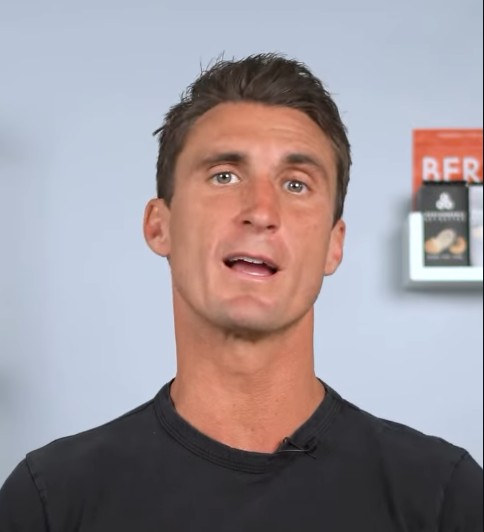
Travis Marziani is a seven-figure e-commerce seller, Amazon FBA coach, and YouTuber with over 480,000 subscribers as of mid-2026.
Unlike a lot of course creators in this space, Travis has a well-documented track record of actually selling physical products — not just selling courses about selling products.
Travis graduated from the University of Southern California with a degree in Biomedical Engineering and worked in corporate consulting at Capgemini before deciding the 9-to-5 wasn't for him. He's been pretty open about the fact that he was dealing with depression during his corporate career, and that's what pushed him to make the leap into e-commerce in February 2013.
His first venture was BDancewear, a dancewear brand he co-founded with his mother. It wasn't an overnight success, and Travis has talked publicly about the first six months being tough — lonely, cash-strapped, and full of setbacks. But it gave him the foundation he needed.
In 2017, he launched Performance Nut Butter, a keto-friendly nut butter brand that he crowdfunded on Kickstarter (raising over $15,000). That product scaled to seven figures in revenue on Amazon. His first year brought in roughly $365,000 in sales with about $120,000 in profit. Year two was strong. Year three, sales dropped to around $62,000 after competitors entered his niche and he got burned by a bad manufacturer — a loss he's been transparent about on his YouTube channel. In 2021, he sold Performance Nut Butter for approximately $1.1 million while retaining a 25% stake.
What I respect about Travis is that he's still actively selling on Amazon, not just teaching. His most recent venture is a carnivore nutrition brand, and his Carnivore Electrolytes product reportedly generated over $110,000 in revenue within its first 30 days. He followed that up with Carnivore Jerky. According to his Instagram bio, he's done over $12 million in Amazon sales across his career and has taught over 14,000 students.
He's also genuinely prolific on YouTube. With over 1,050 videos published and 480K subscribers, the guy clearly puts in the work when it comes to free content. His channel covers Amazon FBA strategy, product research walkthroughs, ad tutorials, and honest breakdowns of his own numbers — including the bad years. That transparency is rare in this space.
How Much Does the Passion Product Formula Cost?
The Passion Product Formula costs $997 as a one-time fee. That gets you lifetime access to all 9 modules, the bonus courses, the Facebook community, weekly Q&A calls, and two personal coaching sessions with Travis.
But here's the part that matters more than the course price: the total startup cost. The $997 is just the education. To actually launch a product on Amazon using Travis's method, you'll need additional capital for product samples, manufacturing, packaging, shipping to Amazon's warehouses, UPC codes, professional product photography, and Amazon PPC advertising. Travis himself recommends budgeting at least $2,000 to $5,000 on top of the course fee. Some reviewers estimate the total investment could reach $10,000–$15,000 depending on your product and manufacturing costs.
Travis does run a multi-tier ecosystem these days, and the Passion Product Formula isn't his only offering. There's a $7 Product Research Challenge (a 4-day live coaching program), a $97 Passion Product Fast Track for beginners, and two higher-tier programs — the Passion Product Accelerator (6-month group coaching, apply-only pricing) and the Passion Product Incubator (6-month private 1-on-1 mentorship with done-for-you listings, photos, and PPC campaign setup, also apply-only pricing). The higher-tier programs are likely several thousand dollars, though prices aren't publicly listed.
One thing I noticed on the sales page: there's a countdown timer that gives you "10 minutes" to claim your spot, and another timer saying the course closes in five days. I can't confirm whether these are real deadlines or just urgency tactics. I'd take those with a grain of salt.
What's Inside the Passion Product Formula?
The course is structured as a step-by-step system across 9 core modules (plus an intro), with 117+ video lessons, worksheets, checklists, and templates. Every lesson is a screen-recording-style video, so you can follow along with exactly what Travis is doing on screen.
Here's what each module covers.
Module 0 — Introduction
Travis kicks things off with a welcome to the program, sets expectations, and shares his mindset techniques for building a successful Amazon business. He also discusses the main reasons Amazon sellers fail and provides a reading list of 10 recommended books. Think of this as the foundation-setting module.
Module 1 — Create Your Idea
This is where Travis introduces his "Idea Generator" method — a framework for turning your personal interests and passions into viable product ideas. He teaches you how to identify profitable angles and variations, how to spot ideas in your daily life, and how to do initial product research. He even shares some of his own product ideas that you can use as starting points.
Module 2 — Validate Your Idea
Before you spend a penny on manufacturing, Travis walks you through validating demand for your product using his 100-point validation checklist. This module covers how to use social media to test product viability, prototyping and testing, and how to prove your product will actually sell before committing real money. I think this is one of the strongest parts of the course because it can save you from pouring thousands into a product nobody wants.
Module 3 — Create Your Brand
This module focuses on building a brand that stands out from competitors. Travis covers how to understand your target customer's motivations, how to craft a unique selling proposition, brand design techniques that drive repeat purchases, and a brand creation checklist. The goal is to position your product as a premium, name-brand offering that can command higher prices than generic private label alternatives.
Module 4 — Create Raving Fans
This is the module that sets the Passion Product Formula apart from most FBA courses. Travis teaches you how to build an audience and "raving fans" before you even launch your product on Amazon. You'll learn how to find where your potential customers hang out online, build a social media presence, create Facebook groups, set up an email list, and generate genuine buzz around your brand pre-launch. This is the same strategy Travis used when launching Performance Nut Butter, and it's what fuels those early reviews and sales that feed Amazon's algorithm.
Module 5 — Create Your Business
The practical setup module. Travis covers how to set up a legally compliant business, get the necessary permits and paperwork, create a trademark on a budget, hire virtual assistants to help run operations, and build systems for automating your day-to-day tasks.
Module 6 — Crowd Fund
This is one of the more unique modules you'll find in any Amazon FBA course. Travis teaches you how to launch a Kickstarter campaign to fund your first production run, using email marketing sequences, influencer outreach, and a Kickstarter video template. The idea is that you raise capital from future customers before spending your own money on manufacturing, which significantly reduces your upfront financial risk.
Module 7 — Production
Once you've got funding, it's time to get your product made. This module covers how to find and vet manufacturers (both domestic and overseas), negotiate effectively, handle UPC codes, plan production runs, manage inventory, and avoid the kind of manufacturing disasters that Travis himself experienced (he's been open about losing tens of thousands to a bad manufacturer early on).
Module 8 — Amazon Launch
Launch day. Travis teaches his Amazon SEO techniques, how to build your seller account, how to create optimized product listings, how to use Amazon PPC ads to drive initial visibility, and how to leverage the pre-launch audience you built in Module 4 to generate early sales and reviews. This module also covers how to use your crowdfunding momentum to fuel your Amazon ranking.
Module 9 — Bonus Shopify
The final module covers expanding beyond Amazon to your own Shopify store. Travis teaches how to set up a Shopify site, turn one-time buyers into repeat customers, and reduce your dependency on Amazon by building a sales channel you actually control. Given how much power Amazon has over sellers, I think this module is more important than most people realize.
Bonus Courses and Extras
On top of the main 9 modules, you also get access to four additional courses: a Google Ads course, a Facebook Ads course, a Shopify course, and a YouTube course. You also get weekly live Q&A calls with Travis, a private Facebook mastermind group, an accountability buddy assignment, a 4-person mastermind group that meets weekly, and a knowledge base with over 1,000 answers to common Amazon FBA questions. Travis also hosts annual in-person events in Los Angeles where students can network and learn from guest speakers.
Does the Passion Product Formula Actually Work?
Yes, there are documented cases of students generating significant Amazon sales using Travis's method. But "sales" and "profits" are two very different numbers, and that distinction matters a lot.
Travis features several student success stories on his website and YouTube channel. AJ Rantz joined the program in 2019 and generated $500,000 in product sales within 12 months selling cocktail cards — he's now reportedly a seven-figure seller. Andrew Konesky made over $330,000 in Amazon sales within 12 months selling a tool organizer for DeWalt batteries. Another student, Brent, built his business to $3 million in his first year while working as a helicopter pilot. Mina started with $900 and grew to over $4 million. These are real people with verifiable stories that you can find on Travis's YouTube channel.
But here's where I want to pump the brakes a little. When Travis or his students talk about "$100,000 in sales," that is revenue, not profit. After you subtract Amazon's referral fee (15% on most categories), fulfillment fees ($3–$10 per unit depending on size and weight), monthly storage fees, potential long-term storage penalties, PPC advertising costs, product manufacturing costs, packaging, and shipping — your actual take-home can be a fraction of the headline number.
Two students who reviewed the course on YouTube gave some more grounded numbers. One seller of "Performance Gum" reported $20,000 in total sales and $9,000 in profit. Another selling "Vino Cards" reported $80,000 in sales and $20,000 in profit. That's a 25–45% profit margin, which is actually solid for Amazon FBA. But it also means the gap between what sounds impressive ("$80K in sales!") and what actually hits your bank account ($20K) is significant.
According to Jungle Scout's annual seller report, about 47% of Amazon sellers have made under $25,000 in lifetime profits, only 28% achieve profit margins above 20%, and just 6% reach millionaire status. The Passion Product Formula gives you a fighting chance with a differentiated approach, but it doesn't make those underlying Amazon economics disappear.
What Are People Saying About the Passion Product Formula?
The online sentiment is mixed — mostly positive on Travis's own platforms, and more critical on independent review sites and Reddit. Here's the breakdown by platform.
What Do Reddit Users Say?
Reddit opinions on the Passion Product Formula are genuinely split. One user described the training videos as "very good and detailed" and said the course contained everything needed to start selling on Amazon. Another user who actually enrolled had a different take — they said the course content largely mirrors what Travis already offers for free on his YouTube channel. That user found the Facebook mastermind group and the checklists useful but questioned the overall value for money and noted that Travis often delegated teaching responsibilities to other coaches rather than handling sessions personally.
The most concerning Reddit thread I found was about refund issues. A user reported asking for a refund within the 14-day window multiple times, and Travis's team kept denying the request. Travis did reply publicly on Reddit to address some of these complaints, and supporters chimed in as well. But the refund complaint is worth knowing about before you buy.
What About Trustpilot?
The Passion Product Formula has very limited presence on Trustpilot. One independent reviewer found a 3.2 out of 5 rating in May 2024, but the total number of reviews was small. One Trustpilot reviewer specifically criticized Travis for using an inexperienced student to teach the weekly coaching sessions — someone the reviewer described as a real-life "David Brent" (the UK version of Michael Scott from The Office). Travis didn't respond to that particular review. The lack of substantial Trustpilot presence is itself worth noting, since many competing courses have much larger review profiles there.
What Do Independent Reviewers Say?
I read through dozens of independent reviews, and there's a pattern you should know about. Almost every independent Passion Product Formula review site follows the same playbook: they give a respectful-but-skeptical overview of the course, then pivot hard at the end to recommend a "better alternative" — which is almost always a $5,000+ local lead generation course they earn affiliate commissions on. I'll cover this in detail in the exposed section below, but keep that bias in mind when reading other reviews.
Setting the affiliate angle aside, the consistent themes from independent reviewers are that Travis is a legitimate entrepreneur with real results, the course is comprehensive, the passion-first approach is genuinely different, but the course content overlaps significantly with free YouTube material, and the Amazon FBA business model itself is the bigger concern — not the quality of Travis's teaching.
What Do I Like About the Passion Product Formula?
Travis practices what he preaches, and that counts for a lot. He's not a retired seller who cashed out and now only makes money from courses. He launched Carnivore Electrolytes recently and it did over $110,000 in 30 days. He's still in the trenches, still testing strategies, still dealing with the same Amazon challenges his students face. That kind of active involvement is rare among course creators in this space, and it means the tactics he teaches are current, not theoretical.
The passion-first philosophy is a genuinely better approach to Amazon FBA. Most FBA courses teach you to chase trends — find whatever's hot on Amazon this month and try to ride the wave. The problem is that everyone else using those same courses finds the same "hot" products, and you end up in a race to the bottom on price. Travis's approach of building a brand around something you care about leads to more differentiated products, stronger customer loyalty, and higher price points. It's harder to execute, but it's more sustainable long-term.
The crowdfunding module is a real differentiator. I don't know of another Amazon FBA course that teaches you how to use Kickstarter to fund your first production run. This single strategy can dramatically reduce the financial risk of launching a physical product because you're validating demand and raising capital simultaneously. Travis used this exact approach to launch Performance Nut Butter, so it's not theoretical advice — it's from direct experience.
The community and coaching structure is solid. Weekly Q&A calls with Travis, two personal coaching sessions, an accountability buddy, a four-person mastermind group, a 2,000+ member Facebook community, a 1,000-answer knowledge base, and annual in-person events in Los Angeles. That's a lot of support wrapped around the course content, and multiple students credit the community with helping them through the early struggles of launching a product.
Travis is transparent about his failures. He openly discusses the year Performance Nut Butter revenue dropped to $62,000, the tens of thousands he lost to a bad manufacturer, and the challenges of competing in a crowded marketplace. This honesty makes me trust his teaching more than someone who only shows you the highlight reel.
What Don't I Like About the Passion Product Formula?
A significant chunk of the course content appears to overlap with Travis's free YouTube videos. This is the single most common complaint I found across Reddit, independent reviews, and even between the lines in student testimonials. Travis has over 1,050 videos on YouTube covering Amazon FBA strategy, product research, PPC ads, and more.
Multiple people who purchased the course said they realized afterward that much of what they paid $997 for was already available for free on his channel. The structured format, checklists, and community access add value beyond the raw content, but if you're someone who learns well from YouTube, you may feel shortchanged.
You can't get a coaching call until you complete the first four modules. Both student reviewers I watched flagged this as the number one complaint they hear from other students. When you pay $997 for a course that advertises personal coaching with the creator, you expect to be able to talk to that person relatively quickly. Instead, Travis requires you to work through the first four modules and complete specific action items before he'll schedule a one-on-one.
I actually understand his reasoning — it forces students to build a foundation so their coaching time is productive rather than wasted on basics — but I can see why people get frustrated, especially right after dropping a thousand dollars.
Travis delegates coaching to other team members. Multiple reviews mention that the weekly Q&A sessions and coaching calls aren't always with Travis himself. He has certified coaches handling some of the teaching. One Trustpilot reviewer was particularly harsh about an inexperienced student being used to lead the weekly sessions. If your main reason for buying is personal access to Travis, you should know that you may be working with his team more than with him directly.
The 365-day "double your money back" guarantee has some fine print worth reading closely. I'll cover this in detail in the refund section below, but the short version is that the guarantee isn't as straightforward as it sounds on the sales page. The conditions for claiming it are "entirely at their discretion," which is vague enough to be concerning.
Amazon FBA itself is the elephant in the room. This isn't a criticism of Travis specifically, but of the business model his course teaches. Amazon takes a 15% referral fee on every sale, charges fulfillment fees of $3–$10 per unit, charges monthly storage fees, hits you with long-term storage penalties if your inventory sits too long, and can suspend your account at any time for terms of service violations — even unintentional ones. If you're weighing whether to get into Amazon FBA versus other online business models, these structural costs are worth understanding upfront.
Is the Passion Product Formula a Scam?
No, the Passion Product Formula is not a scam. Travis Marziani is a real entrepreneur with a documented track record of building and selling physical products on Amazon. He's generated millions in verifiable e-commerce revenue, he's sold a business for $1.1 million, he maintains a massive YouTube presence with over 480K subscribers, and he has real student success stories with names you can look up. The course itself contains real, actionable training across 117+ video lessons.
That said, "not a scam" doesn't mean "guaranteed to work." The success stories Travis features are real, but they represent the top performers. For every AJ Rantz doing seven figures, there are likely many more students who invested the $997 plus thousands more in startup costs and didn't see the returns they hoped for. That's not unique to this course — it's the nature of Amazon FBA as a business model. Only about 40% of Amazon sellers make any profit at all, according to industry data.
The course delivers what it promises — education, coaching, and community support for building an Amazon FBA business. Whether that education translates into profits for you depends on your product choice, your execution, your marketing budget, your willingness to push through setbacks, and frankly, a healthy dose of market timing and luck.
What About the Refund Policy?
The Passion Product Formula offers two guarantees, and it's worth understanding both before you buy.
The first is a 14-day money-back guarantee with no questions asked. If you don't like the course within two weeks, you email [email protected] and get a refund. One student reviewer on YouTube said this process is easy and that he sees "people get their money back all the time with just one email."
However, at least one Reddit user reported a different experience — they said they requested a refund within the 14-day window multiple times and Travis's team kept denying it. Travis's refund page used to offer a 30-day window, but he shortened it to 14 days after saying too many people were "abusing" the policy by consuming all the content and then requesting a refund.
The second guarantee is bolder — and more complicated. Travis advertises a 365-day guarantee where he'll refund your course fee and pay you an additional $1,000 out of his own pocket if you don't make at least $1,000 in profit within your first year. That sounds incredible on the surface. But when you read the fine print, the conditions tighten up fast. You must complete the entire course, do all the action items, and actually launch a product on Amazon. You need to prove you put in "full effort."
And here's the kicker: refund eligibility is "entirely at their discretion." That's directly from the terms on their website. So while the guarantee sounds like a no-lose proposition, the actual requirements for claiming it are subjective and controlled by Travis's team.
My advice? Treat the 14-day guarantee as your real safety net. Join, go through as much content as possible in two weeks, and decide if it's worth continuing. Don't rely on the 365-day guarantee as a backup plan.
Is Amazon FBA Still Worth It in 2026?
Amazon FBA can still be profitable in 2026, but it's significantly harder and more expensive than it was five or even three years ago. The landscape has changed, and Travis's passion-first approach is partly a response to those changes.
According to Jungle Scout, only 28% of Amazon sellers earn profit margins above 20%. About 13% of sellers haven't turned any profit at all. Amazon's fee structure is aggressive — between the 15% referral fee, fulfillment fees, storage fees, and advertising costs, the platform can eat 30–40% of your revenue before you factor in product costs. That's a lot of margin pressure, especially for newer sellers who don't have the volume to negotiate better manufacturing rates.
Competition has intensified too. There are roughly 9.7 million Amazon sellers worldwide according to Marketplace Pulse. You're competing not just with other small sellers using the same courses and tools, but with established brands, Chinese manufacturers selling direct, and Amazon itself through its Amazon Basics line.
Travis's approach of creating unique, passion-driven products does offer a competitive advantage. If you build a genuine brand with loyal customers, you're harder to knock off than someone selling generic private label products. The crowdfunding pre-launch strategy also helps generate early reviews and sales velocity that feed Amazon's algorithm.
But even with these advantages, Amazon FBA remains a capital-intensive business with thin margins and significant platform risk. If Amazon changes its algorithm, raises its fees, or suspends your account, your entire business can be disrupted overnight.
If you're exploring whether Amazon FBA is the right path for you, I'd recommend reading my comparison of affiliate marketing vs Amazon FBA to understand how the two models stack up.
The AI Approach: Building an Online Business for $47
If the idea of spending $997 on a course plus $5,000+ on inventory, manufacturing, and ads makes your stomach drop, there's a different path worth considering.
I built The 2026 AI Business Blueprint specifically for people who want to build an online business without physical products, without inventory, without suppliers, and without pouring money into Amazon PPC campaigns every month. It's $47 one-time — not $997, not $5,000+.
The course covers 5 proven AI-powered business models including affiliate marketing, content creation, digital products, AI-assisted e-commerce, and faceless YouTube channels. Module 3 specifically covers how to use AI tools to compress the tasks that Travis teaches manually — product research, ad copy, customer service, and brand building — into a fraction of the time.
I'm not saying the AI approach replaces what Travis teaches. If your dream is to create a physical product you're passionate about and build a brand around it on Amazon, the Passion Product Formula is a legitimate way to learn how to do that. But if you want to start generating income online without the $5,000+ startup costs, the warehouse fees, the manufacturer negotiations, and the constant anxiety of Amazon platform dependency, the AI route is worth a look.
You can also grab my free guide on building a $10K/month AI business without a team or paid ads to see if this approach resonates before spending anything.

Alternatives to the Passion Product Formula
If you're set on Amazon FBA but want to compare your options, here are a couple of other courses worth knowing about.
Amazing Selling Machine (ASM)
The Amazing Selling Machine is one of the most well-known Amazon FBA courses in existence. It's significantly more expensive than the Passion Product Formula — pricing has historically ranged from $4,000 to $5,000 — and focuses on a more traditional private label approach rather than passion products. ASM has a massive student base and comprehensive training, but it doesn't offer the same level of personal coaching that Travis provides, and the price tag is 4–5x higher. If budget is a concern, the Passion Product Formula offers more value per dollar.
The AI Business Blueprint ($47)
If you're less committed to the Amazon FBA model specifically and more interested in building an online income stream, my 2026 AI Business Blueprint covers multiple business models that don't require inventory, suppliers, or ongoing ad spend. It's $47 one-time versus $997, and you can be generating revenue within weeks rather than the months it takes to source, manufacture, and launch a physical product.
Exposed: Passion Product Formula Reviews and the Lead Gen Pivot
If you've been searching for Passion Product Formula reviews, you've probably noticed something weird. Almost every review follows the exact same script. They give Travis a lukewarm-to-fair review, acknowledge the course is decent, raise some valid concerns about Amazon FBA, and then — like clockwork — they pivot to recommending a completely different business model: local lead generation.
Ippei's review? Pivots to local lead gen. ScamRisk? Pivots to "Digital Leasing" (which is local lead gen). TheInBetween? Pivots to Digital Leasing. The YouTube reviews from non-students? Pivot to local lead gen. One of them literally uses a Star Wars analogy to transition into why you should do lead gen instead.
Here's what they don't tell you: those reviewers are affiliates of local lead gen programs that cost $5,000 to $7,000+. They earn a commission when you sign up through their link. They're not affiliates of the Passion Product Formula, so they have zero incentive to recommend it. Their entire business model depends on you reading their "unbiased review," getting cold feet about Amazon FBA, and clicking their link to a much more expensive program.
Now, I'm not saying local lead generation is a bad business model. It can work. But let's be honest about what it actually involves. You need to be proficient at local SEO. You need to deal with Google Business Profile verification (which requires a physical address). You need to compete against established local businesses that already have SEO agencies working for them. And those $5K+ courses? They're the real reason these "reviewers" wrote about the Passion Product Formula in the first place — not because they care about whether Travis's course works for you.
I'd rather give you a straight assessment of the course you actually searched for, point you toward alternatives I genuinely think are worth considering (like my $47 AI Business Blueprint if physical products aren't your thing), and let you make your own call.
Who Is the Passion Product Formula For?
The Passion Product Formula is a good fit if you have a genuine product idea you're excited about and want a structured system to bring it to market. It works well for beginners who want step-by-step guidance through every phase of the Amazon FBA process, from brainstorming all the way through launch and scaling. It's also valuable for people who are comfortable investing $3,000–$6,000 total (course plus startup capital) and understand that building a physical product business takes months of work before you see meaningful returns.
If you've been watching Travis's YouTube videos and want the structured framework, community support, coaching access, and accountability that come with a paid program, the Passion Product Formula fills that gap. The students who seem to get the most value are the ones who show up to the weekly Q&A calls, participate in their mastermind group, and actually execute the action items rather than passively watching videos.
Who Is the Passion Product Formula NOT For?
This course is not for anyone looking for passive income or a quick return. Building a physical product brand on Amazon is one of the most hands-on online business models there is. You'll be dealing with suppliers, inventory, shipping logistics, product photography, Amazon ad campaigns, customer reviews, and constant competition. Even after launch, you'll be monitoring ads daily, managing inventory levels, and responding to market changes. The phrase "passive income" appears in some of Travis's marketing, but the reality of running an FBA business is anything but passive.
It's also not the right choice if you're on a tight budget. Between the $997 course fee and the $2,000–$5,000 Travis recommends for startup capital, you're looking at a minimum investment of $3,000–$6,000 before your product even reaches an Amazon warehouse. If that kind of financial commitment isn't realistic for you right now, I'd suggest starting with something lower-cost and building up capital first.
If you're someone who's already watched most of Travis's YouTube content and feels like you have a solid grasp of his methodology, you might not get enough incremental value from the paid course to justify the price. The community and coaching access are the main additions beyond what's freely available, so weigh whether those alone are worth $997 to you.
Final Thoughts on the Passion Product Formula
Travis Marziani is the real deal. He's not a fake guru peddling theory — he's an active Amazon seller who's built, grown, and sold real product brands. His Passion Product Formula offers a genuinely different approach to Amazon FBA that emphasizes brand-building and product passion over trend-chasing and private labeling. The course is comprehensive, the coaching support is meaningful, and the crowdfunding angle is a smart way to reduce startup risk.
But "real deal" doesn't mean "must buy." The significant overlap with free YouTube content, the murky 365-day guarantee conditions, the documented refund complaint, and the brutal economics of Amazon FBA in 2026 are all reasons to think carefully before spending $997 plus thousands more in startup capital. Amazon FBA can absolutely work — Travis and his top students prove that — but it requires serious financial commitment, months of execution before seeing returns, and a willingness to operate on a platform you don't control.
If physical products and Amazon are your thing, the Passion Product Formula is one of the better courses in the space and a significantly better value than premium alternatives like the $5,000 Amazing Selling Machine. If you're open to other paths, my AI Business Blueprint gets you started for $47 without the inventory, manufacturing, or platform dependency.
Whatever you choose, just make sure you're going in with realistic expectations and a clear understanding of the total investment required.
Frequently Asked Questions
How Much Does the Passion Product Formula Cost?
The Passion Product Formula costs $997 as a one-time fee. That includes lifetime access to all 9 modules, 117+ video lessons, weekly Q&A calls, two personal coaching sessions, the Facebook community, and four bonus courses. However, you'll need additional capital of $2,000–$5,000 to actually launch a product on Amazon, covering inventory, manufacturing, packaging, shipping, product photography, and Amazon PPC advertising.
Can You Get a Refund?
Yes. The Passion Product Formula offers a 14-day money-back guarantee where you can request a full refund by emailing [email protected]. There's also a 365-day guarantee where Travis promises to refund the course fee plus pay you $1,000 if you complete the course, launch a product, and don't make $1,000 in profit within a year. However, the 365-day guarantee has subjective eligibility conditions that are "entirely at their discretion," so I'd treat the 14-day window as your primary safety net.
Is Travis Marziani Legit?
Yes. Travis Marziani is a seven-figure e-commerce seller with a documented track record including BDancewear, Performance Nut Butter (sold for $1.1 million), and Carnivore Electrolytes ($110,000+ in the first month). He has over 480,000 YouTube subscribers, over 1,050 published videos, and claims $12 million+ in career Amazon sales. He's also transparent about his failures, including a year where revenue dropped significantly and a bad manufacturer that cost him tens of thousands. He's one of the more credible course creators in the Amazon FBA space.
Is the Passion Product Formula Worth It?
It depends on your situation. If you have $3,000–$6,000 to invest (course plus startup capital), a product idea you're passionate about, and the patience to spend months building a brand before seeing profits, the Passion Product Formula gives you a solid framework and support system. If you're on a tight budget, prefer faster returns, or aren't committed to the Amazon FBA business model specifically, you're likely better off with a lower-cost option like the 2026 AI Business Blueprint at $47.
How Long Does It Take to See Results With the Passion Product Formula?
Travis says students can make $100,000 in sales within a year of launching their product, and some students have achieved that or more. Realistically, most students should expect to spend 2–4 months going through the course and preparing their product before they even launch on Amazon. From there, profitability timelines vary widely depending on your product, your marketing budget, and market conditions. The student results I've seen suggest that meaningful profits (not just sales) tend to materialize 6–12 months after launching, and only for those who execute the system consistently.
Can You Find the Passion Product Formula Content for Free on YouTube?
This is the most common criticism of the course. Multiple Reddit users and independent reviewers have noted that a significant portion of the course material covers the same topics Travis teaches for free on his YouTube channel. The main value-adds of the paid course over the free content are the structured step-by-step format, the checklists and templates, the two personal coaching calls, the weekly Q&A sessions, the accountability buddy and mastermind group, and the private Facebook community. Whether those additions justify $997 depends on how much you value structure and community versus learning independently from free resources.
Is Amazon FBA a Good Business Model in 2026?
Amazon FBA can still be profitable, but it's more competitive and expensive than it used to be. Only about 28% of Amazon sellers achieve profit margins above 20%, and Amazon's fee structure (referral fees, fulfillment fees, storage fees, advertising costs) can eat 30–40% of your revenue. Travis's passion-product approach gives you a better shot than generic private labeling because differentiated products are harder to copy and can command premium prices. But anyone entering Amazon FBA in 2026 should be prepared for thin margins, heavy competition, and significant upfront capital requirements.

- Digital Entrepreneurs Are Discovering That Physical Operational Infrastructure Accelerates Digital Scale - October 18, 2026
- Fast-growing E-commerce Sellers Are Overhauling Fulfillment Hubs To Keep Up With Orders - October 16, 2026
- Ad Network Marketing Myths That Can Lead to Poor Campaign Decisions - October 13, 2026