I've been a Sell The Trend member since 2019, so when SellShop launched as their built-in store builder I paid close attention. In April 2026 I went through the full setup process myself - picked a niche, named my store, connected my payment details, and had a live dropshipping store running in under five minutes.
What I found is more nuanced than most reviews are letting on. SellShop is genuinely impressive for beginners, but there are a few things - particularly around pricing and customization - that you need to understand before you commit. Let me walk you through all of it.
👉 SellShop has evolved significantly since its launch. This review is based on my hands-on experience setting up a store in April 2026, using the current version of the platform.
⭐ My SellShop Rating: 3.5 out of 5
SellShop does exactly what it promises for a specific type of person: a complete beginner who wants to launch a dropshipping store fast without touching Shopify or installing a single app. The setup experience is genuinely smooth, the built-in features save real money compared to a Shopify app stack, and the connection to Sell The Trend's product research engine is a legitimate advantage.
Where it falls short is at scale. The 2% transaction fee becomes expensive once you're doing real volume, the store templates are clean but generic, and experienced sellers will find the customization options limiting. It earns its rating as a strong beginner tool with real constraints for anyone trying to build a long-term brand.
What Is SellShop?
SellShop is an all-in-one dropshipping store builder made by Sell The Trend. It lets you launch a fully configured online store in minutes - pre-loaded with winning products, connected to vetted suppliers, and equipped with built-in marketing and fulfillment tools. You don't need Shopify, WooCommerce, or any third-party apps to start selling.
The key thing to understand about SellShop is that it's not a standalone product in the traditional sense. It runs on Sell The Trend's infrastructure, which means your store is powered by the same NEXUS AI engine that Sell The Trend uses for product research. When you sign up for SellShop, you're not just getting a storefront - you're getting access to the full Sell The Trend platform underneath it.
Who Is SellShop Built For?
SellShop is built for complete beginners who want to start dropshipping without the technical overhead of Shopify. If you've been sitting on the fence because setting up a store felt too complicated, SellShop removes that excuse entirely.
I wouldn't recommend it for experienced sellers already running established Shopify stores, or for anyone building a branded long-term business. The platform is optimised for speed and simplicity, not deep customization.
If you know what you're doing and want full control over your store's look, feel, and integrations, Shopify is still the more capable platform. But if you're starting from zero and want the fastest path to a live, selling store, SellShop is hard to beat.
How Do You Set Up a SellShop Store?
Setup takes about five minutes. You go to sellshop.ai, click Start Free Trial, and the first thing it asks you is to choose your niche. The options cover the most popular dropshipping categories - pets, home and garden, sports, fashion, electronics, and moms and newborn. You pick one, type in your store name, enter your card details for the 14-day trial, and your store is live.
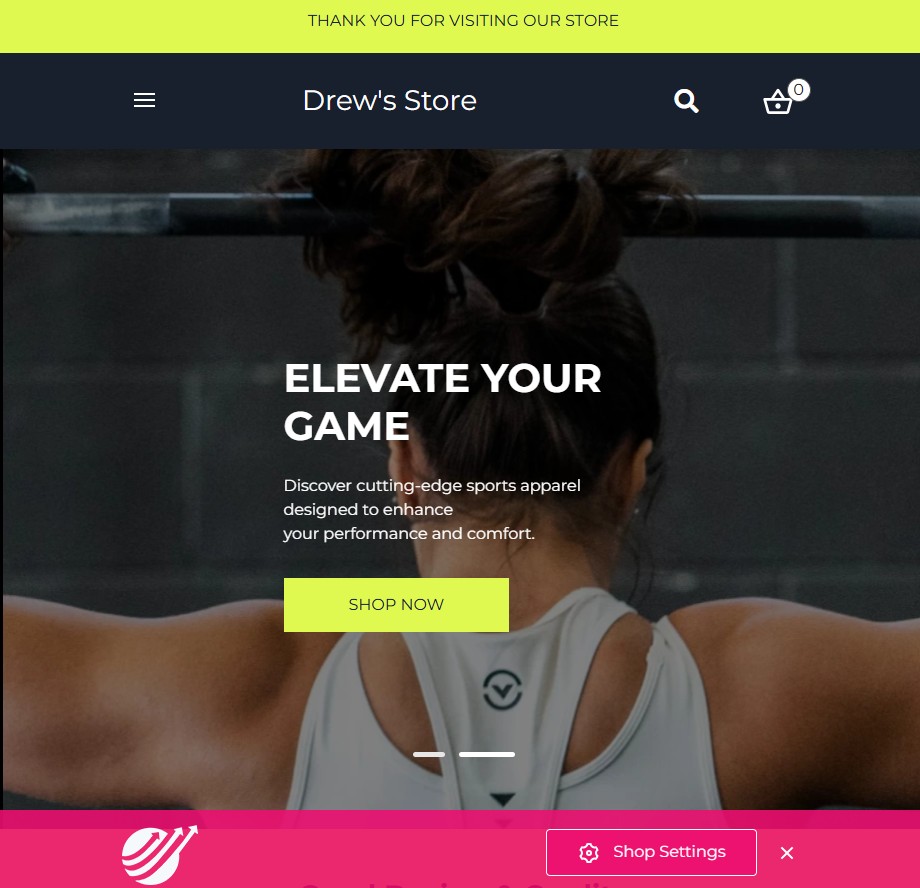
I chose the sports and fitness niche and named it Drew's Store as a test. By the time I'd entered my card details the store was already up - complete with a hero banner, pre-loaded products, and a working cart. I didn't write a single line of copy, install any apps, or configure any settings. It just worked.
The forced niche selection at the start is worth calling out because it's both a pro and a con. For a beginner with no idea what to sell, it eliminates analysis paralysis immediately. For an experienced seller who wants a general store or a custom niche, it feels restrictive. You can add products from other categories later, but your store's initial structure and branding are built around that first niche choice.
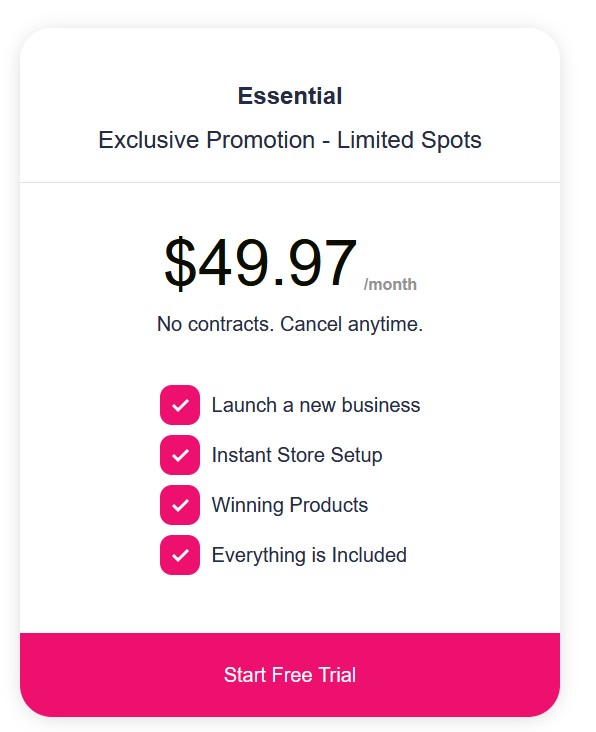
One more thing: the trial does require a credit card upfront. This is standard practice but worth knowing before you start - if you don't cancel before day 14 you'll be charged $49.97 automatically.
What Do You Get Out of the Box?
Quite a lot, honestly. Your SellShop comes pre-loaded with winning products in your chosen niche, sourced directly from Sell The Trend's NEXUS AI product database. Every product page is already built - with descriptions, images, pricing, and customer reviews imported automatically.
Beyond the products, the platform includes several features that you'd normally pay extra for on Shopify. The built-in review importer pulls verified customer reviews with one click. The checkout is conversion-optimised out of the box. You get instant currency conversion for international customers, a built-in upsell app that shows related product recommendations on product pages, and an SSL certificate and hosting included at no extra cost.
I think this is where SellShop makes its strongest case. On Shopify, getting all of those features working together means installing five or six separate apps, each with their own monthly fee. Here it's all included in the one subscription price.
How Customizable Is a SellShop Store?
More than you'd expect for a one-click store builder, but less than Shopify. The drag-and-drop editor lets you change any element on the page - headers, product descriptions, images, colours, layout - without touching any code. You can adjust every element of the store to match your branding once the initial template is in place.
What you can't do is install custom apps, use third-party themes, or deeply restructure the store's architecture the way you can with Shopify. The templates are clean and professional-looking, but they are templates. If you've seen a few SellShop stores you'll notice the family resemblance between them. That's fine for getting started, but it becomes a limitation once you want to differentiate your brand in a competitive niche.
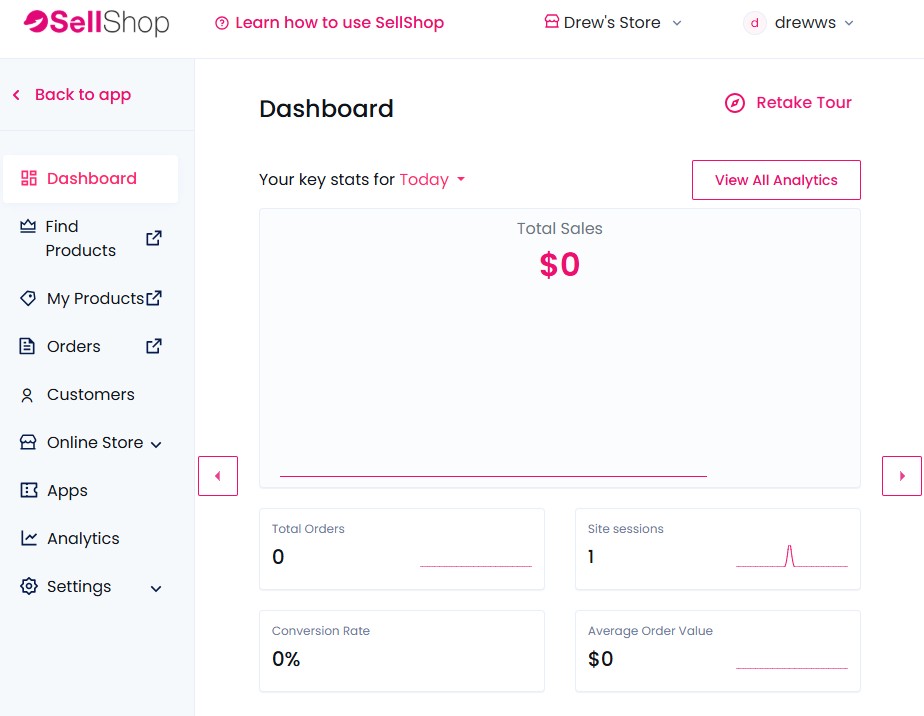
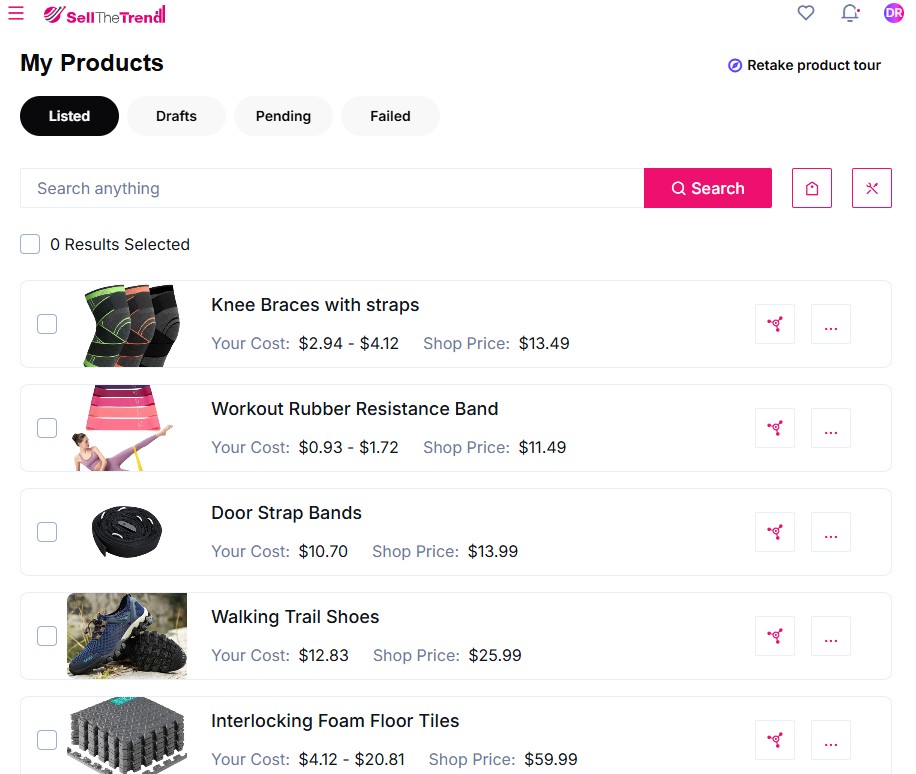
Here are some default products Sellshop suggested for my store:
How Does SellShop Handle Order Fulfillment?
Fulfillment is fully automated. When a customer places an order, the platform processes it and routes it to your supplier automatically. You fulfill with one click from the dashboard, and tracking information is sent to the customer without any manual input from you.
Suppliers in the SellShop directory are ranked and rated on three criteria: shipping speed, item accuracy, and communication. That rating system matters when you're choosing which supplier to use for a given product - a supplier with 3,000 sales and strong ratings across all three categories is a meaningfully different choice than one with 200 sales and mixed feedback.
SellShop also gives you access to US-based suppliers for faster domestic shipping. With tariff uncertainty continuing to affect AliExpress delivery times in 2026, being able to filter for US warehouse suppliers directly inside the platform is a practical advantage that directly affects your customer experience.
What Marketing Tools Are Included?
Three tools are built into the platform. The Video Creator lets you build product ad videos from images without any external software - grab images from a product URL, choose music from the library, add text overlays, and export. It won't replace a professional editor but it gets a usable ad creative made in ten minutes.
The Facebook Audience Builder generates custom targeting audiences based on your product category, pulling from interest, job, magazine, and public figure segments. It's a useful starting point if you've never run Facebook ads before and don't know where to begin with audience targeting.
The Engagement Calculator helps you vet influencers before you pay them. Enter their follower count, average likes, and average comments and it tells you whether the engagement ratio stacks up. A lot of micro-influencers have inflated follower counts, and this tool surfaces that problem before you spend money finding out the hard way.
How Much Does SellShop Cost?
SellShop has a single pricing plan at $49.97 per month. There are no tiers, no annual billing option listed on the standalone site, and no upsells. The 14-day free trial requires card details upfront.
The important number that isn't in the headline price is the 2% transaction fee on every sale. This applies on the base plan and is the one cost most beginner reviews gloss over. At low volume it's barely noticeable - $10 on a $500 month. At meaningful volume it adds up fast. If you're doing $5,000 a month in sales, that's $100 on top of the $49.97 subscription.
For context, Shopify's Basic plan also charges a 2% transaction fee - but only if you use an external payment processor instead of Shopify Payments. If you use Shopify Payments (which is available in most countries), that fee drops to 0%. SellShop doesn't have an equivalent way to eliminate the transaction fee at the base plan level.
The good news is that if you upgrade to Sell The Trend's Pro or Pro+ plans, the transaction fee is reduced. And since SellShop is included inside all Sell The Trend subscriptions from Essential upward, you're effectively getting the store builder as part of the broader research platform rather than paying for it separately.
SellShop vs Shopify: Which Is Better for Dropshippers?
This is the central question most people searching for a SellShop review actually want answered, so let me give you a straight comparison rather than a vague "it depends."
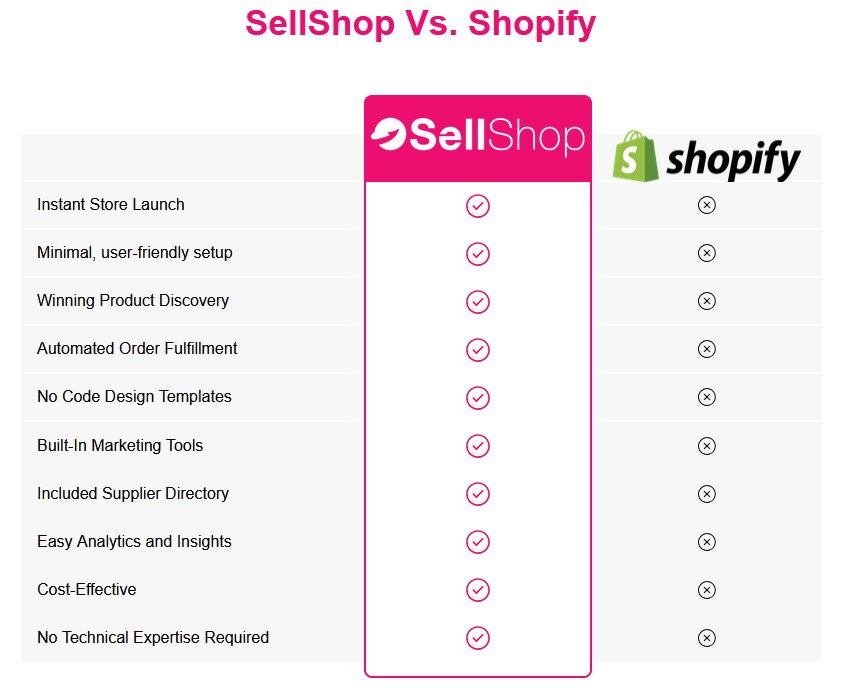
SellShop has a clear edge in several areas that matter specifically to dropshippers. Instant store launch is built into the product - you pick a niche and you're live in minutes, something Shopify simply doesn't offer out of the box.
Winning product discovery through the NEXUS AI is included in your subscription, whereas Shopify has no native product research tool at all. Automated order fulfillment, a built-in supplier directory, and marketing tools like the video ad creator and Facebook audience builder are all included with SellShop. On Shopify, every one of those requires a separate app with its own monthly fee.
Shopify hits back on customization, ecosystem, and scalability. It has thousands of apps, unlimited theme options, and the ability to eliminate transaction fees entirely if you use Shopify Payments. It's a platform built for any ecommerce business, not just dropshipping, which means the ceiling for what you can build is significantly higher. For a branded long-term store, Shopify is still the more capable platform.
The cost comparison is where it gets interesting. A beginner Shopify dropshipping setup typically looks like this: Shopify Basic at $39/month, a review app around $15/month, a currency converter around $10/month, an upsell app around $15/month, and Sell The Trend for product research at $49.97/month. That's roughly $130/month for a properly equipped store.
SellShop at $49.97/month includes all of that in one subscription. For a beginner testing their first products, the saving is real.
The equation shifts at scale because of the 2% transaction fee. Shopify Basic also charges 2% on external payment processors, but drops to 0% if you use Shopify Payments. SellShop doesn't have an equivalent - the 2% applies regardless of payment processor at the standard plan level. At $5,000/month in sales that's $100 on top of your subscription. At $10,000/month it's $200. That's when Shopify starts winning the cost argument.
I feel like the honest summary is this: SellShop wins for months one through twelve of a new store. Shopify wins once you're scaling consistently and want to cut the transaction fee.
What Do I Like About SellShop?
The setup speed is genuinely remarkable. I had a live, professional-looking store with products, reviews, and a working cart in under five minutes. For anyone who has spent days configuring a Shopify store from scratch, that difference is not trivial.
The built-in features replace a real app stack. The review importer, currency converter, and upsell tool alone would cost $30-40/month on Shopify. Having them baked in without any installation or configuration is a genuine quality-of-life improvement for beginners.
The connection to Sell The Trend's NEXUS AI is the platform's biggest advantage. Your store isn't pre-loaded with random products - it's pre-loaded with products that the AI has identified as trending and high-demand. That's a meaningfully better starting point than a blank Shopify store where you're guessing what to sell.
The 24/7 support is worth flagging too. For a beginner who hits a wall at 11pm, having live support available is more valuable than it sounds.
What Don't I Like About SellShop?
The 2% transaction fee is the most significant limitation and it's not prominently displayed anywhere in the onboarding flow. You have to dig into the FAQ to find it. I think that's a transparency problem and it's the main reason I'd caution anyone doing real volume to think carefully before committing.
The store templates look professional but generic. After you've seen a few SellShop stores you'll recognise the design pattern. That's fine for testing products but it becomes a problem when you're trying to build a brand that customers remember and return to.
The forced niche selection at setup is limiting for experienced sellers. If you want a general store or a niche that isn't in the six preset options, you have to work around the initial structure rather than building from a blank canvas.
There's no app ecosystem. Shopify has thousands of apps for every conceivable ecommerce use case. SellShop has what it has, and what it doesn't have you simply can't add. For most beginners this isn't an issue, but as your needs get more specific it becomes one.
What Are the Alternatives to SellShop?
If you want the full Sell The Trend research engine alongside your store, the smarter move is often to sign up for the full Sell The Trend subscription at the Essential tier. You get SellShop included, plus the NEXUS AI, TikTok and Facebook ad finders, Store Intelligence, and all the other tools. The price is the same $49.97/month - you're just getting significantly more for it.
If you want a more established platform with a wider app ecosystem and more customization, Shopify is still the standard. The learning curve is steeper and the cost adds up once you factor in apps, but the ceiling for what you can build is much higher.
If your priority is supplier quality and domestic shipping rather than store building speed, SaleHoo is worth looking at. It connects you with vetted US and international suppliers with a focus on shipping reliability - a different approach to the same problem of finding things people want to buy.
Is SellShop Worth It?
SellShop is worth it for one specific type of person: a complete beginner who wants to launch a dropshipping store as fast as possible without the Shopify learning curve or app costs.
If that's you, the $49.97/month gets you a genuinely functional store, solid product research, built-in marketing tools, and 24/7 support - all without installing anything or writing a line of code. The five-minute setup is real. The store that comes out the other end is real. For a first store or a product test, it does the job.
If you're an experienced seller or you're planning to scale seriously, I'd point you toward the full Sell The Trend subscription which includes SellShop alongside the more powerful research and ad intelligence tools. And if you're already past the beginner stage, Shopify with a proper app stack will give you more control for the long run.
Frequently Asked Questions
What is SellShop?
SellShop is an all-in-one dropshipping store builder made by Sell The Trend. It lets you launch a complete online store in minutes, pre-loaded with winning products and connected to vetted suppliers, without needing Shopify or any third-party apps.
How much does SellShop cost?
SellShop costs $49.97 per month with a 14-day free trial. A 2% transaction fee applies on every sale at the base plan level. No annual billing option is available on the standalone SellShop plan.
Does SellShop charge a transaction fee?
Yes. SellShop charges a 2% transaction fee on sales at the standard plan level. This fee can be reduced on higher-tier Sell The Trend plans. It is disclosed in the FAQ on the SellShop pricing page but is not prominently shown during signup.
Is SellShop better than Shopify?
For complete beginners, SellShop is simpler and more cost-effective in the early months because built-in features replace paid Shopify apps. For experienced sellers or those scaling seriously, Shopify offers more customization, a wider app ecosystem, and the ability to eliminate transaction fees using Shopify Payments.
Do I need Sell The Trend to use SellShop?
Not separately. SellShop is powered by Sell The Trend's infrastructure, and signing up for SellShop gives you access to the Sell The Trend platform as the backbone for product research and fulfillment. They are effectively the same product approached from different entry points.
What niches does SellShop support?
SellShop offers six preset niche templates at setup: pets, home and garden, sports and fitness, fashion, electronics, and moms and newborn. You can add products from other categories after setup, but your initial store is built around the niche you choose at signup.
Is there a free trial for SellShop?
Yes. SellShop offers a 14-day free trial. A credit card is required to activate it. If you do not cancel before the trial ends, your card will be charged $49.97 automatically.

- Dropship Breakthru Review: Price, Guarantees, Fine Print - October 11, 2026
- Best Outdoor Equipment Fulfillment Companies for DTC Brands - October 8, 2026
- Why Your Site Needs an Automated Price Calculator - October 7, 2026