Hey, Drew here. Welcome to my Mikkelsen Twins review for 2026 — and a lot has changed since I first wrote about these guys.
If you've seen Christian and Rasmus Mikkelsen on YouTube promising passive income from publishing books with AI, you're trying to answer one question: are they legit, or is this a scam you should run from?
Here's the short version before we dig in. The Mikkelsen Twins aren't outright scammers — but in April 2026 their company, Publishing.com, agreed to pay $1.5 million to settle FTC charges over deceptive marketing, fake refund guarantees, and paid-for testimonials.
Their course costs $1,995 with a $9,800 upsell waiting behind it, and as I write this, there isn't even a working buy button on their website. So my honest take is a hard pass — and below I'll show you exactly why, plus a far cheaper path if your real goal is making money online with AI.
I've spent 15 years reviewing make-money-online courses. For this one I read the full FTC complaint, went through the Trustpilot and BBB records, and clicked through Publishing.com's current site page by page. No hype, just what I found.
💡 The Mikkelsen Twins Sell a $1,995 Course (Plus a $9,800 Upsell). Here's the $47 AI Alternative.
AI Publishing Academy teaches you to research, write, and publish books with AI, then sell them on Amazon. The idea isn't the problem — the price, the upsells, and a company with a fresh FTC settlement are.
The digital products module inside my 2026 AI Business Blueprint walks you through the same core idea — using AI to create and sell digital products like books — with no sales call, no five-figure upsell, and no refund maze. It's $47, one time. Jump to the $47 AI alternative or keep reading for the full breakdown.
⭐ Mikkelsen Twins Rating: 2 out of 5
I give the Mikkelsen Twins and AI Publishing Academy a 2 out of 5. The business model underneath — publishing books on Amazon — is real, and a small number of dedicated people do make money with it. That's the only reason this isn't a 1.
Everything wrapped around it drags the score down: a $1.5 million FTC settlement for misleading people, a refund "guarantee" that was almost impossible to claim, testimonials the FTC says were paid for or written by employees, a $9,800 upsell, and a website that no longer seems to sell the course at all. When the safest thing I can tell you about a program is that you probably can't even buy it right now, that says most of what you need to know.
Who Are the Mikkelsen Twins?
The Mikkelsen Twins are Christian and Rasmus Mikkelsen, 29-year-old Danish brothers who built a self-publishing education company now called Publishing.com.
Their story is the classic origin pitch: stuck in dead-end jobs, they quit, started publishing audiobooks on Audible, built a YouTube following around the strategy, and turned that audience into a course business. Today they market themselves as millionaire digital nomads. Christian is the CEO and owns half the company; Rasmus is the Chief Product Officer and owns a quarter.

Their track record isn't spotless. In 2018, Amazon limited the twins' own publishing accounts after catching them running books through Google Translate and reselling the poorly translated versions — a story Inc. magazine detailed in a 2023 feature. Inc. also named Publishing.com one of the fastest-growing companies in America, while Vox described the twins as helping fuel an economy of low-value online "slop." Both things can be true at once, and that tension runs through this whole review.
What Is AI Publishing Academy?
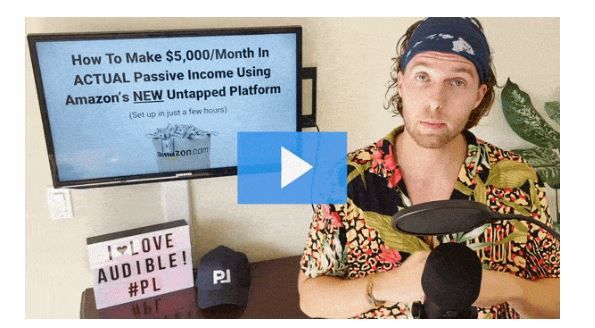
AI Publishing Academy (AIA) is the Mikkelsen Twins' self-publishing course. It teaches you to use AI to research, outline, and write books, then sell them as ebooks and audiobooks on Amazon's Kindle Direct Publishing and Audible.
If the name sounds different from what you remember, that's because it has changed several times. According to the FTC's own filing, the course launched as Audio Income Academy in September 2019, became Audiobook Impact Academy in September 2022, and was renamed AI Publishing Academy in April 2023 — and the parent company operated as Publishing Life before all that. So "Audiobook Income Academy," "Publishing.com," and "AI Publishing Academy" all point back to the same program.
The whole pitch now leans on Publishing.ai, their proprietary software that generates topic ideas, outlines, and full manuscripts up to 30,000 words. The dream they sell is that you barely write a word: the AI drafts the book, you upload it, and royalties roll in. We'll get to how well that holds up in practice.
Can You Even Buy AI Publishing Academy in 2026?
As I write this in June 2026, there's no clear way to actually buy AI Publishing Academy from Publishing.com's website.
I went through their site carefully. Both the homepage and the dedicated course page — the one literally headlined "Get started with AI Publishing Academy" — send every single button to a login screen for existing students. There's no checkout, no "enroll," no "apply," not even a "book a call." The only entry point I could find is a "Watch Intro Training" webinar link buried in the footer.
The rest of the site looks dormant, too. Their blog hasn't published anything since April 2025, the copyright still reads "© 2025," and their AI software page still advertises features as "Coming Q4 2024." That's not the look of a business actively selling a flagship $2,000 program.
To be fair, I found no announcement that the company has shut down, and the FTC settlement didn't order them to stop selling. So I won't tell you they're definitely gone. But if a company's own sales page has no buy button, the question of whether you should buy this becomes a lot less urgent. If you landed here because an old ad sent you, that ad may be pointing at a door that's already closed.
What Does AI Publishing Academy Cost?
AI Publishing Academy has been sold for $1,995 — but that's only the entry fee. The real cost climbs fast once you add the upsell and the money you'll burn trying to make the system work.
Per the FTC, the AIA course runs up to $1,995. Once you're in, coaches push a second program called Publishing Accelerator, which the FTC says generally sold for $9,800. That's nearly $11,800 before you've published a single book.
Then come the costs nobody mentions on the webinar — editing, cover design, and the big one, advertising to get anyone to notice your book. One customer told the FTC they spent over $49,000 on ads alone, none of which was disclosed upfront as necessary. Others reported being pushed to "use credit cards, borrow money, put yourself in debt" to afford the program in the first place.
The headline price has also bounced around for years. I've seen it marketed at $6,000, then $4,000 with a countdown-timer "discount" down to $1,995. Opaque, sales-call pricing like that is a warning sign all on its own.
Does Self-Publishing With AI Still Work in 2026?
Yes, self-publishing on Amazon still works in 2026 — but it's a grind and a numbers game, not the autopilot income the Mikkelsen Twins sell.
People genuinely earn money publishing niche non-fiction and low-content books on Amazon KDP. The catch is volume. The twins themselves claim to have published over 150 books — which should tell you it takes a deep catalog, not one lucky title, to reach real money.
AI makes churning out books faster, and that's exactly the problem. The market is now flooded with low-effort AI titles, and both Amazon and readers have noticed. Amazon limits how many books you can upload per day and has been cracking down on low-quality AI-generated content, so the "publish a book in 7 days and watch the cash flow" fantasy runs straight into a marketplace fighting it.
If you do go this route, you have to be careful about how you publish so your account doesn't get flagged — I wrote a full guide on publishing AI content without getting flagged that's worth reading first. The model works. It's just slower, harder, and more expensive than the ads imply.
The FTC Case: What the Government Actually Found
In April 2026, Publishing.com and the Mikkelsen brothers agreed to pay $1.5 million to settle Federal Trade Commission charges that they deceived customers about earnings, refunds, and reviews.
This is the single biggest reason I can't recommend these guys, so let's be specific. The FTC's complaint laid out three problems.
First, the income claims. Christian Mikkelsen's marketing told people they could copy his students' system to make $1,000 to $3,000 a month in passive income while working an hour a day. The FTC says most customers never came close.
Second, the refund "guarantee." The ads promised a 12-month, no-questions-asked refund. In reality, the FTC found buyers had only a 3-day window — after which they had to publish a full book or a two-hour audiobook just to be considered, and some were even told they'd have to hand over 5% of their book revenue to qualify.
Third, the testimonials. The FTC found Publishing.com failed to disclose that some glowing reviews came from its own employees or the Mikkelsens' relatives, ran a contest dangling a $10,000 prize for video testimonials, and at times made refunds conditional on leaving a positive review.
The settlement bars them from making earnings claims they can't back up, hiding refund terms, or disguising paid reviews. If you've noticed their site is suddenly covered in "results aren't typical" disclaimers — that's why.
Mikkelsen Twins Success Stories: Are Students Really Making Money?
By Publishing.com's own numbers, the average student earns far less than the marketing promises.
Here's the stat that says it all. In a company survey of 1,119 students, Publishing.com's own disclosure put the average income at about $1,801 a month — and that's gross royalties, before ad spend, before the $9,800 upsell, before taxes. Set that next to the "$1,000 to $3,000 a month in passive income" pitch and the gap is obvious. Remember, too, that survey respondents skew toward people still active in the program, so the true average across everyone who paid is almost certainly lower.
Yes, a handful of students hit $8,000 a month or more, and the twins love to put those screenshots front and center. But after the FTC's findings on incentivized and employee testimonials, every one of those success stories deserves a raised eyebrow. Real results exist in this business. They're just rarer and harder-won than a highlight reel suggests.
What Others Think: Trustpilot, BBB, and Reddit
Outside the company's own site, the reviews are mixed at best and alarming at worst.
On Trustpilot, Publishing.com still shows a high star rating across more than 2,000 reviews — but the FTC says that rating was propped up by incentivized reviews, so take the number with a grain of salt. Dig into the actual one-star reviews and a pattern repeats: surprise charges, refund requests denied, and support that goes quiet the moment you ask for your money back.
One reviewer described spending eight months writing prompts, only for the software to keep mangling the manuscript — and was still refused a refund because no book had been published.
The Better Business Bureau is harsher. The BBB opened an investigation into Publishing.com in March 2026, the company didn't respond to its request for information, and there's a documented pattern of dozens of complaints, many about the same refund and upsell issues. Over on Reddit, the mood is mostly skeptical, with experienced self-publishers picking the ads apart.
Worth noting: the loudest positive voices online are often affiliates earning a commission on the sale — something to keep in mind whenever you read a glowing "review."
What I Like About AI Publishing Academy (The Pros)
I try to be fair, so here's what the Mikkelsen Twins get right.
The business model is legitimate. Publishing books on Amazon is a genuine way to make money, and they're at least teaching a real skill rather than thin air.
The training is structured. By most accounts the lessons are organized and beginner-friendly, walking you step by step through the publishing process.
The AI software is a real tool. Publishing.ai does what it claims — generating outlines and drafts — and for some people that's a legitimate time-saver.
There's a large community. Tens of thousands of students and an active group means you won't be completely on your own.
That's the honest case for it. Now the other side.
What I Don't Like About AI Publishing Academy (The Cons)
The FTC settlement. A $1.5 million penalty for deceptive marketing isn't a minor blemish — it's a federal regulator formally finding that this company misled people about money, refunds, and reviews.
The real cost. The $1,995 sticker is the door price. The $9,800 Publishing Accelerator upsell and thousands in ad spend are where the money actually goes.
The refund maze. A "12-month guarantee" that gave you three days, then demanded you publish a book to qualify, is the opposite of risk-free.
The shaky social proof. When testimonials are incentivized and some come from employees and relatives, the success stories can't be trusted at face value.
The AI slop problem. Flooding Amazon with AI books gets harder and riskier as the platform cracks down.
You probably can't even buy it. A sales page with no buy button and a blog frozen in 2025 is not a confidence-builder.
That's a lot of red flags for one program.
Alternatives to AI Publishing Academy
If you still want to publish books, there are cheaper and more transparent options. And if your real aim is making money online with AI, there are far better uses of $2,000.
For people set specifically on self-publishing, there are courses built around the same Amazon KDP model without the FTC baggage — I've reviewed one in Fiction Profits Academy if the publishing path is genuinely your thing. You can also learn most of the fundamentals free on YouTube before paying anyone a cent.
But here's my honest read after 15 years in this space: if the goal is income online, publishing AI books on a saturated Amazon is one of the harder ways to get there. Affiliate marketing and digital products are more forgiving for beginners — I keep an updated list of the best affiliate marketing courses if you want to compare your options.
And the closest alternative to what the Mikkelsens actually promise — using AI to build income online without a team or a big ad budget — is the approach I teach myself. More on that now.
The AI Approach: A $47 Alternative With No $9,800 Upsell
If you like the idea of using AI to create and sell digital products — which is really what AI Publishing Academy is selling — you can learn it for $47 instead of $1,995 plus upsells.
I built The 2026 AI Business Blueprint to teach five AI-powered business models without sales calls, five-figure upsells, or refund games. The most relevant part for anyone drawn to the Mikkelsen pitch is the digital products module.
It walks you through using AI to create and sell digital products like ebooks and guides, figure out what people actually want to buy, and get those products in front of buyers — without betting everything on flooding Amazon with low-quality titles.
It's $47, one time. No coach calling to push a $9,800 add-on. No 12-month "guarantee" with a trapdoor in the fine print. If you want to see exactly what's inside and how it stacks up against high-ticket programs like this one, here's my full breakdown of the five AI business models.
And if you'd rather start free, grab my guide on how to build a $10K/month AI business without a team or paid ads and get the lay of the land before you spend a dollar.
Who Is AI Publishing Academy For?
In its best light, AIA was built for total beginners who want a done-with-you system for publishing books on Amazon and don't mind paying a premium for structure and hand-holding. If you have money to spare, patience for a slow grind, and you specifically want to build a catalog of books, the underlying skill is real.
But given the FTC settlement and the fact that you can't readily buy it right now, even that narrow case is tough to make in 2026.
Who Is It NOT For?
AI Publishing Academy is not for you if you're expecting passive income on autopilot — publishing books is active work, especially the marketing.
It's not for anyone on a tight budget. Between the course, the upsell, and ad spend, you can be out five figures before you ever turn a profit.
And it's not for people who want to trust the company they're buying from. A $1.5 million FTC settlement over deceptive marketing is about as clear a warning as you'll get. If any of those describe you, keep your $2,000.
Is AI Publishing Academy a Scam or Legit?
AI Publishing Academy isn't a textbook scam — you do get a real course and real software — but the FTC formally found the company's marketing deceptive, which is about as close to the line as it gets.
A scam usually means you pay and receive nothing. That's not quite what happened here; people who paid did get training and tools. So technically, legit. The problem is everything around the product: misleading income claims, a refund guarantee that wasn't, and reviews that were quietly paid for, all confirmed by a federal regulator.
In plain terms, the model is legit and the company's conduct was not. That's why my verdict is to stay away — not because you'd get literally nothing, but because you'd be handing serious money to a company the government just penalized for misleading people exactly like you.
Final Thoughts
So, are the Mikkelsen Twins legit or a scam? Somewhere in between — and that's not a compliment.
They teach a real business model, and a small number of committed students do make money with it. But this is a company that just agreed to pay $1.5 million for deceptive marketing, charges $1,995 with a $9,800 upsell behind it, ran testimonials the FTC says were paid for, and currently doesn't even appear to be selling the course. That's not where I'd put my money or my time.
If your dream is using AI to make money online, you don't need a five-figure program with a regulator on its back. Start with my 2026 AI Business Blueprint for $47, or grab the free guide first and decide for yourself. Either way, keep your eyes open and your wallet closed on this one.
Frequently Asked Questions
How much does AI Publishing Academy cost?
The core course has been priced at $1,995. The bigger expense is the Publishing Accelerator upsell, which the FTC says generally sold for $9,800, plus editing, cover design, and the advertising you'll need to actually sell books. Realistically, plan on several thousand dollars minimum before you see a profit — if you see one.
Can you get a refund from Publishing.com?
It's been difficult. Despite advertising a 12-month "no questions asked" guarantee, the FTC found buyers actually had just a 3-day window, after which they had to publish a full book or a two-hour audiobook to even be considered — and some were asked to share a percentage of their revenue first. Many customers reported never getting their money back.
Did the Mikkelsen Twins get in trouble with the FTC?
Yes. In April 2026, Publishing.com and brothers Christian and Rasmus Mikkelsen agreed to pay $1.5 million to settle FTC charges of deceptive earnings claims, misleading refund guarantees, and undisclosed paid testimonials. The settlement requires them to substantiate any future income claims and clearly disclose paid or employee reviews.
Can you still buy AI Publishing Academy in 2026?
As of this update, there's no clear way to buy it from Publishing.com's website — every button on their sales page routes to a login for existing students, and the site hasn't been updated since 2025. There's been no official shutdown announcement, but there's also no working purchase path that I could find.
How much money do Publishing.com students really make?
By Publishing.com's own survey of 1,119 students, the average income was about $1,801 a month in gross royalties — before ad spend, upsells, and taxes — not the $1,000 to $3,000 a month in passive income the marketing promised. A few students earn much more; many earn little or nothing.
Is AI Publishing Academy a scam?
Not in the strict sense — you do receive a real course and software. But the FTC formally found the company's marketing deceptive, so while the product is legitimate, the way it was sold was not. That's why I'd steer clear.
Are the Mikkelsen Twins legit?
They're real entrepreneurs teaching a real business model, so they're not fake. But "legit" is a stretch for a company that just paid $1.5 million to settle federal charges over how it marketed its program. Legit teachers, questionable business practices.
Can I just use AI instead of paying for this course?
Yes. The whole premise — using AI to create and sell digital products like books — is something you can learn without a $1,995 course and a $9,800 upsell. The digital products module of my $47 2026 AI Business Blueprint covers the same core idea, and you can start with my free guide to test the waters first.
How is your AI Business Blueprint different?
It's $47 one time with no upsells, no sales calls, and no refund maze. Instead of betting everything on flooding Amazon with AI books, it covers five different AI business models so you can pick what fits — including digital products, the closest match to what AI Publishing Academy teaches, for a tiny fraction of the price.
Related Posts
...

- Essential Considerations When Choosing a Commercial Building - October 3, 2026
- How Businesses Can Plan for Their Own Research Laboratory - October 2, 2026
- Expert Tips for Boosting Customer Retention - September 30, 2026

I just wasted an hour of my time. Mikkelsen Twins are a scam. In the end it all comes down to $$$$$$. The Video goes on for almost an hour constantly talking about free and then Wham…the cost of the training. Shame on you guys
Thanks for your helpful review.
I did watch the twins presentation and thought it was quite a lot to charge for the course. Sophie Howard’s one is even more I think at 5 x $497.
Having watched the 2 presentations I did wonder if I could simply work out how to do it with free information on line. It looks like that could be the case. Stefan James for example is giving some more nice free information too. So KDP may be something I look at further but I won’t be paying $2,000 + for an expensive course.
Thanks for your help.
Stuart
Thanks for your feedback Stuart. I agree, 2K is a lot of money for a course. You can certainly get the info for free online but it might take longer to see success. However, taking is action is key!
Can u make money with affiliate marketing ( or amazon selling) if u don’t have a laptop or any money to invest?
Without a computer you could make Youtube or Tiktok videos on your phone and recommend products with your affiliate link but that is very limiting.
Really want to thank you for your time to review their course, my wife show me this and was Interested on buying their course but I told her thst it’s just too good to be true,. With your review, I have my wife read your blog and was convinced thst it’s not worth buying.
No problem Tony, impulse buys are never really a good thing. As they say, you gotta shop around!
Their course is led by wildlymisleading income claims derived from people who were abusing blackhat tactics. In essence the Mikkelsen Twins are a 100% scam. STAY AWAY!!!
Thanks for your feedback Mark!