Cost Per Action marketing is one of the most accessible ways to start making money online in 2026. You get paid when someone completes a specific action, which means you can earn commissions without requiring anyone to pull out their credit card and make a purchase.
The model works because it aligns incentives for everyone involved. Advertisers only pay for results they care about (signups, form fills, app installs), and you earn money for driving those results. No inventory, no customer support, no product creation required.
But here's the reality most beginner guides skip: successful CPA marketing requires constant testing. Landing pages, ad copy variations (10-20 per campaign), audience research, and SEO content for free traffic all demand significant time when done manually. AI compresses those timelines from hours to minutes, which is why CPA marketers who use AI tools can scale faster than those still doing everything by hand.
I've been watching the CPA marketing space evolve since 2019, and the fundamentals still work. This guide walks you through everything you need to know to get started properly in 2026.
What Is CPA Marketing?
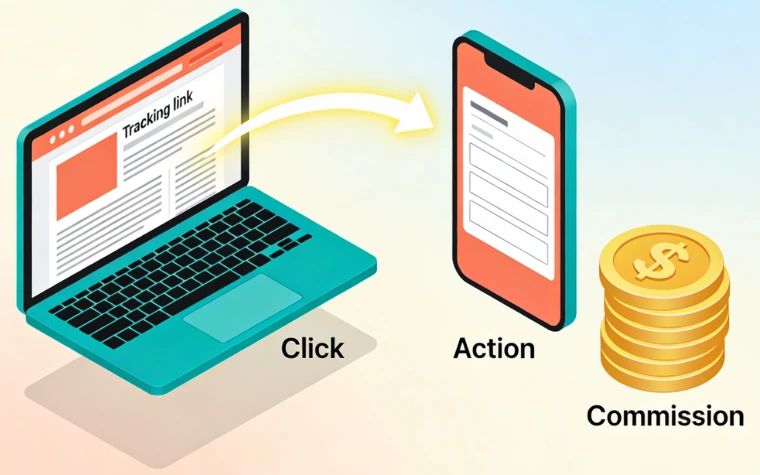
CPA marketing is a performance-based model where you earn a commission when someone clicks your unique tracking link and completes a predefined action. That action could be registering for a newsletter, downloading an app, filling out a form, requesting a quote, or starting a free trial.
The key difference from traditional affiliate marketing is that CPA actions usually don't require a purchase. Someone might hesitate to buy a $97 product but will happily sign up for a free trial or download a PDF guide. That lower friction often translates to higher conversion rates, which is why many beginners find CPA easier to get started with than standard affiliate sales.
There are three main payout models within CPA marketing, and each one pays for a different type of action. Cost Per Lead (CPL) pays when someone submits their contact information through a form. Cost Per Sale (CPS) pays when someone completes a purchase, which makes it functionally identical to traditional affiliate marketing.
Cost Per Install (CPI) pays when someone downloads and installs a mobile app. Most CPA networks offer a mix of all three, so you can choose the action type that matches your traffic source and audience.
The mechanics are straightforward. You join a CPA network, browse available offers, get approved for ones that match your traffic, receive your unique tracking link, and promote it through whatever channels you have access to.
When someone clicks your link and completes the action, the network's tracking system logs the conversion and credits your account. Commissions typically range from $0.50 for simple email submits to $100+ for high-value lead generation offers in finance, insurance, or business services.
How Does CPA Marketing Work in 2026?
You start by choosing an offer from a CPA network that matches your audience and traffic source. The offer page shows you the commission amount, the required action, the allowed traffic sources, and any geographic restrictions. Some offers only accept traffic from the United States or Canada, while others target international audiences with different payout rates by country.
Once you're approved for an offer, you receive a unique tracking link that includes your affiliate ID. You place that link in your content, whether that's a blog post, YouTube video description, social media post, paid ad landing page, or email campaign.
When someone clicks your link, a tracking cookie gets placed in their browser to connect their future actions back to you. Cookies are small data files that track user activity across websites and enable advertisers to attribute conversions to specific marketing sources.
Here's where things get more technical than most beginner guides admit. Not every conversion gets approved immediately. Many CPA networks use hold periods ranging from 24 hours to 30 days to validate that the action was legitimate.
They're checking for fraud signals like duplicate IP addresses, VPN usage, disposable email addresses, or users who complete the action but immediately close the account. If the action passes validation, the conversion moves from "pending" to "approved" and your commission becomes payable.
This quality control exists because advertisers got burned by fake leads in the early days of CPA marketing. A network's reputation depends on delivering genuine user actions, so they're strict about traffic quality. Low-quality traffic sources like incentivized clicks, bot traffic, or misleading ad copy will get your account banned fast. The networks that survive and thrive in 2026 are the ones enforcing real quality standards.
Payment schedules vary by network. Some pay weekly, others monthly, and a few offer daily payouts once you've built a track record. Minimum payout thresholds typically range from $50 to $100, and most networks support direct bank transfer, PayPal, Payoneer, or wire transfer. Payment terms matter when you're comparing networks, especially if you're using paid traffic and need faster cash flow to reinvest in ads.
One metric you'll see constantly in CPA marketing is EPC, which stands for Earnings Per Click. It's calculated by dividing your total earnings by the number of clicks your link received. If you earned $50 from 500 clicks, your EPC is $0.10. Higher EPC offers aren't always better because they often require more persuasion and have lower conversion rates, but EPC helps you compare performance across different offers and traffic sources.
What Are the Top CPA Networks to Join?
MaxBounty is one of the oldest networks still operating in 2026 and has a reputation for paying affiliates on time with minimal hassle. They carry thousands of offers across most verticals, and their affiliate managers actually respond when you need help. The application process is straightforward as long as you can explain your traffic source and promotion method clearly.
ClickDealer focuses on international offers and is particularly strong in Europe, Latin America, and Asia. If you're targeting non-US traffic or want to test geo-arbitrage strategies where you buy cheap clicks from one country and promote higher-paying offers to users in another country, ClickDealer is worth applying to.
CPAlead has one of the easiest approval processes for beginners. They accept smaller publishers and provide content lockers, survey walls, and mobile app install offers that work well for social media traffic. The offer quality varies more than premium networks, but if you're just starting out and other networks rejected you, CPAlead will likely approve you.
Perform[cb] (formerly Clickbooth) positions itself as a premium network with stricter publisher requirements and higher-quality exclusive offers. They vet advertisers carefully and tend to pay above-market rates for proven traffic sources. Getting approved takes more effort since they want to see an established site or social following, but the higher payouts justify the extra work once you're in.
PeerFly lists over 2,000 live offers at any given time and charges no monthly fees. They work with major brands like Uber, Target, and Fiverr, which means the offers tend to convert well because users recognize and trust the advertiser. Every approved publisher gets a dedicated account manager, which is rare at networks this size.
The application process for most networks follows the same pattern. They'll ask how you plan to promote offers (your traffic source), whether you have a website or social media presence, your estimated monthly traffic volume, and sometimes your previous experience with affiliate or performance marketing.
Be honest in your application because networks check for inconsistencies and will deny you if something doesn't add up. If you're brand new, mention specific traffic sources like "Facebook Ads for health and wellness audiences" or "SEO content targeting software buyers" rather than vague answers like "internet marketing."
Getting rejected from one network doesn't mean you'll get rejected from all of them. Different networks have different approval standards, so apply to multiple networks and see which ones accept you. Once you're approved and start generating conversions, other networks become easier to join because you have a track record.
What Traffic Sources Work for CPA Marketing?
Free traffic sources take longer to build but cost nothing beyond your time, which makes them ideal when you're learning. SEO content is the method I use most on this site. You build articles targeting search terms related to your CPA offers, wait for Google to rank them, and monetize the organic traffic with your affiliate links.
It takes three to six months to see meaningful results, but once the traffic starts flowing, it's essentially passive. Research shows that over 99% of organic traffic goes to page one listings, which makes ranking in Google critical for long-term CPA income.Check out this guide on how to start a blog if you want to go this route.
TikTok organic is one of the fastest-growing free traffic sources in 2026. Short-form video allows you to reach thousands of people without spending a dollar, and if your content goes viral, you can drive massive traffic to CPA offers quickly. The challenge is creating engaging videos consistently and dealing with the platform's rules around affiliate links, which change frequently.
Reddit and Quora work well if you genuinely answer questions in your niche and occasionally mention relevant CPA offers when they solve the person's problem. Heavy-handed promotion gets you banned fast, but helpful participation with occasional offers can drive steady conversions. Both platforms hate affiliate links in posts, so you usually need to funnel traffic to a landing page or blog post first.
YouTube combines SEO benefits with video's trust-building power. A single product review video can rank both on YouTube and in Google's video results, which doubles your exposure. You place CPA links in the video description and mention them in the video itself. If you're comfortable on camera and know your niche well, YouTube affiliate marketing can generate significant long-term income.
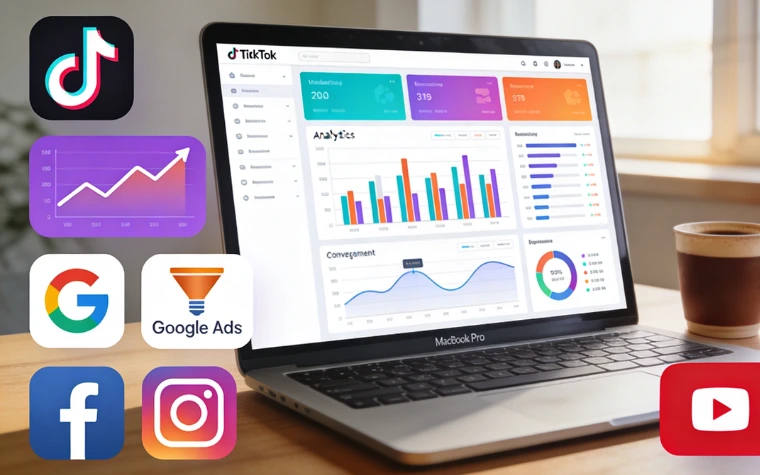
Paid traffic sources let you scale faster but require upfront investment and tight tracking to stay profitable. Facebook and Instagram Ads remain strong for interest-based targeting. You can show highly specific CPA offers to users based on their demographics, interests, and behaviors.
The learning curve is steep because ad costs fluctuate and conversion rates vary by audience segment, but once you find a profitable combination, you can scale it aggressively.
Google Ads delivers high-intent traffic because people are actively searching for solutions. If someone searches "best project management software" and you're promoting a CPA offer for a free trial of a project management tool, the conversion rate will be higher than showing that same ad to random Facebook users. The downside is that Google Ads costs more per click, especially in competitive niches like finance, insurance, and business software.
Native advertising through platforms like Taboola and Outbrain works exceptionally well for health, finance, and lifestyle CPA offers. Your ads appear as recommended content at the bottom of news articles, which makes them feel less intrusive than standard display ads. Click costs are lower than Facebook or Google, but you need compelling headlines and images to stand out in the content recommendation feeds.
Push notification ads through networks like PropellerAds and RichPush deliver cheap clicks and work well for simple offer types like sweepstakes, mobile games, and app installs. The traffic quality varies significantly, so you need to test thoroughly before scaling, but the low cost per click makes it attractive for beginners testing different offers.
Solo ads involve paying someone with an email list to send your CPA offer to their subscribers. This method gets mixed reviews because list quality varies enormously. Some solo ad sellers deliver real engaged subscribers who convert well, while others send bot traffic or disengaged users who never complete the action.
If you go this route, start with small test purchases and track conversion rates carefully before committing larger budgets.
For most beginners, I'd recommend starting with either SEO content or Facebook Ads depending on whether you want slower free traffic or faster paid results. Both methods teach you the fundamentals of audience targeting and offer selection without requiring deep technical knowledge.
How Do You Choose Profitable CPA Offers?
Match the offer to your audience first. There's no point promoting web hosting offers to a cooking audience or insurance quotes to a gaming audience. The offer has to solve a real problem your traffic already has, or the conversion rate will be terrible regardless of how well you execute everything else.
Look carefully at the commission structure and compare it against the effort required. A $1 email submit offer might convert at 10% while a $50 insurance quote offer converts at 0.5%. You need to do the math to figure out which one actually earns more per 100 clicks. Don't automatically chase the highest payouts because they usually come with the lowest conversion rates.
Check the allowed traffic sources before you commit time to promoting an offer. Some advertisers only accept search traffic, others ban social media traffic entirely, and many have geographic restrictions. If you're building a YouTube channel and the offer bans video traffic, you're wasting your time.
EPC (Earnings Per Click) data from the network helps you compare offers objectively. If Offer A pays $3 per conversion but has a network-wide EPC of $0.05 while Offer B pays $1 per conversion with an EPC of $0.15, Offer B will likely earn you more money because it converts better even though the payout is lower. EPC isn't perfect because your results depend on your traffic quality, but it's a useful starting point for comparing similar offers.
Geographic targeting opens up arbitrage opportunities where you buy cheaper traffic from one country and promote offers to users in another country. Traffic from India or Indonesia costs a fraction of US traffic, and some CPA offers pay the same rate regardless of where the click originated.
The catch is that many premium offers restrict traffic to Tier 1 countries (US, Canada, UK, Australia), so you need to find offers that accept Tier 2 and Tier 3 traffic at reasonable payouts.
Niche selection matters more than most beginners realize. Some niches have passionate buyers who take action quickly, while others have window shoppers who never convert. Finance, health, dating, and business opportunity offers tend to perform well because people in those niches are actively looking for solutions and willing to provide their information. Pick a niche you actually understand so your promotion feels genuine rather than forced.
How Do You Create High-Converting CPA Campaigns?
Landing page quality determines whether your traffic converts or bounces. The page needs to clearly explain what the user gets, why they should care, and what action to take next. Cluttered pages with too many options confuse visitors and kill conversion rates. One clear headline, three to five benefit statements, and a single call-to-action button convert better than complex pages with multiple offers.
Ad copy testing separates profitable campaigns from money-losing ones. Professional CPA marketers run 10 to 20 ad variations per campaign to find the angles that resonate with their audience. Each variation tests a different headline, value proposition, or emotional trigger. You might test "Save 50% on Your Insurance" against "Get a Quote in 60 Seconds" against "Compare 15 Companies Instantly" to see which angle drives the most conversions.
Creating 20 ad variations manually takes hours. You write the first version, then generate slight variations changing the headline, opening line, benefit structure, or call-to-action. By the time you've written 15 versions, your brain is fried and the later variations feel forced.
AI tools like ChatGPT or Claude can generate 20 unique variations in 30 seconds, which lets you test more angles faster without burning out on copywriting. You still need to review and polish the AI output to match your voice and ensure accuracy, but the first draft takes minutes instead of hours.
The same principle applies to landing page copy. A strong landing page requires persuasive headlines, benefit-focused body copy, social proof elements, and a clear call-to-action. Writing that from scratch takes one to two hours if you know what you're doing. With AI handling the first draft, you cut that to 10 to 15 minutes of reviewing and editing. You're not replacing strategy with automation. You're compressing execution time so you can test more offers and angles in the same amount of time.
A/B testing reveals which elements actually impact conversions versus which ones you just think matter. Test one variable at a time so you know what caused the change. Try different headlines first since that single element often swings conversion rates 50% or more. Then test your call-to-action button text, button color, form field count, and layout variations. Small improvements compound into significant conversion rate lifts over time.
Tracking everything obsessively separates amateurs from professionals. You need to know your cost per click, click-through rate, conversion rate, cost per conversion, and profit margin for every traffic source and offer combination you test. If you're running paid traffic without tracking, you're gambling, not marketing. Set up conversion tracking pixels from your CPA network and use Google Analytics or a dedicated tracking platform to monitor your funnel performance.
How Does AI Fix The Content Creation Bottleneck?

Here's what most CPA marketing guides won't tell you: the content volume requirement is brutal. Every successful traffic source demands consistent content creation, and most beginners quit in the first three months because they run out of time, ideas, or motivation.
SEO traffic requires two to four blog posts per week to build topical authority fast enough to compete in 2026. Each article takes two to three hours to research, outline, write, and optimize if you're doing it manually. That's six to twelve hours of weekly content creation just to maintain momentum before you've earned a single dollar.
YouTube requires three to five videos per week to maintain algorithmic favor and audience engagement. Each video needs scripting (60 to 90 minutes), filming, editing, thumbnail design, and metadata optimization. You're looking at eight to fifteen hours of weekly work per channel.
Facebook and Instagram content demands daily posting to stay visible in feeds. That means seven to ten posts per week, each requiring caption writing, image selection or creation, hashtag research, and engagement monitoring. Easily ten to fifteen hours weekly just for social media presence.
Paid advertising requires constant creative refresh because ad fatigue kills performance within two to three weeks. You need new ad copy, new images, new landing page variations, and new angles to test. Creating fresh creatives manually takes hours, and if you're running multiple campaigns, the creative workload becomes overwhelming.
Email marketing adds another layer of content creation. Email remains one of the highest-ROI marketing channels, with studies showing returns of $36 to $42 for every dollar spent, which makes it valuable for promoting CPA offers to engaged subscribers.
Welcome sequences require five to seven emails, product campaigns need three to five emails per offer, and weekly broadcasts keep your list engaged. Writing one complete email funnel from scratch takes eight to twelve hours when you factor in subject line testing, personalization, and flow optimization.
Do the math on what successful CPA marketers actually create weekly. If you're running SEO plus email plus social, you're looking at 20 to 30 hours of content creation per week before you even start driving traffic or analyzing data. This is why 95% of beginners quit before seeing results. They simply run out of capacity to maintain the volume required.
AI compresses those timelines by 70 to 80% without sacrificing quality. A blog post outline that took 30 minutes to create manually takes five minutes with AI handling the structure and research while you add expertise and examples. An email sequence that took ten hours to write manually takes 90 minutes with AI generating the complete sequence and you editing for voice and strategy. YouTube scripts drop from 90 minutes to ten minutes. Social media captions go from 30 minutes per post to 30 seconds. Landing page copy falls from two hours to ten minutes.
I'm not suggesting you let AI create garbage and publish it unedited. The CPA marketing fundamentals stay the same regardless of tools: genuine value, clear positioning, audience understanding, strategic offer selection. AI just removes the execution bottleneck that kills beginners before they build momentum. You maintain the same quality standards while executing at the volume required to compete in 2026.
Module 1 of The 2026 AI Business Blueprint covers AI for CPA content creation across every traffic source mentioned on this page. You learn how to generate blog post outlines in five minutes, complete email sequences in 90 minutes, YouTube scripts in ten minutes, social media caption batches in seconds, landing page copy in ten minutes, and 20 ad variations in 30 seconds. Same fundamentals, sustainable execution, no burnout.
What Are Common CPA Marketing Mistakes?
Promoting too many offers at once dilutes your focus and makes it impossible to optimize properly. Beginners see hundreds of available offers and want to test everything simultaneously. You end up with ten different landing pages, five traffic sources, and no clear data on what's actually working. Focus on one offer until it's profitable or definitively dead before moving to the next one.
Ignoring tracking means you're making decisions based on feelings instead of data. You might think Facebook traffic converts better than Google traffic, but without conversion tracking, you're just guessing. Install tracking pixels from your CPA network, set up Google Analytics goals, and check your numbers daily when you're testing new campaigns.
Using bad landing pages destroys conversion rates regardless of how good your traffic is. Slow load times, confusing layouts, broken mobile responsiveness, and sketchy design all signal to visitors that they should leave immediately. Your landing page doesn't need to be beautiful, but it needs to be fast, clear, and functional on all devices.
Not testing enough ad variations leaves money on the table. The difference between a mediocre ad and a great ad can be 200% or more in conversion rate. If you only test one or two variations, you'll never find the winning angles that make campaigns profitable. Successful CPA marketers test constantly because they know most variations fail but the winners pay for all the testing.
Sending low-quality traffic to offers gets your account suspended. Networks track everything and they know when you're sending bot traffic, incentivized clicks, misleading users about what they're signing up for, or violating the offer's terms. One warning usually leads to account termination without paying pending commissions. Play by the rules because every network talks to each other and reputation matters.
Quitting too early is the most common mistake of all. Most people try CPA marketing for four to eight weeks, don't see immediate results, and quit right before the compounding kicks in. SEO traffic takes three to six months to build.
Paid traffic profitability requires testing dozens of combinations before you find winners. Email list growth is slow initially. The people who succeed are the ones still testing in month six when everyone else already quit.
What Metrics Should You Track?
The CPA formula tells you how much each conversion costs, which is your most important metric for paid traffic campaigns. Divide your total ad spend by the number of conversions you generated. If you spent $500 and got 25 conversions, your cost per conversion is $20. If the offer pays $15, you're losing $5 per conversion and need to either improve your conversion rate or find cheaper traffic.
ROI (Return on Investment) shows whether your campaigns are actually profitable after all expenses. Calculate it by dividing your profit by your ad spend and multiplying by 100. If you earned $1,000 in commissions and spent $500 on ads, your ROI is 100%, meaning you doubled your money. Profitable campaigns typically run at 50% to 200% ROI depending on the niche and traffic source.
DemandScience's 2026 State of Performance Marketing report found that measuring marketing ROI remains the most requested analytics capability, though only 32% of marketers trust their data quality enough to make confident ROI decisions.
EPC (Earnings Per Click) helps you compare different offers and traffic sources on an apples-to-apples basis. Divide your total earnings by your total clicks. If you earned $150 from 1,000 clicks, your EPC is $0.15. Higher EPC means you're earning more per visitor regardless of whether that comes from higher conversion rates or higher payouts.
Conversion rate shows what percentage of your clicks turn into completed actions. Divide conversions by clicks and multiply by 100. If you got 50 conversions from 5,000 clicks, your conversion rate is 1%. Different offer types have different baseline conversion rates. Email submits might convert at 5% to 15%, while insurance quotes convert at 0.5% to 2%. Know your niche's benchmarks so you can tell whether your campaigns are underperforming or on track.
Traffic source breakdown reveals which channels actually drive profitable conversions versus which ones just look good on surface metrics. You might find that Facebook traffic converts at 3% while Google traffic converts at 8%, which completely changes where you should focus your effort and budget. Track every source separately and make decisions based on actual performance data.
Real example: You spend $300 on Facebook Ads and get 3,000 clicks to your landing page. 45 people complete the CPA action, which pays $8 per conversion. You earned $360 in commissions against $300 in ad spend, giving you $60 profit and 20% ROI. Your conversion rate was 1.5% (45 conversions / 3,000 clicks), and your EPC was $0.12 ($360 / 3,000 clicks). Those numbers tell you the campaign is barely profitable and needs optimization to scale.
Is CPA Marketing Worth It in 2026?
Yes, but with realistic expectations. The model works because advertisers need leads and customers, and they're willing to pay for them. According to HubSpot's 2026 State of Marketing report, performance-based marketing continues to grow as brands shift away from unclear brand advertising ROI toward measurable outcomes.
The market is competitive but not saturated. New offers launch constantly as businesses shift to performance-based marketing and away from brand advertising with unclear ROI.
The barrier to entry is low. You don't need a product, you don't need inventory, you don't need to handle customer service. You can start with a simple landing page or blog and test offers with minimal upfront investment. If you're willing to learn traffic generation and conversion optimization, CPA marketing provides a legitimate path to online income.
The income potential scales with your traffic and testing discipline. Beginners earning $500 to $1,000 monthly is realistic within six to twelve months if you're consistent. Full-time income of $3,000 to $10,000 monthly is achievable once you've found profitable traffic sources and offers. Six-figure annual income requires significant traffic volume or high-paying offers, but people do it.
The catch is that success requires patience and systematic testing. You'll lose money on most tests initially. You'll get rejected from offers. You'll have campaigns that looked promising suddenly stop converting. The people who make real money from CPA marketing treat it like a business with tracking, budgets, and testing protocols, not like a get-rich-quick scheme.
AI tools change the economics significantly in 2026 because they compress the content creation bottleneck that kills most beginners. You can maintain the volume of content, ads, and landing pages required to compete without burning out or hiring a team. That doesn't make CPA marketing easy, but it removes the execution barrier that stopped 95% of people from ever reaching profitability.
If you're willing to invest three to six months learning traffic generation, testing offers, and optimizing campaigns, CPA marketing is absolutely worth pursuing. Check out this roundup of the best affiliate marketing courses if you want structured training beyond free guides like this one.
Frequently Asked Questions About CPA Marketing
What is CPA marketing for beginners?
CPA marketing for beginners is a performance-based model where you earn commissions when users complete specific actions like form fills, signups, or app installs rather than requiring sales. You join a CPA network, get approved for offers matching your traffic source, receive a unique tracking link, and promote it through SEO content, social media, YouTube, or paid advertising.
When someone clicks your link and completes the required action, you earn a commission ranging from $0.50 for simple actions to $100+ for qualified leads in high-value niches. The model works well for beginners because it requires no product creation, inventory, or customer service, though success depends on driving quality traffic and testing systematically.
How much money can you make with CPA marketing?
Income from CPA marketing varies enormously based on traffic volume, niche selection, and optimization skill. Most beginners earn $0 to $300 in their first month while learning traffic generation and testing offers. Consistent affiliates earning $500 to $1,000 monthly is realistic within six to twelve months of focused effort.
Full-time income of $3,000 to $10,000 monthly becomes achievable once you have found profitable traffic sources and high-converting offers you can scale. Six-figure annual income requires significant traffic volume or exclusive high-paying offers, but people reach that level through SEO authority sites, large email lists, or profitable paid advertising campaigns. The ceiling is high if you treat it as a real business with tracking, testing protocols, and reinvestment strategies.
Do you need a website for CPA marketing?
No, you can run CPA marketing through social media, YouTube, or paid advertising without owning a website. However, having a website gives you more control, better conversion rates, and long-term SEO traffic that compounds over time. Many successful CPA marketers use landing pages hosted on platforms like ClickFunnels or Unbounce instead of full websites.
If you are promoting through affiliate marketing without a website, you can use YouTube video descriptions, TikTok bio links, or Instagram Stories to drive traffic directly to CPA offers. Networks care more about your traffic quality and promotion method than whether you own a traditional website. That said, SEO content sites provide the most sustainable long-term income because organic traffic costs nothing and runs 24/7.
What is the difference between CPA and affiliate marketing?
CPA marketing pays when someone completes a specific action like signing up, downloading, or submitting a form, while traditional affiliate marketing pays when someone makes a purchase. CPA actions usually require no money from the user, which means higher conversion rates but lower payouts per conversion.
Affiliate marketing typically pays higher commissions since purchases involve real money, but conversion rates are lower because people hesitate more before buying. Both models use tracking links and performance-based commissions. The best choice depends on your traffic source and audience intent.
If your audience is early in the buyer journey, CPA offers for free trials or downloads convert better. If your audience is ready to buy, traditional affiliate offers with 20% to 50% commissions earn more per conversion.
How long does it take to make money with CPA marketing?
With paid traffic like Facebook or Google Ads, you can see your first conversions within days or weeks, though profitability requires testing multiple ad variations and offers to find winners. With free traffic through SEO content, YouTube, or TikTok, expect three to six months before you build enough audience and authority to generate consistent conversions.
Email list building takes one to three months to reach the size where promotions produce meaningful income. The fastest path is paid traffic if you have a testing budget and can absorb losses during the learning phase. The slowest but most sustainable path is SEO content that ranks in Google and drives free organic traffic indefinitely. Most successful CPA marketers use a combination of traffic sources to balance speed and stability.
What are the best CPA networks for beginners?
MaxBounty, CPAlead, and PeerFly accept newer publishers with smaller traffic sources and provide responsive support during the learning phase. MaxBounty has been operating since 2004 and maintains a strong reputation for on-time payments across thousands of offers. CPAlead approves most applications and offers content lockers and mobile installs that work well for social media traffic.
PeerFly provides every approved publisher with a dedicated account manager, which helps when you are learning which offers match your audience. ClickDealer and Perform[cb] are premium networks with higher payouts but stricter approval requirements, so apply to those once you have a track record. Start with three to five network applications simultaneously since each network has different approval criteria and offer inventory.
Can AI help with CPA marketing content creation?
Yes, AI dramatically reduces the content creation bottleneck that kills most CPA marketers before they reach profitability. Successful CPA marketing requires constant testing of landing pages, ad copy variations (10-20 per campaign), email sequences, and SEO content for free traffic. Creating those assets manually takes hours per piece, which means most beginners quit from exhaustion before finding profitable combinations.
AI tools like ChatGPT or Claude compress landing page creation from two hours to ten minutes, ad copy variation generation from hours to 30 seconds for 20 versions, email sequence writing from ten hours to 90 minutes, and blog post outlines from 30 minutes to five minutes. You still need to review, edit, and add your strategic thinking, but AI handles the first draft grunt work so you can maintain testing volume without burning out.
What traffic source is best for CPA marketing beginners?
SEO content through blogging provides the most sustainable long-term income because organic traffic compounds over time and costs nothing beyond your initial content creation effort. It takes three to six months to see results, but once articles rank in Google, they drive free traffic 24/7. Facebook Ads offers faster results if you have a testing budget of $500 to $1,000 and can absorb losses while learning which audiences and offers convert profitably.
TikTok organic is the fastest-growing free traffic source in 2026 for certain niches, particularly health, beauty, and lifestyle offers. YouTube combines SEO benefits with video trust-building and works well if you are comfortable on camera. Most successful CPA marketers eventually use multiple traffic sources to diversify income and reduce reliance on any single platform's algorithm changes.
Is CPA marketing still worth it in 2026?
Yes, CPA marketing remains a legitimate business model in 2026 for people willing to learn traffic generation and systematic testing. The market is competitive but not saturated, and new offers launch constantly as more businesses shift to performance-based marketing.
The fundamentals still work because advertisers need leads and customers, and they are willing to pay for them. AI tools have changed the economics by compressing content creation timelines, which means you can maintain the testing volume required to find profitable campaigns without burning out. Quality still matters more than ever because networks enforce strict fraud controls and ban low-quality traffic sources immediately.
If you treat CPA marketing as a real business with tracking, testing protocols, and gradual scaling rather than a get-rich-quick scheme, it provides a viable path to online income.
Related Posts

- Automate Channels Review: Prices, Refunds, YouTube Risk - October 23, 2026
- Why Platform Accountability Claims Now Reshape Online Safety Law - October 22, 2026
- Top Google Review Software for Improving Local Business Reputation - October 22, 2026

Hi Drew,
I really appreciate you for doing this “service”. As always, your explanations are complete, clear, and intelligent.
Thank you for the compliment Dinendra! Glad you are enjoying my content.
Great post, which is the best course to get the cpa marketing done property via email marketing or social media.
Hi Gz, great question and it’s something I am looking into as I don’t want to recommend anything that sucks. However, most affiliate marketing courses will cover CPA marketing to some extent but not exclusively.