
⚠️ Updated April 2026: Scale Your Travel Blog now offers two separate options — a full coaching program at $2,997 and a course-only version at $797. The course has also expanded from 9 to 12 modules, including a new Pinterest traffic module. This review covers both options.
Welcome to my Scale Your Travel Blog review, a course by Mike and Laura Travel.
I'm an actual member of this course — and other similar courses — which puts me in a decent position to give you a real take on whether it's worth your money. I spent around 20 hours going through all the training modules and I'm going to pass my findings on to you straight.
Since I first reviewed this course, a lot has changed. The curriculum has grown from 9 to 12 modules, there's now a cheaper course-only option alongside the original coaching package, and the student community has grown significantly. So if you read an older version of this review, it's worth coming back through.
If you're considering Scale Your Travel Blog and want to know exactly what you're getting before you commit, stick around. No fluff here.
Let's get into it.
⭐ Scale Your Travel Blog Rating: 4.5/5
Overall verdict: One of the most comprehensive travel blogging programs available. The 12-module curriculum is solid, the SEO advice is current, and the full coaching package offers a level of personalized support that's hard to find elsewhere. The course-only option at $797 is genuinely good value for self-starters.
What Is Scale Your Travel Blog?
Scale Your Travel Blog — often shortened to SYTB — is a blogging course and coaching program created by Laura and Mike Peters of Mike & Laura Travel.
It's built to help you grow a travel blog that makes consistent money through affiliate marketing, display ads, email marketing, and sponsorships. The course launched in January 2021 and has since grown to over 950 students, with more than 85 of them getting accepted into Mediavine — a premium ad network that requires 50,000 monthly sessions to qualify. That's a meaningful benchmark.
The course covers 12 modules of over-the-shoulder video training, plus bonus lessons, templates, and an active Facebook community. Depending on which option you choose, you also get access to done-for-you services and live coaching.
Who is Scale Your Travel Blog For?
Scale Your Travel Blog is for anyone serious about building a travel blog that generates real income.
That includes total beginners who haven't started a blog yet, intermediate bloggers who have some traffic but aren't making consistent money, and more advanced bloggers who are earning $5,000+ per month and want to push further. The sales page specifically invites advanced bloggers to contact Laura directly to discuss a customized plan.
One thing that surprises people: despite the name, the strategies taught here apply to pretty much any niche. The SEO, affiliate marketing, and email marketing methods work for food blogs, lifestyle blogs, personal finance blogs — you name it. Laura confirms this herself. That said, the course uses travel-specific examples throughout and the recommended affiliate programs are all travel-focused, so you'll get the most out of it if travel is your niche.
Who is it Not For?
Skip this course if you're not planning to build a travel blog. It won't help you grow a YouTube channel, a social media following, or an ecommerce store. This is a blogging course, full stop.
It's also not the right move if you're hoping to make money fast. Laura is upfront about income timelines — realistically you're looking at little to nothing in the first three months, with meaningful income building from months four to twelve onward. This is a long game and the course doesn't pretend otherwise.
And if you're on a tight budget, know that the $797 course-only option is a much more accessible entry point than the full $2,997 package.
Who is Mike and Laura Travel?
Mike and Laura Peters are a couple who started travel blogging in 2014. After years of struggling with strategies that weren't working — including spending 35+ hours a week on Instagram with nothing to show for it — they eventually cracked the SEO-based approach that changed everything.

They started using the right strategies in August 2019 and went from near-zero to a traffic-driven income blog in 14 months. They now run a portfolio of blogs across multiple niches.
They launched Scale Your Travel Blog in 2021 after getting so many questions from other bloggers about how to do what they did. Laura leads all the teaching. She's a former teacher, and you can tell — the lessons are well-structured, easy to follow, and she's genuinely good at explaining things without being condescending.
They've been featured in Fodors Travel, Drifter Planet, Fupping, and other publications.
How Much Does Scale Your Travel Blog Cost?
Course Only: $797 in full, or 3 monthly payments of $280.
Full Coaching Program: $2,997 in full, 6 payments of $500, or 12 payments of $257.
Both options are straightforward with no hidden costs baked in. The one thing I'd mention: some tools come up in the course — Ahrefs for keyword research, Canva for lead magnets, and an email marketing platform. Free alternatives are shown for most of them. You'd likely want Ahrefs for a month or two (then cancel), but that's optional. The only unavoidable ongoing cost is website hosting, which runs around $50–100 per year.
What's The Difference Between the Two Paid Options?
This is the part of the review that trips people up the most, so let me be clear about it.
Scale Your Travel Blog now comes in two distinct versions. They're not just the same thing with an upsell — they're genuinely different products at different price points.
Option 1: Course Only — $797
This gives you the full 12-module course, all 10+ bonus lessons, templates and checklists, and access to the Facebook community including biweekly Facebook Q&As. You get lifetime access.
What you don't get: no site audit, no done-for-you keywords, no done-for-you blog post outlines, no blog post reviews from Laura, no Zoom Q&As, no monthly coaching calls, no coffee hour calls, and no in-person mastermind meetups.
Payment options: $797 upfront, or 3 monthly payments of $280.
I think this is a strong option for someone who already has some SEO awareness and is disciplined enough to work through the material independently. The Facebook community is active, so you won't be completely on your own if you get stuck.
Option 2: Full Coaching Program — $2,997
This includes everything in the course-only option, plus a serious layer of done-for-you services and live support:
A two-part recorded site audit, approximately 1.5 hours long, covering all SEO issues on your specific site. 25 done-for-you keywords researched for your niche. 6 custom blog post outlines. 4 blog post reviews from Laura. 12 monthly group coaching calls. Biweekly traffic and income strategy calls (unlimited). 6 Zoom Q&As. Unlimited coffee hour calls. Access to two in-person mastermind meetups.
Payment options: $2,997 upfront, 6 payments of $500, or 12 payments of $257.
Which One Should You Choose?
I feel like the full program makes the most sense if you're starting from zero and want to move quickly. The done-for-you keyword research alone is genuinely valuable for new bloggers — you skip weeks of keyword research and just start writing posts that actually have a chance of ranking. The 1.5-hour site audit is specific to your site, not a generic checklist.
If you already understand SEO basics and are comfortable figuring things out with community support, the $797 course-only option gives you everything you need at a much lower cost. The course content is the same either way — you're paying the premium for the personalized services and live access.
Both options include a 14-day refund policy.
Is Scale Your Travel Blog Suitable for Beginners?
Yes, completely.
Module 2 walks you through WordPress setup from scratch — including how to migrate from Wix or Blogger if you started on the wrong platform. Module 3 covers keyword research and on-page SEO assuming zero prior knowledge. You don't need to know how to code, how to write for SEO, or how keyword research works coming in.
If you go with the full program, the done-for-you keyword research and blog post outlines make starting even easier. Having your first 25 keywords handed to you removes one of the biggest mental blocks new bloggers hit — that paralysis around "what should I even write about?"
I think it's also great for intermediate bloggers who have a blog and some traffic but can't figure out why they're not making money. The affiliate marketing modules and the post-fixing module (Module 8) are particularly useful for that situation.
How Does the Course Help You Make Money?
Scale Your Travel Blog focuses on three primary income streams.
Affiliate marketing is the main focus throughout the course. This is where you recommend products and services through tracked links, and earn a commission when someone books or buys. For travel bloggers, that means programs like Skyscanner, Booking.com, travel insurance companies, and tour operators. Mike and Laura make most of their own blog income this way.
Display ads are covered in Module 9. The course walks you through the traffic thresholds required for networks like Mediavine and AdThrive, and shows you how to optimize your posts for ad revenue. As I mentioned, 85+ SYTB students have gotten into Mediavine — that's a real outcome you can benchmark against.
Sponsorships come up in Module 11. This is where you partner with brands for paid collaborations or perks. The course teaches you how to pitch even when your audience is still relatively small.
There's also a bonus module covering additional ways to monetize — including selling your own products or monetizing your blogging skills directly through freelance work — for those who want to diversify beyond the core three.
What's Included in the Course?
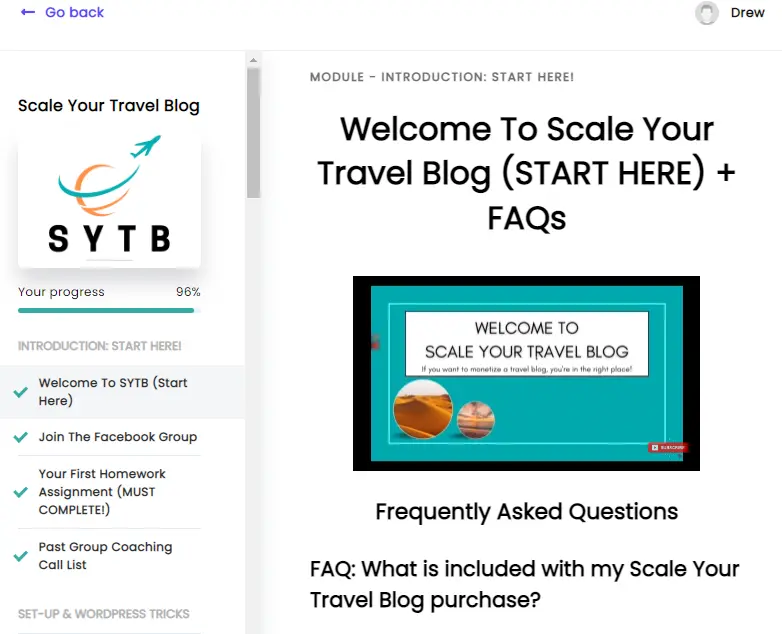
The course has 12 modules in over-the-shoulder video format. Here's what each one covers:
Module 1: Introduction. Getting oriented, joining the Facebook group, accessing your done-for-you materials if you're on the full program, and understanding a realistic income timeline.
Module 2: Website Setup and WordPress Tricks. Choosing a niche and domain name, setting up WordPress correctly, migrating from other platforms, and configuring your homepage, menus, about page, and plugins from scratch.
Module 3: On-Page SEO for Travel Blogs. Keyword research starting from zero, how to write posts that rank in Google's top 10, creating post outlines, and sourcing photos. This module is extensive and covers both Google and Bing.
Module 4: Backlinks. What backlinks are, why they matter, and how to build them using white-hat strategies — nothing that'll get your site penalized.
Module 5: Off-Page SEO. E-E-A-T signals, site speed, technical SEO, and making both readers and search engines happy with your site.
Module 6: Pinterest Traffic. This is a newer addition to the curriculum and one of my favorites. It covers setting up Pinterest for blogging, creating pins for existing content, Pinterest keyword research, and combining Pinterest with email marketing to grow your list. Most travel blogging courses don't cover this at all.
Module 7: Affiliate Marketing. Finding topics that convert, joining affiliate programs (including programs that accept brand-new bloggers), and turning readers into buyers without feeling pushy or salesy.
Module 8: Fixing Old Blog Posts. Using Google Search Console to identify underperforming content, deciding whether to update, delete, or repurpose each post, and the exact steps to optimize stale content for better rankings. A lot of courses skip this topic entirely.
Module 9: Making Money with Ads. Finding the right ad network for your traffic level, hitting the session requirements for premium networks, and maximizing ad revenue per post.
Module 10: Email Marketing. Building an email list, creating lead magnets in Canva, and using email to increase affiliate sales without being annoying. ConvertKit is what Laura recommends, though any platform that allows affiliate marketing works. I personally use GetResponse.
Module 11: Sponsorships. Choosing brands to approach, getting on their radar, and pitching for deals regardless of audience size — including free perks like the bike rental example from Mike and Laura's own blog.
Module 12 and bonus lessons. Additional content including extra ways to monetize, templates, checklists, a coursework success blueprint, and ongoing Facebook Q&As.
The course also comes with a 24-step blog post creation checklist in PDF format that you can use every time you publish. I found that detail genuinely useful — you internalize the process faster when you have a reference to check against.
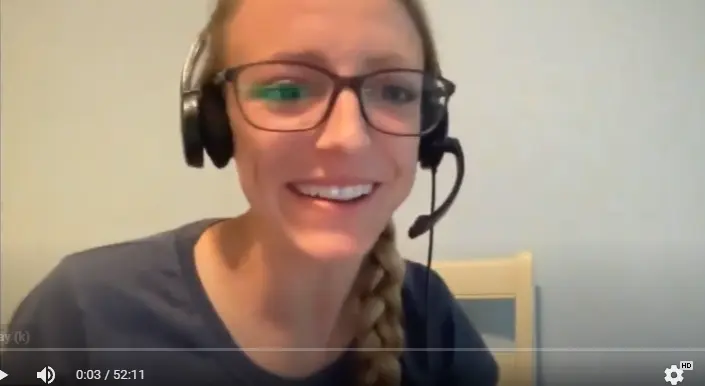
Here is Laura in one of the recorded group coaching sessions I watched. (Yes, coaching sessions are recorded so you can view them anytime if you miss them live)
How Scale Your Travel Blog is Different From Other Courses
When I joined Scale Your Travel Blog I immediately noticed this is a much different course from the typical courses I usually buy. It's not a one-way street. It's very interactive.
Besides the 12 in-depth training modules, you also get templates to help you grow your business, optional tool discounts, and a Facebook Mastermind where you can get your questions answered by not just Mike and Laura but by other successful travel bloggers.
But what really separates this course from others is the personalized service. While other courses may offer all of the above, Scale Your Travel Blog goes further — and this is exclusive to the full program option.
You can submit your site URL and get back a full video audit covering all the issues on your site and how to fix them. Choose 4 existing blog posts and you'll get specific, actionable advice on what's holding them back in Google. Fill out a form with your niche and you're given 25 exact keywords to go after — no guesswork. And you also get 6 customized blog post outlines built for your specific niche.
I haven't joined a course that offers anything like this. For someone new, I think this is incredibly valuable. It shows that Mike and Laura are serious about helping you achieve success and they have taken the time to customize a course that is tailored to each individual's needs.
What I liked About Scale Your Travel Blog
After going through the course, here are the things that really stood out to me.
1. Done For You Service
I touched on this already but felt it was worth mentioning again. Most other courses aren't interactive like this. They take your money and you are on your own to learn. With Scale Your Travel Blog, you get personalized service with their done-for-you programs which is a huge plus.
2. Video Training
As I said, video training is king! It's fun and entertaining to watch Laura take you through the lessons. You can even speed up or slow down the video depending on how fast you want to go.
3. Laura's Motivational-Style Training
Laura is a natural motivator. You can tell that she's passionate about travel and also passionate to teach this stuff. There's no fakery here. Since Laura is an ex-teacher, it's no wonder she does a great job of getting her point across and keeping you motivated.
4. Great For Beginners
You don't need to know how to code, you don't need to know SEO or how to write a blog post. As long as you have the motivation, you'll learn the skills needed to grow your travel blog.
The course is designed with beginners in mind. Even if you are somewhat successful already, I guarantee you will learn a few things in this course that could boost your success.
5. You Won't Sweat the Tech Stuff
All the techy things you need to know are covered. This includes walking you through setting up your Google Analytics, Search Console, and more. Everything is taught from scratch, so don't sweat the tech stuff. Laura makes it easy to understand.
6. Shows You Keyword Research Without Having to Pay for Tools
I liked that there are modules that show you how to get some great keywords without having to pay for expensive tools. A few different examples of free tools are provided. And, if you want to splurge on keyword tools like Ahrefs, you are shown how to use these too.
7. Learn the Exact Strategies They Use to Rank Blog Posts
You're going to learn the exact process that Mike and Laura use to rank their blog posts in Google. If fact, they have a process where they incorporate 24 steps that you need to take. While that may seem like a lot, each step is going to get you further ahead than your competitors.
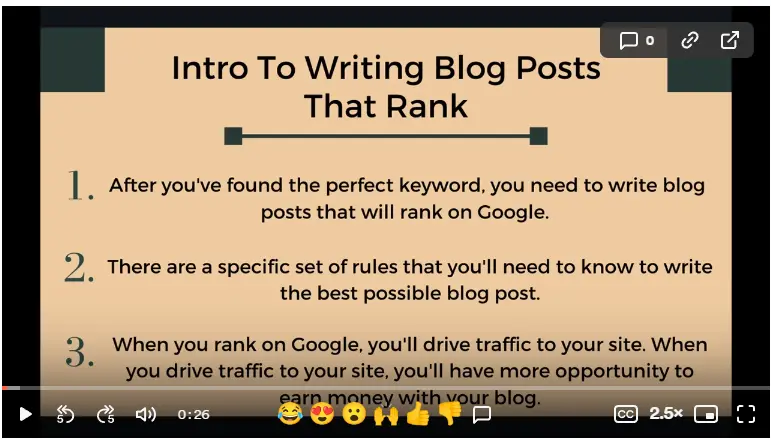
This is because you are going to learn how to structure your blog posts as well as the key elements of a successful post.
Not only do you get videos explaining the whole process, but you also get a downloadable PDF template that breaks down each step so you can reference this each time you create a blog post.
8. You Get Trained to Show E-E-A-T
E-E-A-T stands for Experience, expertise, authoritativeness, and trustworthiness. This is an important factor in the Google algorithm that will determine how you rank. You will learn the exact process of how to show your expertise so that you can instantly become an authority site in the eyes of search engines.
Even if you are a complete beginner, you are going to be able to demonstrate E-E-A-T by the strategies learned in this course. This is an important one, something you could easily screw up if you go at it alone!
9. You Are Given The Exact Affiliate Programs You Should Promote
Mike and Laura have tested many different affiliate programs. You are going to be shown the exact programs that they use, to bring in the most money. They even do comparisons with similar programs and show you why you should choose one program over the other.
Knowing what programs to promote is a bonus and the ones recommended can be used for any niche in the travel blog space. So whether you are doing a travel blog on Puerto Rico or Europe, these recommended programs will work. That means no wasted affiliate links!
10. How and When to Update Your Blog Posts
Laura does a good job explaining why and how to update your blog posts. A lot of training in other courses doesn't cover this topic, but it is an important one. You need to keep your blog posts up-to-date and relevant in order to get more traffic and rankings over time.
The course will also show you how to structure your post updates so that they are optimized for search engine algorithm changes.
11. Learn How to do Email Marketing
Email marketing is often overlooked, but not in this course. Laura explains why you should start an email list and walks you through the entire process.
You are shown how to set up your list using ConvertKit which is what they recommend, but you can use pretty much any autoresponder. I prefer GetResponse myself, but just be sure that you're allowed to do affiliate marketing on the platform as some like MailChimp don't allow it.
You will also learn how to create "lead magnets" in Canva, which is essentially a freebie that you can offer to your readers in exchange for their email addresses. That's how you will grow your list. You are shown step-by-step how to create these freebies and it's really not that difficult.
12. No Fluff
This course cuts straight to the point with no fluff. You won't find any long lectures that don’t add to your learning. All the information is concise and easy to digest.
13. Active Community
When you join the course you get access to the Facebook Group.
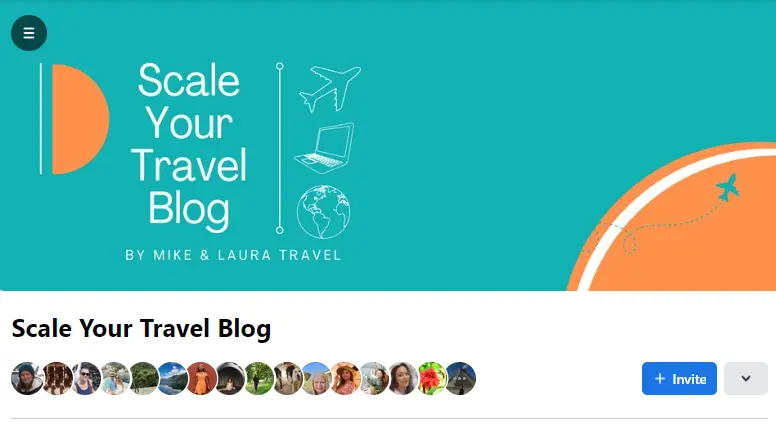
I joined shortly after enrolling in the course and wanted to see what the chatter was all about. I've seen questions about writing posts on specific hotels, to getting backlinks, questions on Schema, and so on. Some people have even complained about getting frustrated with setting up their website.
Of course, that's the point of a community forum - to get help. From what I have seen, all questions have been answered which is a good sign. Responses are from members and from Laura herself.
Here's one for example:
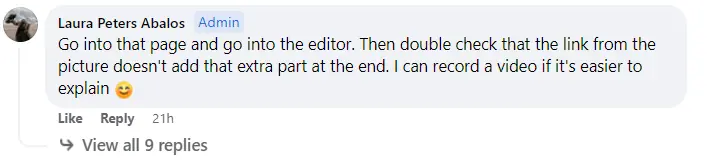
So don't worry if you get stuck with anything, there's plenty of help in the Facebook Group.
14. The SEO Advice is Solid
I know a thing or two about SEO and can easily spot bad strategies that no longer work or advice that can get your site slapped by Google. I didn't see any of that in this course.
The SEO advice is on point, both for on-page and off-page SEO. On-page SEO is all about getting your keywords, headings, content and everything on your site done the right way so Google can index your page properly.
Off-page SEO has to do with backlinks where other sites link to you. Laura teaches you only white-hat strategies and no funky stuff that can get you into trouble.
And don't worry - the way how it's taught, you don't need to have any prior SEO skills. You'll learn the entire process from scratch.
15. The Pinterest Module
The Pinterest module was added to the curriculum more recently and it's a smart move. Google traffic is harder than it used to be, and having a secondary traffic source baked into the strategy from day one is sensible advice. I think this module adds real value over older versions of the course.
What I didn't like About Scale Your Travel Blog
It was kinda hard to find things that I didn't like about the course but I have to be balanced here!
My first complaint would be the price. It isn't cheap. I will say though that considering for what you get with this course, with the done-for-you keyword research, audit, etc., I think it's worth it.
It's more expensive than the average course, but this is no average course either.
Another thing that might only apply to some is that the sales page doesn't mention what expenses you will incur after purchasing the course. To be fair, you are given some free options but in reality, the paid tools work best.
The most expensive tool would be Ahrefs, but the good news is that you would probably just need it for a month to get all your research in and then cancel. Laura even mentions this in the course.
Is Scale Your Travel Blog Worth It?
Yes, I think it is — but the right option depends on where you're at.
If you're starting from scratch and want to move as fast as possible, the full program at $2,997 is worth the investment. The done-for-you keywords, site audit, and coaching give you a real head start that most bloggers spend months figuring out on their own. Over 950 students have gone through this program and 85+ have hit Mediavine. That's not a coincidence.
If you already have some SEO knowledge and are comfortable working independently, the course-only option at $797 is genuinely solid value. You get the same 12 modules and the community — you're just not paying for the hands-on support layer on top.
Either way, the course content itself is strong. The SEO advice is current, the Pinterest module is a smart addition, and Laura is one of the better teachers I've come across in this space. I feel like this course gives you everything you need to build a travel blog that actually makes money — as long as you show up and do the work.
Frequently Asked Questions
Do travel blogs actually make money?
Yes, travel blogs can make serious money with the right strategy. Mike and Laura's blog makes $40,000+ per month. Students like Shelley Marmor from Travel Mexico Solo made over $557,000 in 2023 from her travel blogs. Those are outliers, but getting to $2,000–$5,000 per month within a year or two is realistic if you follow the process consistently and put the work in.
What's the difference between the course-only and full program options?
The course-only option at $797 gives you the full 12 modules, bonus lessons, templates, and Facebook community access. The full program at $2,997 adds done-for-you keywords and blog post outlines, a personalized site audit, blog post reviews from Laura, monthly group coaching calls, biweekly strategy calls, Zoom Q&As, coffee hour calls, and access to in-person mastermind meetups. Both options include a 14-day refund policy.
Is Scale Your Travel Blog only for travel bloggers?
No. Despite the name, the SEO, affiliate marketing, and email marketing strategies apply to any niche. Laura confirms this on the sales page. The examples and recommended affiliate programs are travel-specific, so you'll get the most natural experience with a travel or lifestyle blog, but the framework transfers.
Is Scale Your Travel Blog suitable for beginners?
Yes, completely. The course starts from scratch with WordPress setup and assumes no prior SEO or blogging knowledge. The done-for-you services in the full program — particularly the keyword research and blog post outlines — make it even more accessible if you've never done any of this before.
Do I need to buy extra tools?
Some tools come up in the course — Ahrefs for keyword research, Canva for lead magnets, and an email platform like ConvertKit. Free alternatives are shown for most of them. The main unavoidable cost is website hosting, which runs around $50–100 per year. If you want Ahrefs, you'd typically need it for a month or two before canceling — plan for that in your budget.
What is the refund policy?
Both the course-only and full program options come with a 14-day money-back guarantee.
Which platform is best for a travel blog?
The best platform for a travel blog is WordPress. It does require hosting and a domain, but it's worth the investment — you have full control over your design and functionality, and it's the industry standard for serious bloggers whether you're in travel or any other niche. Just stick with WordPress.
Is it hard being a travel blogger?
It can be hard if you don't know what you're doing. If you don't know how to write optimized articles, do on and off-page SEO, or target the right keywords, then yes, it's going to be a tough road. But with the right training from the start, you'll have the proper foundation to build on. That's exactly what this course provides.
Related Articles

- Automate Channels Review: Prices, Refunds, YouTube Risk - October 23, 2026
- Why Platform Accountability Claims Now Reshape Online Safety Law - October 22, 2026
- Top Google Review Software for Improving Local Business Reputation - October 22, 2026