For years, ClickBank has been the default starting point for new affiliate marketers. It's easy to join, loaded with digital products, and practically impossible to get rejected.
But here's the thing—ClickBank isn't the best option for everyone anymore.
I've been running affiliate campaigns since 2010, and while I still use ClickBank for specific niches, I've found that branching out to other networks has actually increased my earnings. Some networks offer recurring commissions that pay month after month. Others have premium brands that convert better than the typical ClickBank ebook. And a few specialize in physical products or B2B software where the real money is hiding.
If you're serious about affiliate marketing in 2026, putting all your eggs in the ClickBank basket is a mistake. You need multiple income streams across different networks, and this guide will show you exactly which alternatives are worth your time and which ones you can skip.
I'm going to walk you through the 12 best ClickBank alternatives based on commission structure, product quality, payout reliability, and how easy they are to actually make money with. Some are perfect for beginners, others require an established website, and a few are game-changers if you're promoting the right products.
Let's start with why you might want to look beyond ClickBank in the first place.
Why Do Affiliates Look for ClickBank Alternatives?
ClickBank works great for certain situations, but it has some legitimate problems that push affiliates toward other networks.
The biggest issue I've seen is the refund rate. ClickBank products can have refund rates as high as 30% to 50% in some niches, which means that commission you thought you earned last week might vanish after the refund period. I've had months where I made $800 in sales only to see $300 of it evaporate from refunds. That's brutal when you're trying to build a sustainable business.
Product quality is another headache. Since it's ridiculously easy to list a product on ClickBank, you'll find a lot of low-quality ebooks and courses mixed in with the good stuff. If you promote garbage, your audience stops trusting you, and that reputation damage is way worse than missing out on a few commissions.
ClickBank also has geographic restrictions. If you're outside the US, Canada, or a handful of other approved countries, you can't even sign up. That rules out a massive chunk of potential affiliates right from the start.
Then there's the Facebook problem. ClickBank's domain is flagged by Facebook, which means you can't post direct affiliate links on the platform unless you build a landing page first. If your traffic strategy relies on affiliate marketing on Facebook, that's an extra step you don't need.
I also don't love the inactivity fees. If your account has a balance but you haven't earned anything in a while, ClickBank will start charging dormant account fees. It's not a huge amount, but it's annoying when you're testing different income streams and one goes quiet for a few months.
Finally, there's the withdrawal restriction. You need at least five sales before you can withdraw commissions, and if you don't hit that threshold, your earnings sit there losing a small percentage each week. For someone just starting out, that feels like the platform is betting against you.
None of these are dealbreakers on their own, but when you add them up, it makes sense to explore other options. The good news is that the affiliate marketing world has grown massively since ClickBank launched, and there are now networks that handle physical products, SaaS subscriptions, premium brands, and even AI tools—all with better commission structures and fewer headaches.
If you're relatively new to this whole world and still figuring out how affiliate marketing actually works, I'd recommend checking out some solid training first. Explore how AI teaches five proven business models and choose the path that fits your budget to save yourself months of trial and error.
What Are the Best ClickBank Alternatives in 2026?
I've tested dozens of affiliate networks over the years, and these 12 consistently deliver results. Some pay higher commissions, others have better brand recognition, and a few specialize in recurring revenue that compounds over time.
Here's what actually works in 2026.
1. Impact.com
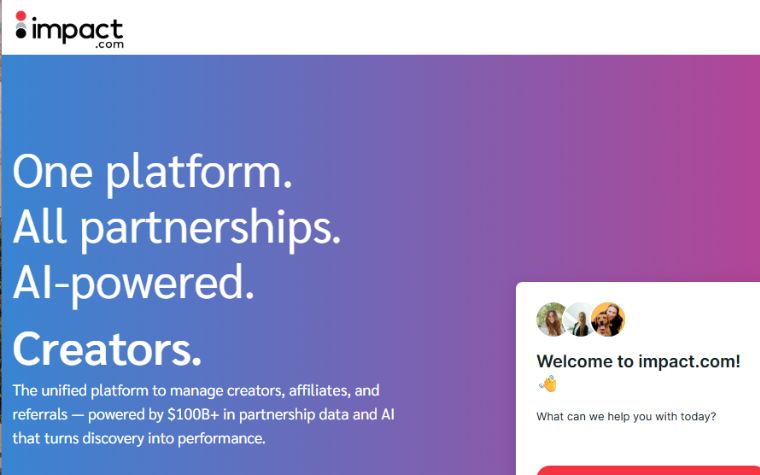
Impact.com is the premium affiliate network right now, and it's where serious affiliate marketers go when they outgrow beginner platforms.
This network hosts some of the biggest brands in the world—Airbnb, Shopify, Uber, Walmart, Adidas, Canva, and Semrush all run their affiliate programs through Impact. If you've ever wondered where the top-tier programs are hiding, this is it.
The tracking technology is enterprise-grade, which means you get accurate attribution across multiple touchpoints. The fraud protection is better than most networks, and the reporting dashboard actually makes sense. You can see exactly which content is driving conversions and optimize from there.
Commission rates vary by merchant since you apply to individual programs within the network, but the quality is consistently high. These are established brands with marketing budgets and conversion-optimized checkout flows, so your traffic converts better than it would on a random ClickBank product.
The downside is that Impact can be selective. Some programs require established traffic before they'll approve you, so if you're just starting out, you might need to build your site first. But once you're in, you have access to offers that most affiliates never see.
Cookie durations depend on the specific merchant, but many premium brands offer 30 to 90 days, which gives your audience plenty of time to convert.
Impact pays monthly once you hit the minimum threshold, which varies by program but is typically around $50. Payment methods include PayPal, direct deposit, and wire transfer.
If you're promoting lifestyle products, travel, SaaS tools, or consumer brands, Impact should be one of your first stops. The conversion rates alone make it worth the application process.
2. PartnerStack
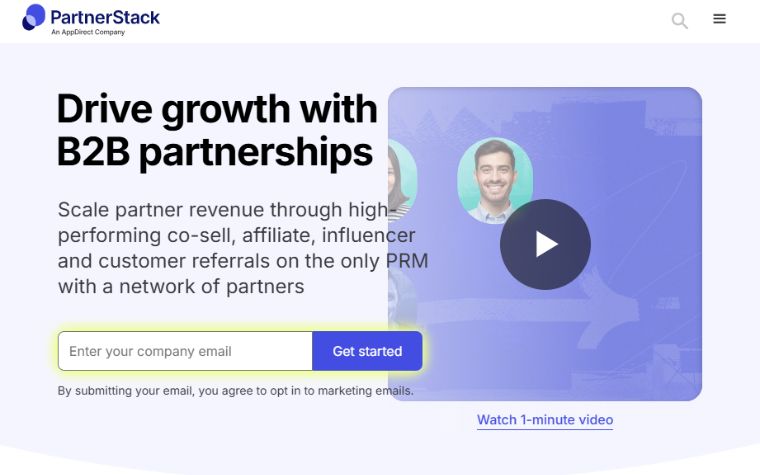
PartnerStack is the go-to network for B2B SaaS affiliate programs, and it's quietly become one of the most profitable networks for affiliates who know how to use it.
The network includes programs like Notion, Monday.com, Webflow, Freshbooks, and Intuit. These are business tools with high lifetime value, which means the commissions are significantly higher than consumer products.
What makes PartnerStack different is the recurring commission structure. Instead of earning a one-time payout, you get paid month after month as long as the customer stays subscribed. I've seen affiliates earning 20% to 40% recurring commissions on software subscriptions, and that income compounds fast. One good referral can turn into $500+ per year in passive income.
The other advantage is that B2B buyers are less price-sensitive than consumers. If you're recommending a project management tool to a business owner, they care more about solving the problem than saving $10 per month. That means higher conversion rates and fewer refunds.
You apply to individual partner programs within the network, and approval requirements vary. Some programs want to see that you have a business audience, but the bar isn't as high as you'd think. A niche blog with 5,000 monthly visitors can get approved if the audience matches.
PartnerStack pays monthly via PayPal or Stripe once you hit a $5 minimum threshold, which is one of the lowest I've seen. That means you get paid faster than most networks.
If your audience includes business owners, marketers, freelancers, or entrepreneurs, PartnerStack is a no-brainer. The recurring commissions alone make it one of the best long-term income streams you can build.
3. Awin
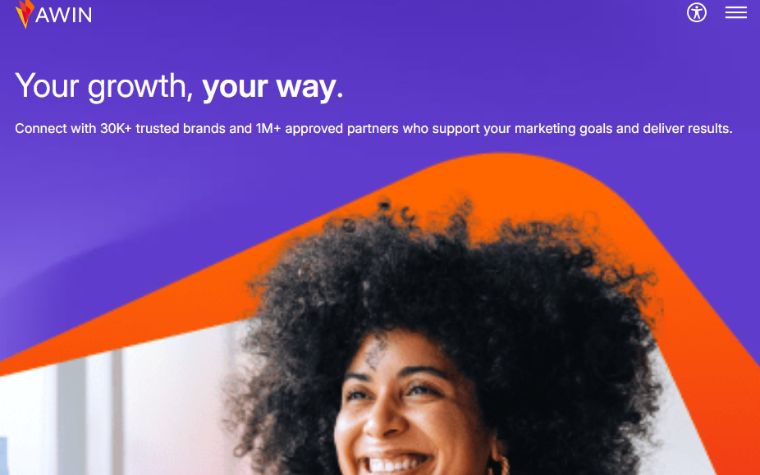
Awin is one of the largest affiliate networks globally, and it absorbed ShareASale in 2025, combining both platforms into a single massive marketplace.
The network now includes over 30,000 advertisers across every niche you can think of—fashion, travel, finance, insurance, telecommunications, software, home goods, and more. If you're looking for variety, Awin delivers.
I like Awin because it works for both physical and digital products, which gives you flexibility depending on what your audience wants. You can promote everything from clothing brands to SaaS tools without needing separate accounts.
The platform has a slight European tilt since it was founded in Germany, but there's plenty of US and global coverage too. You'll find big names like Etsy, StubHub, and AliExpress alongside thousands of smaller merchants.
Commission rates and cookie durations vary by advertiser, so you need to check the terms for each program before applying. Some merchants offer 30-day cookies, others go up to 90 days. Some pay per sale, others use cost-per-action models.
One thing to note is that Awin charges a $5 sign-up fee, but you get it refunded once you hit your first payment threshold. If you don't get approved or never make a sale, you lose the $5. It's a small barrier to entry that filters out people who aren't serious.
Awin pays twice monthly on the 1st and 15th for the previous month's commissions, and the minimum payout is $20. Payment methods include bank transfer, ACH, and international wire.
If you want access to a huge range of products and don't mind applying to individual programs, Awin gives you more options than almost any other network.
4. CJ Affiliate (Commission Junction)
CJ Affiliate, formerly known as Commission Junction, is one of the oldest and most established affiliate networks in the industry.
The network currently has over 2,600 merchants, including major brands like Barnes & Noble, NordVPN, Hello Fresh, and Overstock. It covers both physical and digital products across just about every niche, which makes it a solid all-around option.
CJ is known for being beginner-friendly in terms of account approval. Most people get accepted even if they're just starting out, which is rare for premium networks. That said, individual merchant approvals can be tougher, so you might get into the network easily but still need to prove yourself to specific brands.
The dashboard has a learning curve. I'm not going to lie, when I first signed up for CJ, I spent a full afternoon just figuring out where everything was. But once you get comfortable with the interface, it runs smoothly. The reporting tools are detailed, and you can generate deep links for almost any page on a merchant's site.
Commission structures vary widely depending on the merchant. Some pay flat rates per sale, others use percentage-based models, and a few offer cost-per-action payouts. Cookie durations also differ, so read the terms carefully before committing to a campaign.
CJ pays monthly once you hit a $50 minimum for checks or $100 for direct deposit. Payment methods include check, direct deposit, and Payoneer.
If you're looking for a network with a good mix of big brands and smaller merchants, CJ is a reliable choice. It's not the flashiest network, but it's been around since 1998, and it still delivers consistent results.
5. Dub.co
Dub.co is a newer platform that's built specifically for the AI era, and it's worth paying attention to if you're promoting modern SaaS and AI tools.
The network powers affiliate programs for companies like Perplexity, Framer, Vercel, Superhuman, and Twilio. These are cutting-edge tech products that didn't exist a few years ago, and traditional networks like ShareASale or CJ don't always have them.
What makes Dub different is that it's an open-source platform, which means the developer community trusts it. The tracking is real-time, the analytics are clean, and the link attribution works seamlessly across short links and campaign URLs.
The platform offers recurring commissions on most programs, typically in the 20% to 30% range for the first 12 months. That's not as long as lifetime recurring, but it's still better than one-time payouts.
Dub also runs its own affiliate program, which pays 30% recurring for 12 months. If you're promoting affiliate links for link management or affiliate tools, that's an easy add-on.
The downside is that Dub is still relatively new, so the merchant selection is smaller than established networks. But the quality is high, and if you're in the AI, developer, or SaaS space, you'll find programs here that don't exist anywhere else.
Dub pays monthly with a low minimum threshold, and most programs use Stripe for payouts.
If you're writing about AI tools, productivity software, or developer products, check Dub first before defaulting to older networks. The programs here are more aligned with what's actually trending in 2026.
6. Rakuten Advertising
Rakuten Advertising is a premium affiliate network that focuses on quality over quantity.
Instead of hosting tens of thousands of random merchants, Rakuten curates partnerships with established global brands. You'll find companies like Macy's, Best Buy, Walmart, and major travel and finance brands.
The platform is data-driven, which means you get access to tools like the Affiliate Conversion Journey tracker. This shows you where your content fits in the customer's buying process, even if you don't get credit for the final click. That insight is valuable if you're creating top-of-funnel content that helps people research before they buy.
Rakuten is best suited for publishers who already have traffic. The approval process can be selective, and they tend to favor affiliates with established audiences in retail, travel, finance, lifestyle, or technology.
Commission structures vary by advertiser, but the conversion rates are typically higher than mid-tier networks because you're promoting trusted brands. Cookie durations range from 7 to 90 days depending on the program.
Rakuten pays monthly once you hit the minimum threshold, which is usually around $50. Payment methods include check, direct deposit, and PayPal.
If you're focused on premium brands and want a network that prioritizes data and performance, Rakuten is a strong alternative to ClickBank's digital product marketplace.
7. Amazon Associates
Amazon Associates is the most recognizable affiliate program in the world, and for good reason—everyone trusts Amazon.
The network gives you access to millions of physical and digital products across every category imaginable. If you're reviewing products, writing gift guides, or creating buying recommendations, Amazon is almost unavoidable.
The big advantage is conversion rate. People already shop on Amazon, their payment info is saved, and Prime shipping removes friction. If you send someone to Amazon with intent to buy, there's a good chance they'll follow through.
The downside is that commission rates have dropped significantly since 2020. Amazon cut affiliate commissions by roughly 50% across most categories, and now you're looking at 1% to 10% depending on what you promote. Electronics and video games pay around 1% to 2%, while luxury beauty and Amazon handmade can hit 10%.
The 24-hour cookie is also limiting. If someone clicks your link but doesn't buy within 24 hours, you don't get credit. That's rough compared to networks that offer 30 to 90 day cookies.
Amazon also has strict terms of service according to the FTC's affiliate disclosure guidelines. If you violate their policies, they can ban your account without warning, and there's no appeal process. You need to read the operating agreement carefully and follow the disclosure rules.
Despite the lower commissions, Amazon still converts well enough that most product affiliates run it in the background. For high-traffic content, the volume makes up for the low percentages.
Amazon pays monthly once you hit a $10 minimum for direct deposit or $100 for checks. Payment methods include direct deposit, check, and Amazon gift cards.
If you're promoting physical products, you'd be crazy not to include Amazon Associates in your strategy. Just don't rely on it as your only income source. Check out these Amazon affiliate program alternatives for more options.
8. eBay Partner Network
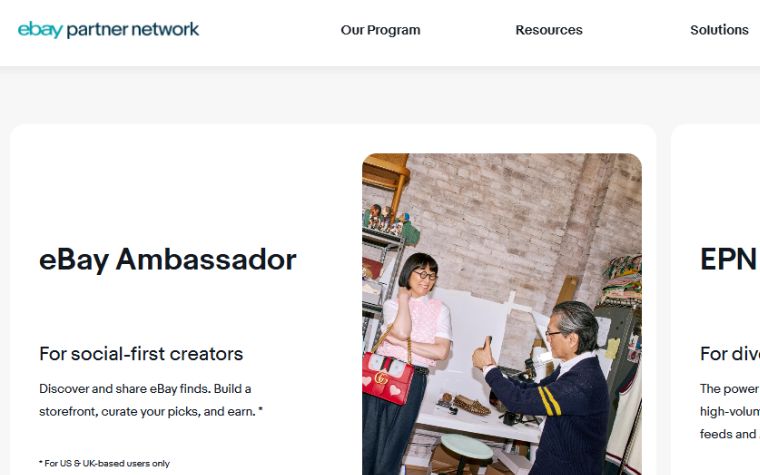
eBay Partner Network gives affiliates access to one of the largest online marketplaces for new, used, refurbished, and collectible products.
Like Amazon, eBay benefits from brand recognition and buyer trust. The platform is particularly strong for niche products, collectibles, refurbished tech, and deal-hunting content.
Commission rates vary wildly by category. Some categories pay up to 60%, while others are painfully low at 1% to 2%. You need to research the commission structure for your specific niche before committing to an eBay-focused strategy.
The cookie duration is 24 hours, same as Amazon, which means you only get credit if the buyer completes a purchase within a day of clicking your link.
eBay pays monthly as long as you've earned at least $10 in commissions, which is one of the lowest minimums out there. Payment methods include PayPal, direct deposit, and check.
eBay works well for deal sites, gift guides, niche product roundups, and content focused on hard-to-find items. It's less useful if you're promoting new mainstream products that are widely available elsewhere.
If your audience likes hunting for deals or collecting specific items, eBay Partner Network is worth testing alongside Amazon.
9. JVZoo
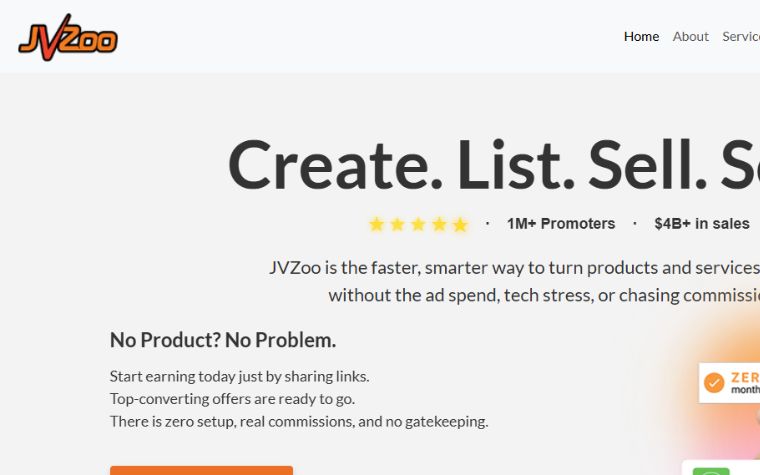
JVZoo is essentially a smaller version of ClickBank, focused almost entirely on digital products related to making money online.
The network hosts courses, software, PLR content, WordPress plugins, and other internet marketing products. If you're in the make-money-online niche, you'll find a lot of overlap with what's on ClickBank, but with different vendors.
The approval process is easy, which is both good and bad. Good because you can get started quickly. Bad because low-quality products slip through, and if you promote junk, your reputation takes a hit.
One advantage JVZoo has over ClickBank is the refund rate. In my experience, JVZoo products tend to have lower refund rates, which means the commissions you earn are more likely to stick.
The downside is competition. Because JVZoo grew out of the Warrior Forum, a lot of internet marketers promote the same products, which makes it harder to stand out. You're competing against people with massive email lists and established audiences.
JVZoo pays via PayPal, and you can set up instant commission payouts once you've built a track record with the network. That's faster than most platforms.
If you're already in the internet marketing niche and want an alternative to ClickBank's product selection, JVZoo is worth exploring. Just be selective about what you promote and do your research before recommending anything.
10. Warrior Plus
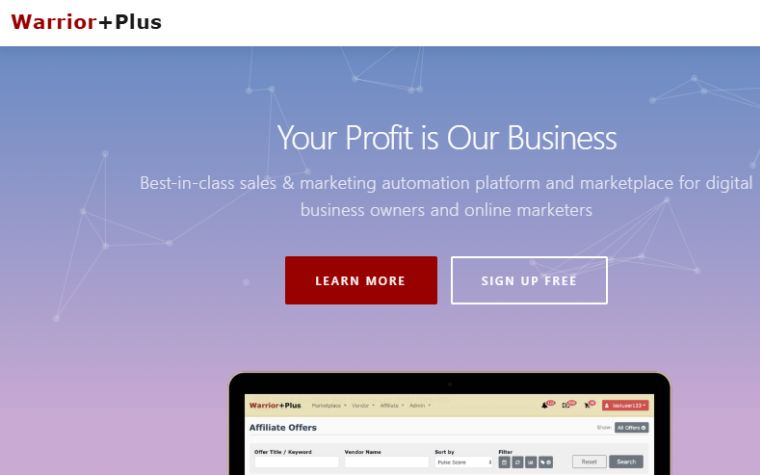
Warrior Plus is another network that grew out of the Warrior Forum, and it focuses exclusively on digital products for people trying to make money online.
You'll find products teaching affiliate marketing, SEO, email marketing, social media, ecommerce, and various online business ideas. There are also WordPress themes, plugins, and tools marketed to website owners and marketers.
Like JVZoo, the barrier to entry is low, which means product quality varies. Some vendors create genuinely helpful courses, while others push rehashed content with aggressive upsells.
The competition on Warrior Plus is fierce. Many of the same affiliates promoting on JVZoo also promote on Warrior Plus, so you're fighting for attention in a crowded space.
One benefit is that Warrior Plus allows you to see which products are selling well before you commit to promoting them. The marketplace shows sales stats, which helps you avoid dead offers.
Warrior Plus pays via PayPal, and instant commissions are available once you've proven yourself as a reliable affiliate.
If you're deep in the make-money-online niche and want more product options beyond ClickBank, Warrior Plus can work. But I'd focus most of your energy on networks with less competition and higher-quality products.
11. MarketHealth
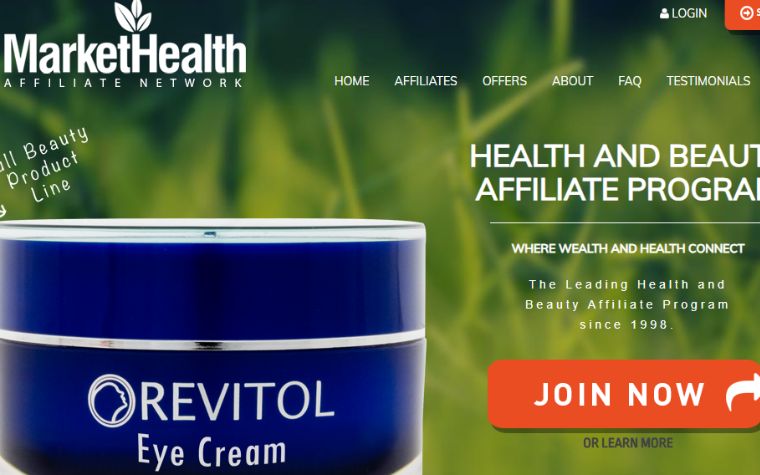
MarketHealth is a specialized network for health and fitness affiliates, focusing almost entirely on physical supplements and wellness products.
If you're running a health blog, fitness site, or wellness-focused content, MarketHealth offers products you won't find on general networks. The catalog includes supplements, diet products, skincare, and other health-related items.
Commission structures vary by program. Some pay a percentage per sale, while others use cost-per-action models where you get paid based on specific actions your visitors take. CPA offers are rare in the health space, so that's a nice bonus.
Approval is tougher than ClickBank. MarketHealth actually reviews your site before accepting you into the network, which filters out low-quality affiliates. Once you're in, you'll have access to offers that aren't oversaturated with competition.
The products tend to convert well because MarketHealth works with established brands that already have marketing budgets and conversion-optimized sales funnels.
MarketHealth pays monthly once you hit the minimum threshold, which varies by program. Payment methods include check, wire transfer, and PayPal.
If you're in the health and fitness niche, MarketHealth is a better fit than ClickBank's generic supplement ebooks. The products are real, the commissions are competitive, and the conversion rates are solid.
12. Private Affiliate Programs
Not every affiliate program is listed on a network, and some of the most lucrative opportunities come from direct partnerships with individual companies.
You find these by searching Google for your niche plus "affiliate program." For example, if you run a fishing site, search for "fishing lures affiliate program" or "fishing gear affiliate program." You'll discover companies offering direct partnerships that aren't available on ShareASale, CJ, or any major network.
Private programs often pay higher commissions because they're not giving a percentage to a network middleman. You also get more direct communication with the company, which can lead to custom deals, exclusive promotions, and better support.
The downside is that you need to vet these programs yourself. Not every company is reputable, and some have terrible tracking, delayed payments, or shady terms. Before joining, search for reviews of the affiliate program, check forums for complaints, and read the terms carefully.
I've made some of my best long-term income from private programs because the commission splits are better and the competition is lower. If you find a niche product with a solid affiliate program that nobody else is promoting, you can dominate that space.
Managing multiple private programs can be a headache since each one has its own dashboard, payment schedule, and tracking system. But if you find the right partnerships, it's worth the extra admin work.
If you're looking for high commissions and less competition, spend some time researching private affiliate programs in the best affiliate marketing niches. You might uncover opportunities that most affiliates never see.
How Do I Choose the Right ClickBank Alternative for My Business?
Picking the right affiliate network depends on what you're promoting, who your audience is, and what kind of income you want to build.
Start with your niche. If you're reviewing physical products, Amazon Associates, eBay Partner Network, and Awin make sense. If you're writing about business software, go with PartnerStack or Impact. If you're in the make-money-online space, JVZoo and Warrior Plus are obvious choices. Match the network to what your audience actually buys.
Next, look at commission structure. One-time payouts are fine for high-ticket items, but recurring commissions compound over time. A 30% recurring commission on a $50 per month SaaS subscription is worth way more than a $100 one-time payout. Do the math and prioritize networks that pay you month after month.
Cookie duration matters more than most affiliates realize. A 90-day cookie gives your audience three months to convert, which is especially important if you're creating top-of-funnel content that helps people research before they buy. A 24-hour cookie means you only get credit if they purchase immediately, which works for bottom-of-funnel product reviews but not much else.
Check the minimum payout threshold and payment schedule. If a network requires $100 to cash out and only pays quarterly, your money sits there for months. Networks with $10 minimums and monthly payouts get cash in your pocket faster.
Brand quality affects conversion rates. Premium brands like those on Impact or Rakuten convert better than random ClickBank products because people trust the names. If you're sending traffic to a recognized brand, your conversion rate will be higher even if the commission percentage is lower.
Finally, think about approval requirements. Some networks let anyone join, others want to see established traffic. If you're just starting out, focus on beginner-friendly networks like CJ, Awin, or Amazon. Once you have 10,000+ monthly visitors, apply to premium networks like Impact and Rakuten.
The best strategy is to join multiple networks and test different offers. Don't put all your traffic into one program. Spread it across three to five networks, track what converts, and double down on what works.
If you're still figuring out which business model makes sense for you, The 2026 AI Business Blueprint is $47 once and covers five complete AI-powered business models so you can pick the path that matches your skills.

Frequently Asked Questions
What is the best alternative to ClickBank for beginners?
CJ Affiliate and Awin are the best starting points for beginners because they're relatively easy to join and offer a wide variety of products across multiple niches. Both networks have lower barriers to entry than premium platforms like Impact, and they give you access to thousands of merchants so you can test different offers and figure out what converts for your audience.
Which affiliate network pays the highest commissions?
PartnerStack and Impact tend to have the highest commissions because they focus on B2B SaaS products with recurring revenue models. You can earn 20% to 40% recurring commissions on software subscriptions, which compounds into significant long-term income. For physical products, commission rates are lower across the board, but niche networks like MarketHealth sometimes offer higher percentages than general networks.
Can I use multiple affiliate networks at the same time?
Yes, and you should. Using multiple networks diversifies your income and gives you access to different products and commission structures. I run campaigns across five different networks depending on what I'm promoting, and that approach protects me if one network changes its terms or a merchant pulls out. Just make sure you're not violating any exclusivity agreements in your contracts.
How long does it take to get approved for an affiliate network?
It depends on the network. ClickBank, JVZoo, and Warrior Plus approve accounts almost instantly. CJ Affiliate and Awin usually approve within a few days. Premium networks like Impact and Rakuten can take one to two weeks because they manually review applications. Individual merchant approvals within networks can add another few days to a week.
Do I need a website to join affiliate networks?
Most networks require a website, blog, YouTube channel, or social media presence with an established audience. Amazon Associates, Awin, and CJ all want to see where you plan to promote their products. Some networks like PartnerStack are more flexible and will consider applications from people with business audiences on platforms like LinkedIn. If you don't have a website yet, start a blog and publish 10 to 15 pieces of content before applying.
Are ClickBank alternatives better for making money?
It depends on your niche and business model. ClickBank works well for certain digital products, but alternatives like Impact, PartnerStack, and Rakuten offer higher-quality brands, recurring commissions, and better conversion rates.
If you're promoting premium products or business software, you'll almost always make more money on alternative networks. For make-money-online products, ClickBank is still competitive with JVZoo and Warrior Plus. Learn more about how much money you can make with affiliate marketing on different platforms.
What is a recurring commission in affiliate marketing?
A recurring commission means you get paid every month as long as the customer stays subscribed to a product or service. For example, if you refer someone to a $50 per month SaaS tool and earn a 30% recurring commission, you make $15 per month from that single referral for as long as they remain a customer. Recurring commissions are common on networks like PartnerStack, Impact, and Dub.co.
Final Thoughts
ClickBank is a fine starting point, but it shouldn't be your only affiliate network in 2026.
The affiliate marketing world has evolved way beyond digital ebooks and one-time commissions. You now have access to premium brands, recurring revenue models, B2B software programs, and AI-era platforms that didn't exist a few years ago.
I've been running affiliate campaigns for years, and my income grew significantly once I stopped relying on a single network. Diversifying across Impact, PartnerStack, Awin, and a few private programs gave me more stability, higher commissions, and better products to promote.
Start by joining two or three networks that match your niche. Test different offers, track what converts, and focus on the programs that actually make you money. Don't waste time promoting low-quality products just because the commission percentage looks good. Your audience's trust is worth more than a quick payout.
If you're serious about building a sustainable affiliate business, recurring commissions should be a priority. One good SaaS referral can pay you for years, while one-time commissions require constant new traffic. Do the math and optimize for long-term income.
The best time to branch out from ClickBank is right now. Pick one network from this list, create an account, and apply to programs that fit your audience. You don't need to overhaul your entire strategy overnight—just add one or two new income streams and build from there.
If you're ready to move beyond affiliate marketing and explore other ways to make money with AI, grab the free AI Side Hustle Cheat Sheet to see which tools and business models are working best in 2026.
Related Articles

- Automate Channels Review: Prices, Refunds, YouTube Risk - October 23, 2026
- Why Platform Accountability Claims Now Reshape Online Safety Law - October 22, 2026
- Top Google Review Software for Improving Local Business Reputation - October 22, 2026