If you're looking for a Dropship Lifestyle review that actually goes inside the course, you're in the right place.
I spent over 15 hours going through the material. As an online store owner myself, I know enough about eCommerce to give you a straight answer on whether this is worth your money — and more importantly, whether it's worth the price tag.
I'll rate it on content quality, ease of understanding, reputation, and value. And yes, I'll give you some much cheaper alternatives too.
Let's just jump right in!
⭐ Dropship Lifestyle Rating: 3.5 / 5
Dropship Lifestyle is one of the most complete high-ticket dropshipping courses out there. The content is solid, Anton is genuinely active in the community, and the course gets updated regularly.
The problem is the price. At $3,997 for the entry-level course, it's hard to recommend when quality alternatives exist for a fraction of the cost. If money is no object and you want the most thorough dropshipping education available, DSL delivers. For everyone else, I think there are smarter ways to spend that money.
Overview of Dropship Lifestyle
Dropship Lifestyle is an online course created by Anton Kraly in 2013. It teaches a 7-step blueprint for starting and scaling an eCommerce business using high-ticket dropshipping — meaning you sell expensive products like outdoor furniture, home gym equipment, or wine fridges rather than cheap imported goods from AliExpress.
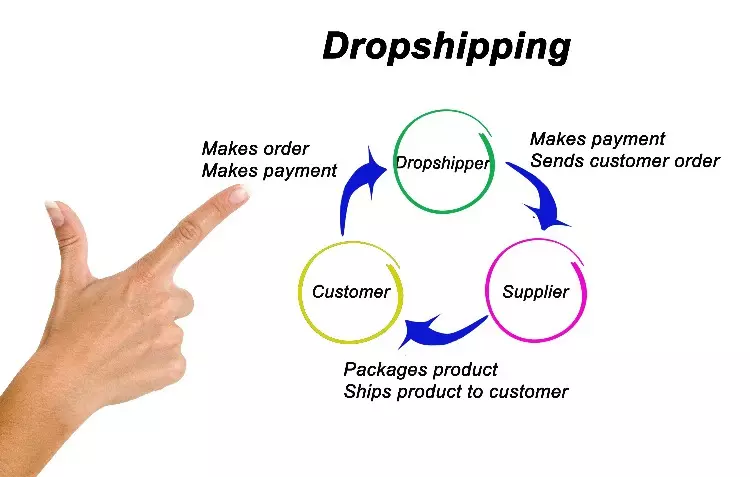
The model works like this: you build a Shopify store, get approved by domestic suppliers, and when a customer places an order, the supplier ships directly to them. You never hold inventory. What you do need is a solid store, good supplier relationships, and traffic — mostly through Google Ads.
DSL has been around for over a decade and has grown well beyond a course. It now includes a private Discord community, monthly live coaching calls with Anton, and in-person retreats held in locations around the world. Shopify recognized it as the best eCommerce course back in 2017, and it's been updated regularly ever since — now on version 7.0, rebranded under the DSL X and DSL XA lineup.
Over 4,000 members have gone through the program across more than 25 countries.
Who is Anton Kraly?
Anton Kraly is the founder of Drop Ship Lifestyle and one of the most recognized names in the high-ticket dropshipping space.
He's been at this since 2007, which means he's not some recent YouTube guru — he was building eCommerce stores before most people knew what dropshipping was.
His story started after graduating college in 2006. Like a lot of people, he had big ambitions but no clear path. That changed in 2007 when he read The 4-Hour Workweek by Tim Ferriss, which introduced him to the idea of building an online business. He started with a small eCommerce store selling cookies, figured out dropshipping by 2009, and eventually built multiple seven-figure stores before launching DSL in 2013 to teach others the same system.
I think what separates Anton from a lot of course creators is that he actually did the thing he teaches. He's not just recycling someone else's playbook. He's also genuinely active in the community — running monthly Q&A calls on Discord, answering questions directly, and showing up in a way that most course creators at this price point don't.
He also published a book called Dropship Secrets in 2019 if you want a lower-commitment way to get a feel for his approach before dropping thousands on the course.
Does Dropship Lifestyle Have a Free Version?
Not really. You can sign up with your email to get some basic introductory content from Anton, but I wouldn't call it a free course. It's more of a welcome sequence designed to get you excited about dropshipping and move you toward buying the paid course. You won't learn anything actionable from it.
The more useful free entry point is his webinar. It's promoted heavily on the DSL site and does cover some real ground on the high-ticket dropshipping model. It's still a sales pitch at the end of the day, but I think you'll get a better feel for Anton's teaching style and whether the course is something you'd actually want to invest in.
If you want to go even lower commitment, his book Dropship Secrets is a cheap way to sample his methodology before spending $3,997.
How Much Does Dropship Lifestyle Cost?
Dropship Lifestyle has three packages right now. Here's what each one runs:
DSL X — $3,997
This is the entry-level course. You get the 7-module blueprint, supplier directory access, the DSL Shopify theme, Discord community access, monthly live coaching calls, a 21-day launch plan, niche verification with Anton, and lifetime access with free updates.
DSL XA — $3,997
This is a separate advanced course, not an upgrade to DSL X. It covers things like Microsoft Ads, Meta Ads, influencer marketing, conversion rate optimization, and email marketing. If you're already running a store and want to scale, this is where you'd go next.
Ultimate Package — $9,997
This combines everything in DSL X and DSL XA, plus a custom-built Shopify store, done-for-you content marketing, one-on-one private coaching, and dedicated launch support.
So yeah — it's not cheap. The entry point alone is nearly four grand. And that's before you factor in what it actually costs to run a dropshipping business. You'll need roughly $300 to set up an LLC, $30 a month for Shopify, a domain, and an ad budget. Most experienced dropshippers recommend having at least $5,000 beyond the course price before you start running paid traffic.
Is there a refund policy?
There is, but it's not a simple 30-day money-back guarantee. To qualify, you have to prove within 30 days that you've selected a niche, contacted at least 20 suppliers, and built a website. That's a significant amount of work. If you're thinking of buying the course just to test it out, I'd think twice — qualifying for the refund is genuinely difficult.
Do you pay for future updates?
No. Once you're in, updates are free. Anton has updated the course multiple times since 2013 and current members don't pay extra for new content.
Is Dropship Lifestyle Course Worth the Price?
Honestly? It depends on your situation.
The course itself is solid. The content is comprehensive, Anton is genuinely active, and the community is one of the better ones in the eCommerce space. If you follow the system and treat this like a real business, there's a legitimate path to making good money with it. The Trustpilot score backs that up — DSL sits at 4.4 out of 5 stars across 370+ reviews, which is strong for a course at this price point.
But $3,997 is a lot of money for a course that teaches you a business model you still have to fund separately. When you add up the startup costs on top of the course fee, you're looking at $10,000+ before you make your first sale. That's not a knock on DSL specifically — that's just the reality of high-ticket dropshipping. You need capital to do this properly.
I feel like the value proposition is strongest for someone who has the budget, is serious about building a long-term eCommerce business, and wants a structured system with real support rather than piecing things together from YouTube. For that person, DSL probably pays for itself.
For everyone else — if spending $3,997 would strain your finances, skip it. There are solid alternatives at a fraction of the price that will teach you the fundamentals just as well.
Who Is Dropship Lifestyle Best Suited For?
DSL is built for beginners, but it's not only for beginners.
If you've never touched dropshipping before, the course is structured well enough that you can follow it step by step and actually build a store. The 21-day launch plan keeps you moving rather than getting stuck overthinking every decision.
If you're already running a low-ticket AliExpress-style store and want to move into high-ticket products with domestic suppliers, DSL is probably the most complete resource for making that transition. It's a fundamentally different business model and the course treats it that way.
If you have an existing dropshipping store and want to improve your Google Ads performance specifically, I think the Google Ads training alone is worth paying attention to. It was one of the stronger modules when I went through the material.
That said, DSL is probably not a great fit if you're outside the US. The whole model is built around sourcing from domestic suppliers, and there's very little guidance on how to adapt it for other markets. If you're not US-based, you'll need to do a lot of independent research on tax obligations, supplier availability, and market differences before this system works for you.
Possible Reasons Why You Might Not Want to Buy The Course
The price is the obvious one. You could buy a used car for what this course costs, and that's before you've spent a single dollar on ads or Shopify. If purchasing DSL would put you in a financially uncomfortable position, that's your answer right there. Don't do it.
The second reason is the risk that comes specifically with high-ticket dropshipping. Let me give you a concrete example. Say you sell a $2,000 outdoor furniture set. Great — solid commission. But what if the customer wants to return it within the return window? That refund comes out of your pocket. If you've already reinvested that money into your business or just don't have it sitting around, you're in a tough spot.
This is why I keep coming back to the capital question. You need a financial cushion not just to launch, but to absorb the inevitable bumps along the way. High-ticket dropshipping rewards people who are well-funded and patient. It punishes people who are undercapitalized and expect quick returns.
If either of those describes you, I'd hold off on DSL and look at the alternatives I cover at the end of this review.
What's the Latest Version of Dropship Lifestyle?
The current version is DSL 7.0, which is a significant upgrade from previous iterations. Anton has pushed out seven major updates since the course launched in 2013 — roughly one per year — which is more than most courses in this space can claim. A lot of dropshipping courses go stale fast. DSL hasn't.
The course is now sold under two separate products — DSL X for beginners and DSL XA for advanced students — rather than the old Premium and Ultimate naming you might have seen in older reviews. The Ultimate Package bundles both together and adds the done-for-you store and coaching on top.
I covered the full pricing breakdown earlier, but the short version is: start with DSL X, add DSL XA when you're ready to scale, or go straight to Ultimate if you want the done-for-you store and one-on-one coaching from day one.
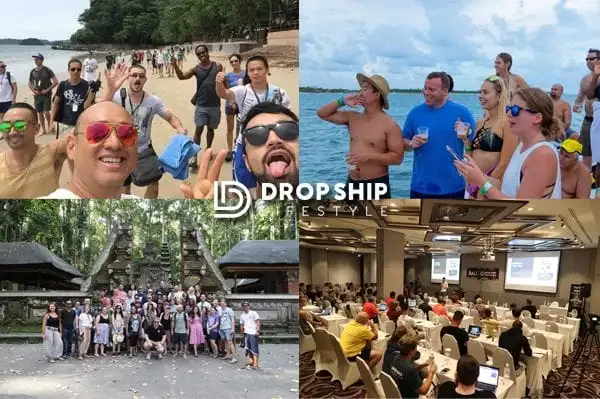
Is the Premium Package Good Enough of do I Need the Ultimate Package?
The Premium package is totally fine. You'll learn everything that’s needed to build a successful Dropshipping store. Included are the blueprint, the business forum, and Anton's drop ship labs in addition to social media training through Google Ads with his personal supplier directory.
It's a tough choice, but if you're going to do it by yourself then I guess that is what makes sense. The additional $2k for Ultimate will give you an edge and skip all of the steps where others have failed before (including personal coaching).
Plus now there are fancy retreats with other entrepreneurs who can share their knowledge with you. So if you think that will benefit you, then it's an option.
Dropship Lifestyle Course Modules
Dropship Lifestyle contains 7 modules in total which I will break down here. The training is video-based which I find is the easiest way to absorb material. The less reading, the better. Right?
Here's what's inside the course:
Module 1: Niche Selection
Anton says that choosing a niche can either make or break your business. Here he shows you how to find high-value products from a specific niche. Your first store will be focused on one niche, not several. By the end of the module you'll have a list of 50 different niches to choose from, then narrow it down in module 2.
Module 2: Market Research
Module 2 shows you how to narrow those 50 niches down to one. You'll learn how to extract supplier information from competitors, identify price points, use keyword research, determine if a niche is dropship-friendly, and build a master list of every company you could potentially sell for in that niche.
Module 3: Creating Your Website
The goal of this module is to have you build out your store. There are three options to choose from.
Option 1 - Download the DSL Theme
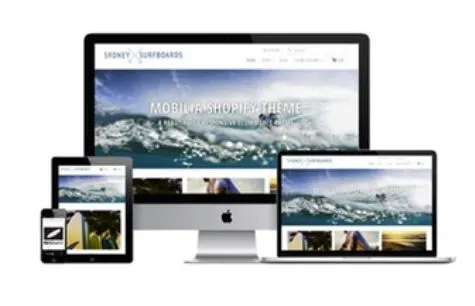
DSL does include a theme you can use so you can download it and use it, or use your own. You're going to be using Shopify anyway, so there's no coding necessary on your end.
The DSL theme makes it even easier to style your website. The theme provided is decent, but keep in mind many others will use the same theme and I think it's important to stand out. You could get it customized but that would cost you a bit of money.
Option 2 - Go Through the Shopify Video Course
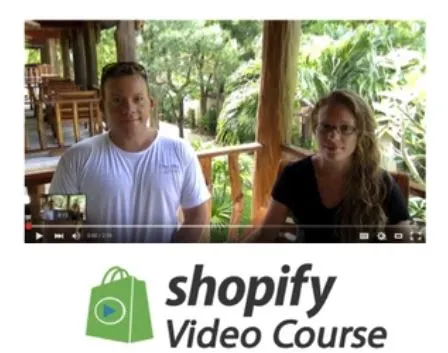
If you don't want to use the DSL theme, you can create your own by going through the training in the "Shopify Video Course". The training is 25 videos done by Anton's sister Laura, who is the head designer of Dropship Lifestyle. If you want to design your store from scratch, then you'll want to go through this training which breaks down how to use Shopify.
Option 3 - Use Their Team
If you really don't want to build the site yourself, you could hire the Dropship Lifestyle team to do this for you. This will cost you a fair bit of money and I advise against it. Use the provided theme if you're a total newbie and save your money.
This step is totally unnecessary and a waste of money if you ask me! You should really learn the ins and outs of Shopify anyway so doing it yourself or using the provided theme will help you understand the platform better.
Module 4: Get Drop Shippers
Once your store is live, the focus shifts to building supplier relationships. You'll get phone and email scripts, learn what makes a store look trustworthy to suppliers, and understand why these relationships are the foundation of the whole business.
Module 5: Optimize for Conversions
You need at least 5 supplier approvals before touching this module. DSL's conversion target is 2.5% — meaning 2.5 sales per 100 visitors. You'll learn how to hit that through better content pages, social proof, urgency, abandoned cart follow-ups, and reducing friction in the buying process.
Module 6: Get Traffic
No traffic means no sales, no matter how good your store looks. This module covers Google Ads, Bing Ads, Facebook Ads, SEO, email marketing, influencer outreach, and remarketing. The Google Ads training is where I think DSL really earns its keep.
Module 7: Outsourcing & Automation
This module is about stepping back from the day-to-day once your store is profitable. Anton wants you handling everything yourself first — customer inquiries, order processing, all of it — so you understand the processes before handing them off. Don't touch this module until your store is actually making money.
What's New in DSL 7.0?
DSL 7.0 is the most substantial update the course has seen. Here's what changed:
Upgraded Welcome Module
New students now get foundational eCommerce training before jumping into the business-specific content. This covers the basics of online business, the DSL code of ethics, and a "know your why" framework. If you're brand new to eCommerce, this is genuinely useful groundwork.
Updated Market Research Strategies
The market research module got a full refresh to reflect how competitive the dropshipping landscape is today. New techniques for finding profitable niches in a more crowded environment.
Updated Niche Selection Module
Now includes a passion vs. profit framework and real examples of good and bad niches upfront, so you don't waste time heading down the wrong path.
Improved Supplier Approval Methods
Getting approved by quality suppliers is harder than it used to be. This update gives you better research tools, updated phone and email scripts, and a clearer framework for standing out to suppliers.
Outsourcing and Automation as a Standalone Module
Previously folded into other content, automation now gets its own dedicated module covering abandoned cart automation, Google Sheets automation, order tracking, and content distribution.
AI for eCommerce
New additions cover how to use AI tools to speed up store building, product research, and content creation. This wasn't in earlier versions and it's a welcome addition given how much the landscape has changed.
What's the Difference Between Dropship Lifestyle and other Dropshipping Courses?

Most dropshipping courses teach you how to sell cheap products sourced from AliExpress or Alibaba using Facebook Ads. DSL takes the opposite approach — high-ticket products, domestic US suppliers, and Google Ads as the primary traffic channel. That's a fundamentally different business model, not just a different course.
The community is also a differentiator. DSL runs an active Discord server with monthly live Q&A calls where Anton shows up personally. Most cheaper courses give you a Facebook group that goes quiet after six months. The in-person retreats are another layer you just don't see at lower price points.
Update frequency is another thing that sets DSL apart. Seven major updates since 2013 is a strong track record. A lot of courses get one update and then the creator moves on to selling something else.
The biggest difference though is still the price. You're not just paying for videos — you're paying for the community, the coaching access, the supplier directory, and the structure. Whether that's worth $3,997 to you is a personal call, but at least you know what you're actually paying for.
Can you Make Money Dropshipping?
Yes — but most people don't, at least not in their first year. Studies suggest only 10-20% of dropshippers turn a profit in year one. That's not a reason to dismiss the model entirely, but it is a reason to go in with realistic expectations.

The ones who fail usually make the same mistake: they get excited about finding a supplier or launching a store and completely neglect marketing and customer service. Those two things are the actual business. The store is just the storefront.
Dropshipping is still a viable model in 2026. The market is valued at over $200 billion globally and continues to grow. But it's also more competitive than it was five years ago. Ad costs have gone up significantly, conversion rates have tightened, and customers have higher expectations around shipping times and service. You can't just throw up a generic Shopify store and expect sales to roll in.
High-ticket dropshipping — which is what DSL teaches — has some advantages here. You're making more per sale, you're working with domestic suppliers so shipping times are reasonable, and you're targeting a more deliberate buyer rather than impulse shoppers. The tradeoff is that high-ticket items are harder to sell and the financial consequences of returns are steeper.
If you treat this like a real business — invest in marketing, answer customer emails, iterate on what isn't working — you can make money with dropshipping. If you treat it like a passive income shortcut, you'll be in the majority that doesn't.
What if you don't live in the USA?
This is one of my bigger criticisms of DSL. The entire model is built around sourcing from domestic US suppliers, which means if you're not based in the US, you're immediately working against the grain.
The course doesn't cover international tax obligations, how to register a business outside the US, or how to find equivalent domestic suppliers in other markets. You'd need to figure all of that out independently before the DSL framework even becomes applicable to your situation.
If you're outside the US and serious about dropshipping, I'd strongly recommend getting advice from a local business advisor or accountant before spending $3,997 on a course that was built with American entrepreneurs in mind.
What Are The Pros of Dropship Lifestyle
Anton Kraly is the real deal. He's been doing this since 2007 and built multiple seven-figure stores before ever selling a course. You're not handing money to someone who learned dropshipping last year and repackaged it into a program.
The niche selection process is one of the stronger parts of the course. Choosing the wrong niche is where most dropshippers fail before they even get started, and DSL gives you a structured framework for vetting niches properly. Anton's team will also verify your chosen niche before you build, which is a genuinely useful safeguard.
The community and coaching access is better than most courses at this price point. Monthly live Q&A calls on Discord where Anton actually shows up, an active member community, and in-person retreats for those who want to network in real life. I think that ongoing access is a big part of what you're paying for.
The course gets updated. Seven major updates since 2013 means you're not buying a stale product. That matters in a space that changes as fast as eCommerce does.
What Are The Cons of Dropship Lifestyle
The price is the obvious one. At $3,997 for DSL X alone, this is one of the most expensive dropshipping courses available. When you add startup costs on top, you're looking at a serious financial commitment before you make a single sale.
The refund policy is frustrating. Proving you've selected a niche, contacted 20 suppliers, and built a website within 30 days is a lot to ask. It's structured in a way that makes refunds difficult by design.
High-ticket dropshipping carries real financial risk. When a customer returns a $2,000 item, that refund comes out of your pocket. If you're undercapitalized, one bad month can put you in a hole.
Shopify is the only platform taught. If you have a preference for WooCommerce or another platform, DSL won't help you there.
The course is US-centric. As I mentioned earlier, if you're outside the US the model requires significant adaptation that the course doesn't guide you through.
Are There Alternatives to Dropship Lifestyle?
Not everyone has $3,997 to spend on a dropshipping course, and honestly you don't need to. There are solid alternatives at a fraction of the price.
Here are a couple of great options.
1. eCommerce Accelerator
The eCommerce Accelerator is brought to you by SaleHoo. The course is taught by Sarah Li, who runs a few multi-million dollar ecommerce stores.
What makes this course different from most is the dropship-to-wholesale model — you start with dropshipping, identify a winning product, then move to buying wholesale for better margins and faster shipping times. That's a smarter long-term play than staying in dropshipping forever.
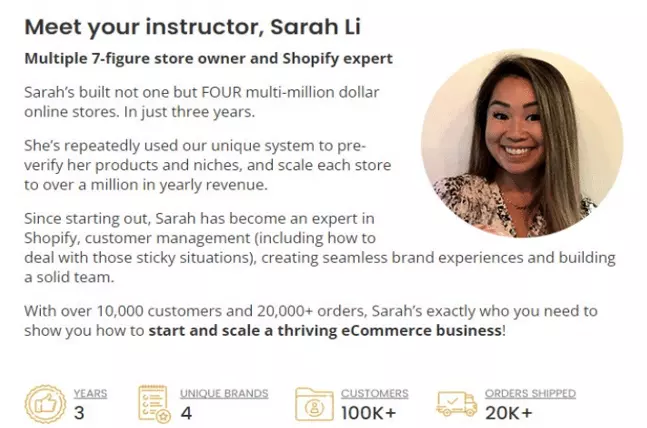
You also get access to SaleHoo's directory of 8,000+ vetted suppliers, a product research tool called Market Research Labs, and a dropship automation tool that imports products directly into your Shopify store. It's a lot more than just a course. The price is $497 as a one-time payment, with a no-questions-asked 30-day refund policy.
Learn more about how this works in my eCommerce Accelerator review.
2. eCom Elites
eCom Elites by Franklin Hatchett is one of the best value dropshipping courses available. It comes in at $197 for the standard version or $297 for the advanced version and covers Facebook Ads, Instagram Ads, Google Shopping, email marketing, SEO, and sales funnels. Unlike DSL it focuses on lower-priced products rather than high-ticket items, so it's a different model — but if high-ticket dropshipping feels out of reach financially, this is a solid starting point.
Franklin actually runs eCommerce stores himself rather than just teaching, which I think matters. The course has over 200 videos and comes with lifetime free updates. See my full eCom Elites review for more details.
Conclusion and Final Thoughts on My Dropship Lifestyle Review
Dropship Lifestyle is a legitimate course built around a legitimate business model. Anton Kraly knows what he's doing, the content gets updated regularly, and the community is one of the better ones in the eCommerce space. If you follow the system properly and go in well-funded, there's a real path to building a profitable high-ticket dropshipping store.
But I still can't fully recommend it for most people, and the reason is simple — the price.
At $3,997 for DSL X alone, you're making a serious financial commitment before you've proven the model works for you. Add startup costs on top and you're looking at $10,000+ out of pocket before your first sale. That's not a dealbreaker for someone with capital to deploy, but for the average person exploring dropshipping for the first time, it's a lot of risk to carry.
I feel like the alternatives I mentioned — eCommerce Accelerator at $497 and eCom Elites at $197 — give you enough to get started, test the model, and decide if dropshipping is genuinely for you before making a four-figure investment in education.
If you've already tested dropshipping, know you want to go high-ticket, and have the budget to do it properly, DSL is probably the best course available for that specific path. Just go in with realistic expectations, a financial cushion, and the understanding that this is a real business that takes real work to build.
My rating: 3.5 out of 5.
Frequently Asked Questions about Dropship Lifestyle
Is Dropship Lifestyle legit?
Yes. Dropship Lifestyle is a legitimate course created by Anton Kraly, who has been building and selling eCommerce stores since 2007. It has 370+ reviews on Trustpilot at 4.4 out of 5 stars and has been recognized by Shopify as the best eCommerce course. It's not a scam — it's an expensive course that teaches a real business model.
How much does Dropship Lifestyle cost?
There are three packages. DSL X costs $3,997 and covers the core 7-module blueprint for beginners. DSL XA also costs $3,997 and is a separate advanced course focused on scaling. The Ultimate Package costs $9,997 and includes everything from both courses plus a done-for-you Shopify store and one-on-one private coaching.
Is Dropship Lifestyle suitable for beginners?
Yes. The course is structured for beginners and includes a 21-day launch plan to help you build and launch your first store step by step. That said, you'll need capital beyond the course price to run ads and cover operational costs, so it's not a zero-budget starting point.
Why should you buy Dropship Lifestyle?
If you're serious about high-ticket dropshipping specifically, DSL is the most complete course available for that model. You get structured training, a vetted supplier directory, active community access on Discord, and monthly live coaching calls with Anton. It's the support structure as much as the content that justifies the price.
Who created Dropship Lifestyle?
Anton Kraly created the course in 2013. He started in eCommerce in 2007 after reading The 4-Hour Workweek, built multiple seven-figure dropshipping stores, and launched DSL to teach others the same system. He also published a book called Dropship Secrets in 2019 if you want a low-cost introduction to his methodology.

- Automate Channels Review: Prices, Refunds, YouTube Risk - October 23, 2026
- Why Platform Accountability Claims Now Reshape Online Safety Law - October 22, 2026
- Top Google Review Software for Improving Local Business Reputation - October 22, 2026

Glad to hear it Dan. I’m happy to save my readers a lot of money and get them excellent training for a fraction of the cost. Enjoy!
Ricki you really missed out on that Gold list! lol. All kidding aside yes there is no need to spend 1500 bucks on a course. Ecom Elites has a ton of value that you won’t find in more expensive courses and that’s why I highly recommend it to my readers. Whichever direction you take just work at it and results will come in time.